


Introduction:
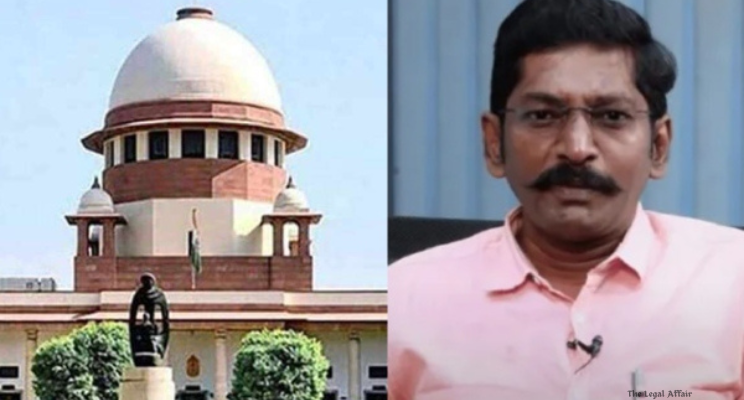
On August 30, 2024, the Supreme Court of India heard a significant case challenging the preventive detention of YouTuber and independent journalist Savukku Shankar under Tamil Nadu’s ‘Goondas’ Act, 1982. The case also questions the validity of 16 First Information Reports (FIRs) lodged against Shankar for remarks made during an online interview. The petitions were filed by Shankar’s mother, Kamala, who argued that the detention violated his fundamental rights, and by Shankar himself, who contends that the multiple FIRs filed against him are an attempt to stifle his freedom of expression. This legal battle has brought the alleged misuse of the ‘Goondas’ Act and preventive detention laws in Tamil Nadu into the spotlight.
Arguments from the Petitioners:
Advocate Balaji Srinivasan, representing Shankar and his mother, presented a strong case against the State of Tamil Nadu, emphasizing that the ‘Goondas’ Act is being misused at an alarming rate. He cited statistics indicating that Tamil Nadu is responsible for 51% of all preventive detention orders in India, suggesting a widespread abuse of power under this law.
Srinivasan argued that the law is being disproportionately applied in Tamil Nadu, where many individuals are detained under preventive measures, often without due regard for their fundamental rights. He noted that the misuse of preventive detention is not unique to Tamil Nadu but has also been observed in other states, such as Telangana, where the Supreme Court had previously rebuked the police for similar practices.
Srinivasan further argued that the 16 FIRs against Shankar stem from a single interview, making the multiplicity of charges a blatant attempt to harass and silence the YouTuber. He asserted that the charges should be consolidated, as they all arise from the same incident. Srinivasan also expressed concern about the ineffectiveness of seeking relief from the High Court due to a significant backlog of cases, which could delay justice for Shankar by five to six months.
The advocate also highlighted that Shankar was re-detained under the ‘Goondas’ Act immediately after his previous detention was quashed by the Madras High Court on August 9, 2024. This, Srinivasan argued, demonstrates a clear pattern of the state’s intention to keep Shankar in custody indefinitely, regardless of legal justifications.
In addition to questioning the legality of Shankar’s detention, the petition also outlined the State’s alleged tactics to suppress Shankar’s dissenting voice, including filing false cases, custodial violence, threats from ruling party members, and forced relocations that prevent him from staying in one place.
Arguments from the State:
Representing the State of Tamil Nadu, Senior Advocate Mukul Rohatgi responded to the allegations by requesting additional time to verify whether the 15 FIRs indeed arose from a single interview. Rohatgi’s defense was primarily procedural, aiming to establish that the State’s actions were within legal boundaries and that the FIRs were not arbitrarily filed. He also sought to justify the use of the ‘Goondas’ Act, implying that Shankar’s actions posed a sufficient threat to public order to warrant such measures.
Rohatgi argued that the State had acted in good faith to maintain law and order, and that preventive detention under the ‘Goondas’ Act was a necessary tool in this context. He contended that the law was invoked because of the severity and potential impact of Shankar’s remarks, which were seen as inflammatory and capable of disrupting public peace.
The State also defended its decision to re-detain Shankar after the quashing of the previous detention order, stating that this was a separate incident involving an NDPS (Narcotic Drugs and Psychotropic Substances) case, where Shankar had been granted bail earlier. Rohatgi argued that this re-detention was legally justified and not connected to the quashed order.
Court’s Observations and Decision:
The Supreme Court bench, while hearing the arguments, expressed concern over the pattern of re-detention following the quashing of previous detention orders. The bench pointed out that Shankar’s case required careful scrutiny, particularly because it involved a successive detention order under the same law that had previously been invalidated by the High Court.
The bench questioned the need for the petitioners to approach the Supreme Court instead of the High Court, to which Advocate Srinivasan responded by highlighting the significant delays in the High Court, arguing that these delays would result in prolonged injustice. The Court took note of this argument, acknowledging the urgency and seriousness of the matter.
The Supreme Court granted Mukul Rohatgi additional time until September 2, 2024, to review the details of the FIRs and to determine whether they all originated from the same interview. The bench also indicated that it would consider the validity of Shankar’s preventive detention order “prima facie,” meaning that it would make a preliminary assessment based on the facts presented before making a final decision.
In its interim order, the Supreme Court stayed any coercive action against Shankar concerning the 16 FIRs until further notice. The Court also indicated that it would thoroughly examine the habeas corpus petition filed by Shankar’s mother, which challenges the preventive detention under the ‘Goondas’ Act.
The Court’s decision to focus on the “prima facie” aspects of the preventive detention indicates its concern over the repeated use of such laws against Shankar. The justices seemed to imply that the state’s justification for Shankar’s detention would need to be exceptionally strong to withstand scrutiny, given the history of the case and the previous High Court ruling.
Conclusion:
The Supreme Court’s decision to closely examine the preventive detention and multiple FIRs against YouTuber Savukku Shankar underscores the ongoing debate over the use of preventive detention laws like the Tamil Nadu ‘Goondas’ Act. As the case unfolds, it could have significant implications for the balance between state security measures and individual freedoms in India. The outcome of this case will be closely watched, as it may set a precedent for how the judiciary handles allegations of state overreach in cases of preventive detention.