


Introduction:
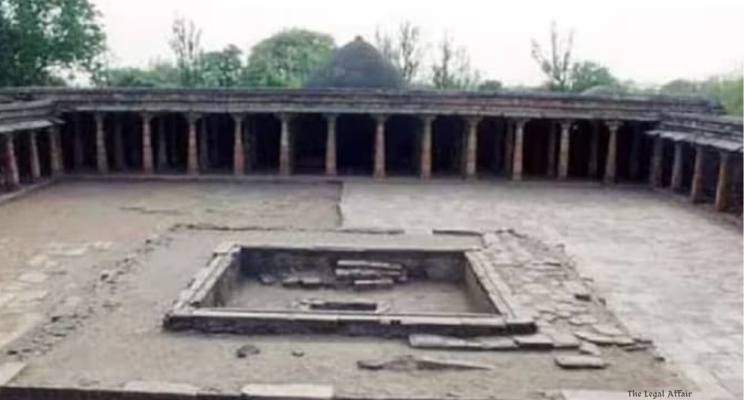
The Supreme Court, while hearing a plea challenging the Madhya Pradesh High Court’s order to conduct an Archaeological Survey of India (ASI) investigation at the Bhojshala Temple-cum-Kamal Maula Mosque complex, directed the matter to the Chief Justice of India (CJI) Sanjiv Khanna. The petition, filed by the Maulana Kamaluddin Welfare Society, arises from disputes over the historical site, where Hindus and Muslims lay conflicting claims. The Hindu Front for Justice seeks exclusive Hindu rights over the complex, while the Muslim community opposes excavation, citing previous Supreme Court directives to preserve the site’s character. The matter has gained national significance in light of broader debates surrounding the Places of Worship Act, of 1991.
Arguments by the Petitioner (Maulana Kamaluddin Welfare Society):
The petitioner argued that the Madhya Pradesh High Court’s order for an ASI survey contradicts the Supreme Court’s April 2024 interim order prohibiting physical excavation at the Bhojshala site to prevent alterations to its historical character. The petitioner contended that allowing an ASI survey risks disrupting communal harmony and potentially contravenes the Places of Worship Act, 1991, which seeks to maintain the status quo of religious places as of August 15, 1947. The petitioner also referenced the recent Supreme Court directive staying all district court orders for surveys at disputed sites such as the Gyanvapi Mosque and Mathura Shahi Idgah, stressing the importance of a consistent approach.
Arguments by the Respondents (Hindu Front for Justice):
The Hindu Front for Justice defended the Madhya Pradesh High Court’s directive for an ASI survey, asserting that it is critical for determining the historical and cultural origins of the Bhojshala complex. The respondents maintained that the order does not violate the Places of Worship Act, as the Bhojshala is an ASI-protected monument, and understanding its historical character is crucial to resolving the dispute. They emphasized that Hindus consider the site sacred as it houses an idol of Vagdevi (Goddess Saraswati), and any delay in reclaiming it denies them their religious rights. The respondents dismissed concerns over communal tension, asserting that an objective ASI survey would bring clarity and help resolve the conflict amicably.
Court’s Observations and Judgment:
The Supreme Court presided over by Justices Hrishikesh Roy and SVN Bhatti, highlighted the sensitivity of the matter, particularly in light of the ongoing constitutional challenge to the Places of Worship Act, 1991, being heard by a CJI-led bench. The Court expressed concern over potential violations of its April 2024 interim order prohibiting physical excavation at the Bhojshala site, noting photographs suggesting that excavation activities were underway. Justice Roy cautioned the respondents against pursuing actions that could be construed as contempt of court, emphasizing the need for strict adherence to judicial directions.
Recognizing the broader implications of the case, the bench decided to refer the matter to CJI Sanjiv Khanna for possible tagging with other cases challenging the Places of Worship Act. The Court observed that the Bhojshala dispute requires a holistic judicial approach, given its resemblance to other contentious cases involving religious sites like the Gyanvapi Mosque and Mathura Shahi Idgah. The Court deferred any immediate decisions on the ASI survey and contempt proceedings, reserving these issues for deliberation under the CJI’s guidance.
The Court also urged the parties to exercise restraint and prioritize communal harmony while the judicial process unfolds. It reiterated the importance of preserving the Bhojshala complex’s historical character, emphasizing that any actions altering its physical structure would undermine judicial efforts to resolve the dispute fairly. The matter will now proceed under the supervision of the Chief Justice, ensuring consistency in the Court’s approach to cases involving religious disputes.