


Introduction:
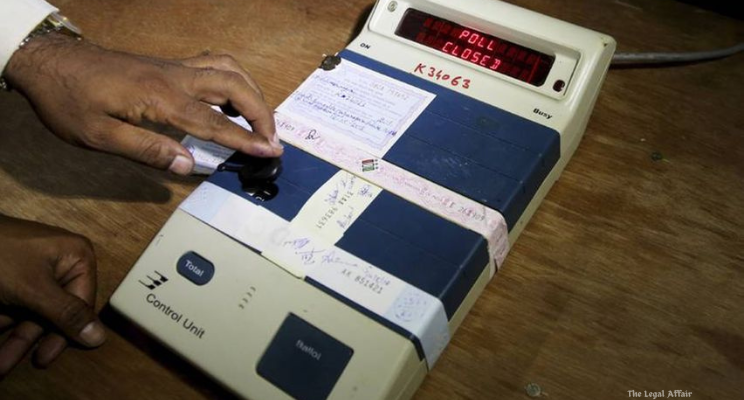
On November 26, the Supreme Court dismissed a Public Interest Litigation (PIL) seeking the replacement of Electronic Voting Machines (EVMs) with physical ballot voting in India and stricter measures to curb electoral corruption. Filed by evangelist Dr K.A. Paul, the petition also sought directions to the Election Commission of India (ECI) for disqualifying candidates found guilty of distributing money, liquor, or other inducements during elections. A bench comprising Justices Vikram Nath and P.B. Varale rejected the plea, finding it unsubstantiated and devoid of merit. During the proceedings, the court humorously questioned the petitioner about his repeated filing of unconventional PILs, setting the tone for the deliberations.
Arguments by Both Sides:
Dr. K.A. Paul, appearing as petitioner-in-person, passionately argued that India’s reliance on EVMs is an anomaly in global democracy, with 180 out of 197 democracies opting for physical ballots. Citing his extensive humanitarian work and international experience, he contended that India should align with international practices to prevent corruption. He also highlighted constitutional violations under Articles 14, 19, and 21, alleging that the current electoral system lacks transparency and accountability.
Dr Paul further alleged widespread corruption during elections, pointing to instances of cash and gold seizures amounting to ₹9,000 crores as reported by the ECI. He claimed that political parties, including major ones, receive substantial financial contributions from businesses to influence elections. Relying on statements from tech experts and political figures like Elon Musk and Chandrababu Naidu, Dr Paul asserted that EVMs are susceptible to tampering and manipulation. He also referred to specific incidents where EVMs were allegedly compromised and demanded that the issue be debated in court with responses from political parties.
Court’s Observations and Questions:
The court took a light-hearted approach while scrutinizing the petitioner’s claims. Justice Nath humorously asked how Dr. Paul came up with his “brilliant ideas” for PILs and probed why the petitioner wanted to delve into the political domain. The court pointed out that no political party has raised objections to the EVM-based system and questioned Dr. Paul’s singular objection to the mechanism.
Responding to Dr Paul’s allegations of corruption, the bench remarked that criticisms of EVMs often arise when parties lose elections, citing examples of leaders blaming EVMs only when results are unfavourable. The court highlighted that similar arguments have been made by political leaders like Chandrababu Naidu and Y.S. Jagan Mohan Reddy when their respective parties faced defeat.
Justice Nath also dismissed claims of widespread tampering, emphasizing the credibility and integrity of the electoral system. While acknowledging the petitioner’s concerns, the bench found no substantial evidence to justify a drastic overhaul of India’s voting system.
Judgment:
The Supreme Court dismissed the PIL outright, observing that it lacked substantive grounds and evidence. Justice Nath concluded that the petitioner’s assertions were speculative and rooted in political narratives rather than concrete facts. The court reiterated its faith in the ECI and the robustness of the EVM system, which has undergone rigorous scrutiny and testing over the years.
Addressing Dr. Paul’s demand for stricter electoral regulations, the bench noted that the ECI already has mechanisms to address malpractices like money distribution and inducements. The court emphasized that existing laws and guidelines are adequate, provided they are implemented effectively.
The court rejected the petitioner’s argument for disqualifying candidates accused of distributing inducements, stating that such measures fall under the ECI’s jurisdiction and legislative framework. The bench also underscored that judicial intervention in electoral processes must be restrained to maintain democratic integrity.