


Introduction:
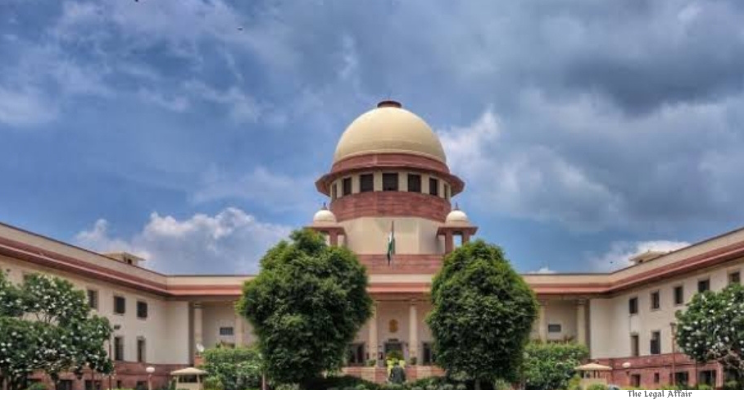
In a significant legal development, the Supreme Court of India today (June 14) denied the interim relief sought against the demolition of the Pracheen Shiv Mandir by the Delhi Development Authority (DDA). The case was heard by the Vacation Bench comprising Justices Sanjay Kumar and Augustine George Masih. This decision follows a recent ruling by the Delhi High Court on May 29, which rejected the plea filed by Pracheen Shiv Mandir Avam Akhada Samiti, seeking to halt the demolition of the temple situated near Geeta Colony and the Yamuna Flood Plains.
Petitioner’s Argument:
The petitioner, Pracheen Shiv Mandir Avam Akhada Samiti, argued that the temple, with its ancient significance, should be preserved for the use and devotion of the public. They contended that the demolition by the DDA would deprive devotees of their place of worship. The counsel for the petitioner claimed that the temple was not located within the floodplains of the Yamuna River and challenged the necessity of its demolition. They sought interim protection to ensure the temple remained operational while the case was under review.
Respondent’s Argument:
On the other hand, the Delhi Development Authority (DDA) defended its action by stating that the temple was an unauthorized construction on the Yamuna flood plains. The DDA highlighted that the structure was built on land developed following the directions of the National Green Tribunal (NGT) to clear the floodplains of all encroachments. They emphasized that the petitioner had failed to demonstrate any legal rights to occupy the land, and the High Court had already provided a 15-day period for the removal of idols and other religious objects from the temple.
Court’s Judgement:
The Delhi High Court, through Justice Dharmesh Sharma, had previously rejected the plea of the petitioner. The Court observed that the petitioner could not demonstrate any legal rights to use the land for running temple services. Justice Sharma remarked that the deity, Lord Shiva, did not require protection, but rather, it was the people who sought His blessings. The Court expressed that clearing the Yamuna floodplains of unauthorized constructions would be more pleasing to Lord Shiva. Consequently, the High Court granted the petitioner 15 days to relocate the idols and granted the DDA permission to proceed with the demolition.
Today, the Supreme Court echoed the sentiments of the High Court, emphasizing the lack of sufficient evidence presented by the petitioner to establish the temple’s ancient status. The Bench noted the absence of any proof that the temple was indeed ancient, remarking that traditional ancient temples were typically constructed with rock, unlike the cement and painted structure in question. The Court was unpersuaded by the petitioner’s assertion that the temple was not within the floodplains. The Bench also emphasized the importance of following legal procedures and stated that it would not entertain parallel proceedings as the appeal was already pending before the Division Bench of the High Court.
When the petitioner’s counsel requested interim protection for an additional 24 hours, the Court denied the plea, citing insufficient documentary evidence to justify such relief. The Court’s decision reinforces the principle that legal rights and proper documentation are critical in matters involving unauthorized constructions on public land.