


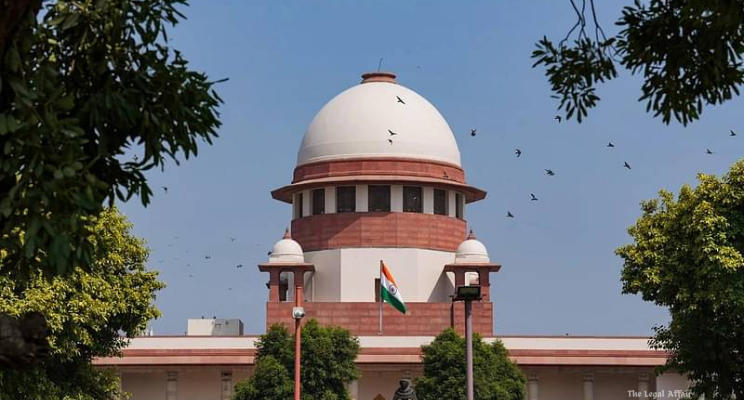
Introduction:
In a pivotal judgment titled G.C. Manjunath & Others v. Seetaram (2025 LiveLaw (SC) 399), the Supreme Court of India, through a bench comprising Justice B.V. Nagarathna and Justice Satish Chandra Sharma, reaffirmed the protective ambit of Section 197 of the Code of Criminal Procedure, 1973, emphasizing that public servants are not automatically stripped of statutory safeguards merely because their official conduct allegedly exceeded authority. The case centered around the appellants, all police officers, who were accused by the complainant, Seetaram, of assault and wrongful confinement during the investigation of multiple criminal cases registered against him. The complainant, a known rowdy-sheeter declared as such by the Deputy Commissioner of Police, Bengaluru City, had a chequered criminal record. He filed a private complaint, leading to the Magistrate issuing a summoning order without prior sanction from the competent authority. When the High Court dismissed the appellants’ plea to quash the order, they approached the Supreme Court.
Arguments:
The petitioners, represented by Senior Advocate Rahul Kaushik and team, argued that the acts attributed to them—though possibly excessive—were intrinsically connected to their official duties as police officers conducting an investigation. They relied heavily on the doctrine that the necessity of sanction under Section 197 CrPC is not negated merely because an act exceeded the scope of duty, as long as a reasonable nexus with the official function can be established. The petitioners cited the precedent set in D. Devaraja vs. Owais Sabeer Hussain, (2020) 7 SCC 695, where the Court held that even acts of overreach during an investigation, such as custodial torture, are protected if they are reasonably linked to the performance of official duties. They argued that without such protection, public servants would be subjected to frivolous litigation that hampers effective functioning.
On the other side, the respondent Seetaram, represented by Advocate Rohan Thwani and his team, maintained that the alleged actions constituted criminal offenses outside the purview of official duties. He contended that wrongful confinement and assault cannot be considered legitimate components of investigation and should not be cloaked with immunity under Section 197. The respondent emphasized that granting such protection would embolden abuse of power and violate fundamental rights, particularly when actions cross into the realm of criminality.
Judgement:
After a thorough examination, the Supreme Court sided with the appellants, underscoring that the critical consideration is not whether the act was lawful but whether it was connected with official duties. The judgment reiterated that “a mere excess or overreach in the performance of official duty does not, by itself, disentitle a public servant from the statutory protection mandated by law.” The Court noted that the acts were committed during the investigation of criminal cases against the complainant, and though they may have been excessive, they bore a reasonable nexus to the discharge of official functions. The absence of prior sanction vitiated the proceedings, rendering the Magistrate’s cognizance untenable.
The judgment decisively concluded that the learned VII Additional Chief Metropolitan Magistrate had erred in taking cognizance of the complaint without the requisite sanction. It held that sanction is a prerequisite whenever an act, even if in excess, is integrally linked to the discharge of official duties. Consequently, the Supreme Court quashed the proceedings against the appellants and allowed the appeal.