


Introduction:
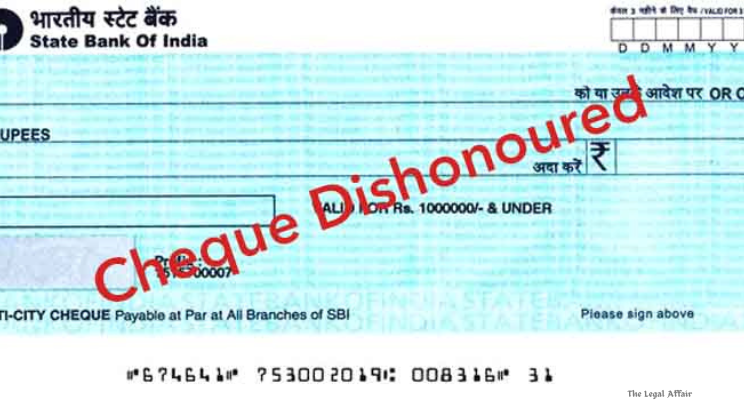
In a landmark decision, the Supreme Court of India reiterated that an authorized signatory of a company cannot be held liable under Section 138 of the Negotiable Instruments Act, 1881, for a dishonoured cheque unless the company is arraigned as the principal accused. The bench, comprising Justices JB Pardiwala and R Mahadevan, delivered this judgment while dismissing an appeal challenging the acquittal of Paresh Manna, a director of Shilabati Hospital Pvt. Ltd., in a case involving a dishonoured cheque issued to Bijoy Kumar Moni.
Arguments of Both Sides:
The complainant, Bijoy Kumar Moni, argued that he had extended a personal loan of Rs. 8,45,000 to Paresh Manna in 2006, and the dishonoured cheque was issued to repay the loan. Moni contended that the cheque, drawn on the account of Shilabati Hospital Pvt. Ltd., was issued to settle a personal liability and not a corporate debt. He further asserted that Manna never claimed during the trial that the loan was for the company’s benefit. Moni relied on Section 139 of the NI Act to argue that the cheque carried a presumption of being issued for the discharge of a legally enforceable debt.
Conversely, Paresh Manna, the accused, maintained that the cheque was issued in his capacity as the Director of Shilabati Hospital Pvt. Ltd. and drawn on the company’s account. He argued that under the doctrine of separate corporate personality, the liability for a dishonoured cheque lies primarily with the company as the drawer. Since Shilabati Hospital Pvt. Ltd. was not made a party to the proceedings, Manna contended that he could not be held personally liable under Section 138. He emphasized that liability could only extend to him under Section 141 of the NI Act if the company was arraigned as the principal offender.
Court’s Judgment:
The Supreme Court upheld the reasoning of the Calcutta High Court, which had reversed the conviction of Manna. The Court emphasized that Section 138 of the NI Act stipulates that the liability for a dishonoured cheque rests solely with the drawer of the cheque. The expression “on an account maintained by him with a banker” establishes a specific relationship between the account holder and the banker. The Court explained that an authorized signatory acts on behalf of the company, and the company remains the account holder and the drawer of the cheque.
The bench reiterated that vicarious liability under Section 141 requires the company to be prosecuted as the principal offender. Without the company being arraigned, individuals such as directors or authorized signatories cannot be held liable for the dishonour of a cheque. The Court relied on established precedents to underscore that only the drawer of the cheque can be held liable under Section 138, and penal provisions must be interpreted strictly to avoid unintended consequences.
Addressing the complainant’s argument, the Court stated that even if the cheque was issued to settle Manna’s liability, the absence of Shilabati Hospital Pvt. Ltd. as a party to the proceedings prevented any prosecution. The bench noted that the complainant had the opportunity to arraign the company during the trial but failed to do so. Consequently, the statutory requirements for prosecution under Section 138 were not satisfied.
The Court clarified that its decision was not to trivialize the complainant’s grievance but to affirm the legal framework governing cheque dishonour cases. It acknowledged that the complainant may have suffered due to the dishonoured cheque, but it highlighted that the remedy under Section 138 was no longer available due to procedural lapses. The Court also observed that the statute of limitations for filing a civil suit to recover the debt had expired.
Nonetheless, the bench left room for alternative legal remedies, stating that the complainant could approach the police to investigate potential criminal charges of fraud or cheating against Manna. The Court dismissed the appeal, emphasizing that its decision was rooted in the principles of justice and adherence to statutory requirements.