


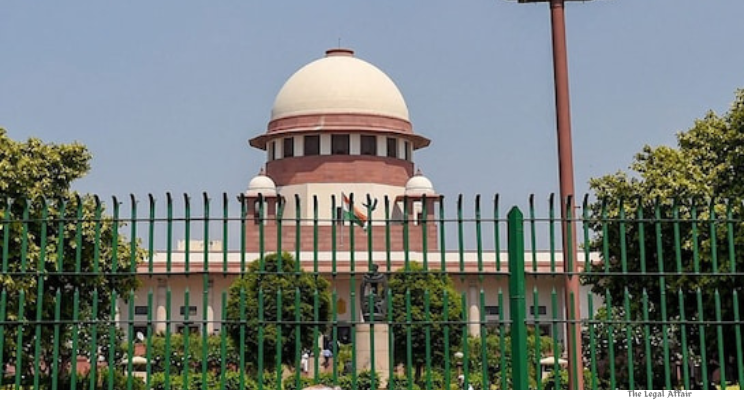
Introduction:
In Rikhab Chand Jain v. Union of India & Ors., the Supreme Court of India once again reiterated the settled doctrine that the extraordinary jurisdiction of the High Courts under Article 226 should not be invoked when an equally efficacious and specifically designated statutory remedy exists under a different jurisdiction provided by the concerned legislation. The case revolved around a long-pending customs dispute arising from the confiscation of silver dating back to 1992, where the appellant, Rikhab Chand Jain, had first approached the Customs, Excise and Gold (Control) Appellate Tribunal (CEGAT). While the Tribunal partially allowed his appeal by reducing his penalty, it upheld the confiscation order. Instead of availing the statutory route of seeking a reference before the High Court as provided under the Customs, Excise and Gold (Control) Appellate Tribunal Act, 1962, the appellant filed a writ petition in 2003 before the Rajasthan High Court after a substantial and unexplained delay. The High Court dismissed the writ petition as non-maintainable on the ground that an effective, alternative remedy was available, and the Supreme Court, hearing the matter in 2025, upheld this dismissal. The bench comprising Justice Dipankar Datta and Justice Aravind Kumar emphasised that Article 226 is a discretionary remedy and not a substitute for statutory appellate or revisional frameworks. The Court highlighted that when the law itself creates a complete mechanism and provides a specific forum for redressal, litigants cannot bypass it merely because they prefer the convenience of the writ court. The Supreme Court also drew support from two Constitution Bench precedents—Thansingh Nathmal v. A. Mazid (1964) and A.V. Venkateswaran v. Ramchand Sobhraj Wadhwani (1961)—which categorically hold that writ remedies are not meant for those who, by their own inaction or negligence, fail to pursue statutory processes within prescribed timelines. This appeal thus presented the Court with an opportunity to reinforce judicial discipline in invoking writ jurisdiction, discourage litigants from circumventing statutory frameworks, and underline the importance of approaching the correct forum designated by law.
Arguments of the Appellant:
The appellant, Rikhab Chand Jain, advanced several contentions in support of his claim that the High Court erred in refusing to entertain his writ petition. He submitted that the confiscation of the silver and the consequent order of the CEGAT suffered from serious legal infirmities and jurisdictional errors which warranted scrutiny under Article 226. He argued that the Tribunal’s reasoning in upholding the confiscation was arbitrary and contrary to established principles of natural justice, thereby presenting a case fit for writ intervention. The appellant further pleaded that the remedy of seeking a reference before the High Court, though statutorily available, was neither speedy nor efficacious due to procedural complexities and delays inherent in the mechanism. Asserting that constitutional remedies are overarching and remain available notwithstanding statutory alternatives, he contended that the High Court ought to have exercised its extraordinary jurisdiction to ensure justice. He also attempted to justify the delay in approaching the High Court by submitting that he was under a bona fide impression that the writ petition was the appropriate remedy, and that technical defaults should not defeat substantive justice. Additionally, he argued that the doctrine of alternate remedy is only a rule of discretion and not a rule of compulsion, and therefore, the High Court could have made an exception given the nature of the dispute, the long time elapsed since the confiscation, and the alleged miscarriage of justice by the Tribunal.
Arguments of the Respondents:
The Union of India, represented by the Additional Solicitor General and supporting counsel, strongly defended the High Court’s order and argued that the appellant had deliberately bypassed a clear and effective statutory remedy provided under the Customs, Excise and Gold (Control) Appellate Tribunal Act, 1962. They emphasized that the statute expressly provided the mechanism for seeking a reference to the High Court on questions of law arising from the Tribunal’s order, which the appellant failed to exercise within the stipulated timeframe. The respondents asserted that the writ petition was rightly dismissed as non-maintainable because the existence of an alternative statutory remedy bars writ intervention except in exceptional circumstances, none of which were present in this case. They further argued that the appellant’s delay of over three years in approaching the High Court was unjustified and demonstrated a conscious attempt to circumvent statutory procedures. The respondents highlighted that Article 226 is discretionary and cannot be invoked as a matter of right, particularly when the litigant has slept over his legal remedies. They relied extensively on Constitution Bench rulings which categorically state that when litigants disable themselves from availing statutory remedies through their own fault or delay, writ courts are not bound to entertain their petitions. The Union also emphasized that allowing such a writ petition would set a dangerous precedent where litigants could simply ignore statutory frameworks and resort to writ courts at their convenience, thereby undermining legislative intent and clogging the constitutional courts with matters meant for alternate forums.
Court’s Judgment and Analysis:
The Supreme Court, in a detailed and reasoned judgment, upheld the Rajasthan High Court’s decision and reaffirmed the well-settled doctrine that the writ jurisdiction under Article 226 cannot be invoked when a litigant has access to an effective and specific alternate statutory remedy. The bench of Justice Dipankar Datta and Justice Aravind Kumar first pointed out that the appellant’s statutory remedy under the Act was not only available but was directly tailored for the kind of grievance he sought to challenge. They observed that the statute created a complete adjudicatory framework and expressly provided the remedy of seeking a reference before the High Court on substantial questions of law arising from a CEGAT order. The Court clarified that the existence of such a remedy bars the exercise of writ jurisdiction unless exceptional circumstances—such as violation of natural justice, lack of jurisdiction, or glaring procedural irregularities—are established, none of which were present in this case. The Court remarked that when a statute designates a forum specifically empowered to grant speedy and efficacious relief, litigants cannot be permitted to take a detour through writ courts. The delay of over three years in approaching the High Court was also condemned, with the Court noting that the appellant had, “by his own fault, disabled himself” from availing the statutory mechanism. Relying heavily on the Constitution Bench judgments in Thansingh Nathmal and A.V. Venkateswaran, the Court reiterated that writ jurisdiction cannot be used as a refuge by those who fail to act with diligence. The judgment underscored the importance of public law discipline, judicial restraint, and the principle that constitutional remedies are not substitutes for statutory ones. The bench emphasized that Article 226 is a discretionary power and not an appellate remedy, and therefore, courts must refrain from entertaining matters better suited for specialized statutory forums. Concluding that the High Court’s refusal to exercise writ jurisdiction was neither arbitrary nor unjust, the Supreme Court dismissed the appeal, reiterating that the appellant’s attempt to bypass statutory procedures amounted to a “misadventure,” and the High Court was correct in declining relief.