


Introduction:
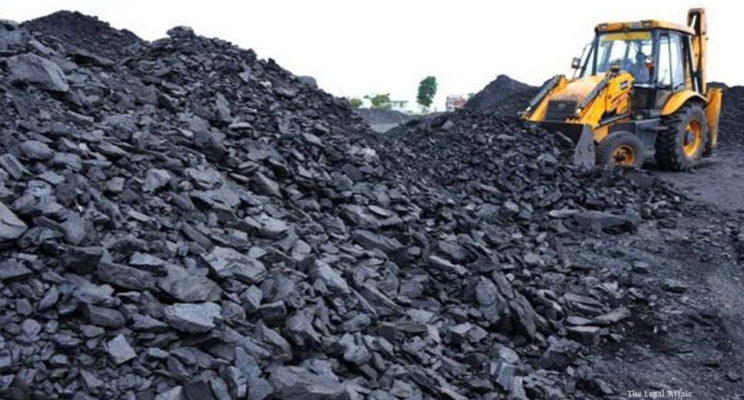
On August 23, 2024, the Supreme Court of India delivered a significant judgment, quashing two orders passed by the Special Judge, CBI, which had framed charges in a corruption case involving Karnataka EMTA Coal Mines Ltd (KECML). The appellants, including KECML, filed criminal appeals under Article 136 of the Indian Constitution, challenging these orders in light of the Supreme Court’s earlier directions in the landmark case of Manohar Lal Sharma v. Principal Secretary and Another (2014).
The Supreme Court’s decision in Manohar Lal Sharma had far-reaching implications, scrutinizing the allocation of coal blocks to private companies between 1993 and 2011. The allocation process was challenged on the grounds that it violated the principles of trusteeship of natural resources and bypassed mandatory provisions of the Mines and Minerals (Development and Regulation) Act, 1957, and the Coal Mines (Nationalisation) Act, 1973. In that case, the Court declared that the entire allocation process from 1993 onwards was arbitrary, lacked transparency, and failed to follow a fair procedure.
This present case stems from a Joint Venture Agreement (JVA) executed in 2002 between Karnataka Power Corporation Limited (KPCL) and Eastern Mineral and Trading Agency (EMTA) for the development of captive coal mines to supply coal to the Bellary Thermal Power Station. This agreement led to the formation of Karnataka EMTA Coal Mines Ltd (KECML). However, the CBI launched an investigation into broader irregularities in coal allocation, making KPCL and its joint venture with EMTA subjects of scrutiny. The investigation primarily relied on a 2013 Audit Report from the Comptroller and Auditor General of India (CAG), leading to the registration of a case against the appellants in 2015.
Arguments by the Appellants:
The appellants, represented by Senior Advocate Ranjit Kumar, argued that the charges framed by the Special Judge, CBI, were baseless and relied solely on the 2013 CAG report, which suffered from multiple infirmities.
They contended that the CAG report was never tabled before Parliament, as required by law, rendering the report’s findings speculative and insufficient to initiate criminal prosecution.
The appellants emphasized that the JVA between KPCL and EMTA was a civil agreement, and any disputes arising from it should be resolved within the framework of contract law, not through criminal prosecution.
They further argued that two sanctioning authorities, the Board of KPCL and the Office of the Prime Minister, had denied the CBI permission to prosecute key individuals involved in the joint venture. The appellants contended that the CBI’s decision to proceed with the prosecution despite these denials was improper and unjustified.
The appellants invoked Article 136 of the Constitution, which grants the Supreme Court special leave to appeal against any judgment, decree, or order passed by any court or tribunal. They argued that in light of the directions passed in Manohar Lal Sharma, only the Supreme Court had the jurisdiction to entertain cases related to coal block allocation, making their appeal directly to the Apex Court appropriate.
Arguments by the Respondent (CBI):
The CBI, represented by Senior Advocate Cheema, argued that the appellants were involved in a criminal conspiracy to facilitate the illegal sale of coal rejects generated during coal washing, causing a significant loss to the public exchequer.
The CBI maintained that its investigation was based on the findings of the CAG report, which indicated irregularities in the disposal of coal rejects by KPCL and KECML. The agency argued that these actions amounted to criminal misconduct under the Prevention of Corruption Act, 2002.
The CBI dismissed the appellants’ claims that the case was merely a civil dispute and insisted that the nature of the alleged offenses warranted criminal prosecution.
The CBI also contended that the denial of sanctions by the sanctioning authorities did not preclude the agency from pursuing charges against the appellants. It argued that the decisions of the sanctioning authorities were administrative and did not necessarily determine the merits of the case.
Court’s Judgment:
The Supreme Court, in its judgment, carefully examined the arguments presented by both sides and scrutinized the evidence on record. The Court found several critical flaws in the CBI’s investigation and prosecution strategy.
Infirmities in the CAG Report:
The Court noted that the CBI’s prosecution was based almost entirely on the 2013 CAG report, which had not been tabled before Parliament, as required by law. This failure to table the report before Parliament and solicit comments from the Public Accounts Committee (PAC) or relevant ministries rendered the CAG’s findings speculative and non-decisive.
The Court referred to the case of Arun Kumar Aggarwal v. UOI (2013), which clarified that the CAG’s reports, while independent, are subject to scrutiny by Parliament. The government has the opportunity to offer its views on the report, and Parliament may accept or reject the report, either in full or in part. Therefore, the CAG’s report, in this case, could not be accepted as conclusive evidence of wrongdoing.
Denial of Sanction to Prosecute:
The Supreme Court found that both the Board of KPCL and the Office of the Prime Minister, acting as sanctioning authorities, had refused to grant the CBI permission to prosecute the Director of KPCL and the Managing Director of KPCL, respectively. The Court noted that the CBI had not filed any appeals against these decisions, effectively accepting them.
The Court criticized the CBI for proceeding with the prosecution despite these denials of sanction. It held that the CBI could not argue that these were merely administrative decisions and that the agency could still proceed against the appellants based on the same evidence that had been thoroughly scrutinized and rejected by the sanctioning authorities.
Invocation of Article 136:
The Supreme Court addressed the appellants’ invocation of Article 136 of the Constitution, which grants the Apex Court special jurisdiction to entertain appeals in exceptional circumstances. The Court noted that ordinarily, parties aggrieved by the filing of a chargesheet or the framing of charges should first approach the High Court under Section 482 of the Code of Criminal Procedure (CrPC), which provides for the inherent powers of the High Court to prevent abuse of the process of any court and to secure the ends of justice.
However, the Court acknowledged that in light of the directions passed in Manohar Lal Sharma, which vested exclusive jurisdiction over coal block allocation cases in the Supreme Court, the appellants were justified in directly approaching the Apex Court under Article 136.
Plenary Powers under Article 136:
The Supreme Court reiterated that Article 136 grants it extraordinary, plenary powers to ensure the dispensation of justice and correct errors of law. The Court emphasized that these powers are boundless, allowing it to reach out to injustice wherever it is found, and are not confined by the procedural limitations that apply to other courts.
The Court referred to the case of Arunachalam v. P.S.R. Sadhanantham and Another (1979), which established that Article 136 should only be invoked in exceptional circumstances, such as when a question of law of general public importance arises or when a decision shocks the conscience of the Court. The Court observed that this case met those criteria, as it raised significant legal issues related to the CBI’s investigation and the proper role of the CAG report in criminal prosecutions.
Failure of the Special Court, CBI:
The Supreme Court found that the Special Court, CBI, had failed to apply its mind at the stage of discharging the appellants under Section 227 of the CrPC. The Court referred to UOI v. Prafulla Kumar Samal & Anr (1979), which clarified that at the stage of discharge, the judge should not act as a mere post office or mouthpiece of the prosecution but should consider the broad probabilities of the case, the total effect of the evidence, and any basic infirmities in the prosecution’s case.
The Court concluded that the CBI had embarked on a “roving and fishing inquiry” based on the CAG report, which was not a sufficient basis to establish criminal intent against the appellants. The Court criticized the CBI for misinterpreting the clauses of the agreements between the parties and attempting to transform what was essentially a civil dispute into a criminal case.
Conclusion:
In conclusion, the Supreme Court quashed the charges framed against Karnataka EMTA Coal Mines Ltd and other appellants, finding that the CBI’s investigation was fundamentally flawed and relied on an incomplete and speculative CAG report. The Court’s judgment underscores the importance of adhering to proper legal procedures, including the need for CAG reports to be scrutinized by Parliament before they can be used as a basis for criminal prosecution. The Court’s invocation of its plenary powers under Article 136 reaffirms its commitment to ensuring justice and correcting errors of law, even in complex cases involving allegations of corruption in high-stakes industries like coal mining.