


Introduction:
In a recent legal development, a petition has been filed before the Supreme Court of India seeking immediate action regarding the three new criminal laws set to replace the Indian Penal Code, the Code of Criminal Procedure, and the Indian Evidence Act. The petitioners, Anjale Patel and Chhaya Mishra, represented by AOR Kunwar Sidharth, have requested the Court to constitute an expert committee to assess these laws’ viability and stay their implementation, citing significant concerns over their titles, provisions, and parliamentary approval process.
Arguments of Both Sides:
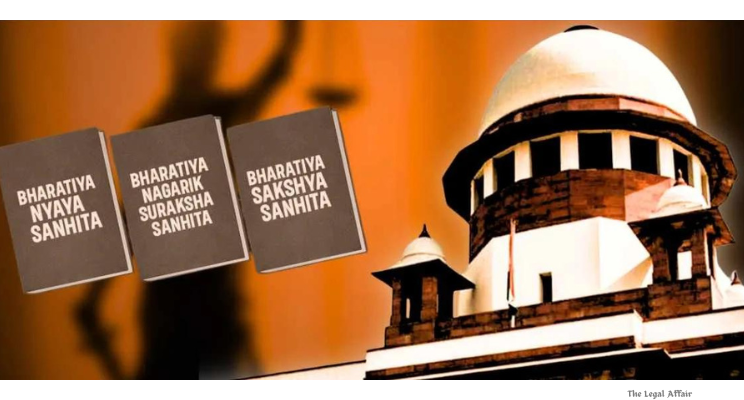
The petitioners argue that the titles of the new laws—Bharatiya Nyaya Sanhita (BNS), Bharatiya Nagarik Suraksha Sanhita (BNSS), and Bharatiya Sakshya Sanhita (BSA)—are ambiguous and do not clearly reflect their statutes or motives. They assert that these titles are misleading and fail to convey the true nature and intent of the laws.
Regarding the BNS, the petitioners highlight that it retains most offences from the IPC and introduces the concept of petty organized crime without clearly defining critical terms such as ‘general feelings of insecurity,’ ‘gang,’ ‘anchor points,’ and ‘mobile organized crime groups.’ They argue that this lack of clarity could lead to arbitrary enforcement and misuse of the law.
The petitioners also raise significant concerns about the BNSS, particularly the provision allowing up to 15 days of police custody, which can be authorized in parts during the initial 40 or 60 days of the 60 or 90-day period of judicial custody. They contend that this could result in prolonged detention without bail, undermining the accused’s rights and due process.
They further contend that the Bills were passed without proper parliamentary debate, as a substantial number of MPs were suspended during the session. This lack of debate, they argue, undermines the democratic lawmaking process and prevents a thorough examination of the Bills’ provisions and implications.
Regarding the BSA, the petitioners point out that while it provides for the admissibility of electronic records, it lacks adequate safeguards to prevent tampering and contamination of these records during the investigation process. They stress the importance of ensuring the integrity and reliability of electronic evidence in the justice system.
The petitioners emphasize that the new laws could potentially increase the workload and complexity faced by lawyers, necessitate continuing legal education, and pose resource constraints for small and mid-sized law firms. They also highlight the potential impact on legal practice, procedural changes, and access to legal aid and pro bono services.
The Union Government opposes the plea, arguing that the new laws were enacted to modernize and streamline the criminal justice system. They contend that the petitioners’ concerns about the titles and specific provisions are unfounded and that the new laws aim to address contemporary challenges and enhance the efficiency of the legal process.
The government also asserts that the Bills were passed following the established parliamentary procedures, and the suspension of certain MPs does not invalidate the legislative process. They argue that the petitioners’ claims about the lack of debate are exaggerated and that the new laws underwent sufficient scrutiny and discussion.
Regarding the provision for police custody in the BNSS, the government maintains that it is designed to balance the needs of effective investigation with the rights of the accused. They argue that the provision allows for flexibility in custody arrangements and is consistent with existing legal principles and precedents.
The government further argues that the safeguards for electronic evidence in the BSA are adequate and in line with international standards. They contend that the petitioners’ concerns about tampering and contamination are speculative and not supported by concrete evidence.
Court’s Judgment:
The Supreme Court has yet to deliver its judgment on the petition. However, the Court’s previous refusal to entertain similar PILs challenging the new criminal laws suggests that the petitioners face an uphill battle in obtaining the relief they seek. The Court has indicated that the laws are not yet in force, and any challenge to their validity and implementation should be addressed once they come into effect.