


Introduction:
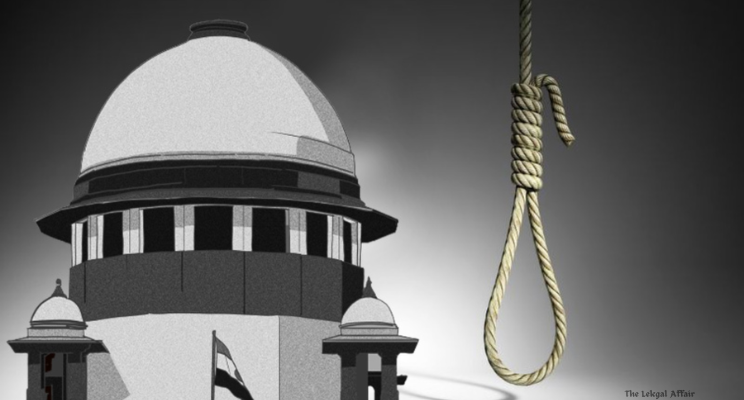
In a significant ruling, the Supreme Court of India overturned the death sentence of an individual accused of murdering his wife and 12-year-old daughter, underscoring the importance of a fair trial and the right to effective legal representation under Article 21 of the Indian Constitution. The appellant, Sovaran Singh Prajapati, had been convicted and sentenced to death by the Allahabad High Court, but the Supreme Court found serious lapses in the trial process that compromised the fairness of the proceedings. The Court’s ruling brought to the forefront the constitutional guarantee of a fair trial, focusing on the accused’s right to competent legal assistance and the procedural safeguards that must be upheld, particularly in capital punishment cases. The Supreme Court set aside both the conviction and the death sentence, remanding the case for a fresh trial starting from the stage of framing charges, thus providing the appellant an opportunity to challenge the evidence against him under proper legal representation.
Arguments of Both Sides:
The appellant, represented by senior counsel Rajiv Shakdhar and others, argued that the trial process was riddled with serious flaws that denied him a fair trial, in violation of his constitutional rights. One of the key points raised by the defense was the absence of proper legal representation during crucial stages of the trial. The defense counsel was frequently changed, and in some instances, the appointed lawyer was absent during the examination of key prosecution witnesses. This led to an inability to cross-examine witnesses effectively, which is a vital part of ensuring the fairness of the trial. Moreover, the defense counsel was provided insufficient time to prepare for the case, especially after being appointed at the last minute, raising doubts about the quality and effectiveness of the defense presented.
The defense also highlighted that the trial court’s failure to properly record the defense statements further compromised the accused’s right to a fair trial. The questions posed to the appellant were general, and the defense was not given an adequate opportunity to address all the circumstances that could have been relevant to the case. This, the defense contended, led to potential prejudice and a trial that was not based on a thorough and meaningful presentation of the defense case.
On the other hand, the prosecution, represented by counsel Divyesh Pratap Singh and others, maintained that the evidence against the appellant was substantial, pointing to the conviction and the imposition of the death penalty by the trial court and the Allahabad High Court. The prosecution argued that the appellant’s guilt was established beyond a reasonable doubt, and the death sentence was warranted for such a heinous crime. The prosecution contended that the trial had been conducted fairly and in accordance with the law, and thus the conviction and sentence should be upheld.
Judgment:
In its judgment, the Supreme Court took into account the serious lapses in the trial process that led to a violation of the appellant’s right to a fair trial. The Court observed that the frequent changes in counsel, the lack of preparation time for the defense, and the absence of the defense lawyer during critical stages of the trial amounted to a denial of effective legal representation. The Court emphasized that merely appointing a legal aid counsel was not enough; the representation must be “effective and meaningful,” as reiterated in earlier precedents such as Anokhilal v. State of M.P. (2019). The Court noted that the appellant’s defense was compromised due to these issues, which prevented a proper challenge to the prosecution’s case and the opportunity to cross-examine key witnesses.
The Court further observed that the failure to ensure the continuity of counsel during the trial, particularly when the case was reserved for judgment on the same day a new lawyer was appointed, created serious doubts about whether the appellant received adequate legal assistance. The Court questioned whether the new counsel had sufficient time to familiarize themselves with the case, assess the evidence, and effectively argue the appellant’s defense. These procedural irregularities, the Court held, were sufficient to call into question the fairness of the trial and the credibility of the conviction and sentence.
The Court also referred to international law principles, including the Universal Declaration of Human Rights (UDHR) and the International Covenant on Civil and Political Rights (ICCPR), which guarantee the right to a fair trial and adequate representation for accused individuals, irrespective of the severity of the crime. In this context, the Court pointed out that even in cases of the gravest offenses, such as murder, the accused must be afforded basic legal protections, ensuring a fair trial process free from procedural flaws.
Citing the Rome Statute, which emphasizes the right to a fair trial for individuals accused of serious crimes, the Court highlighted that the right to a fair trial is a fundamental principle that must be upheld in all criminal cases, especially when the death penalty is involved. The Court emphasized that capital punishment cases require the highest standards of procedural fairness to ensure that the process is free from errors that could irreversibly affect the outcome.
In light of these findings, the Supreme Court set aside the conviction and death sentence imposed by the trial court and upheld by the Allahabad High Court. The Court remanded the case to the trial court for a fresh trial, starting from the stage of framing charges. This decision effectively annulled the death sentence, providing the appellant with another opportunity to mount a defense in accordance with the principles of fair trial and legal representation. The judgment reaffirmed the importance of procedural fairness and competent legal assistance, particularly in capital cases, and reinforced the need for the justice system to ensure that no individual is subjected to an unfair trial, regardless of the seriousness of the charges against them.