


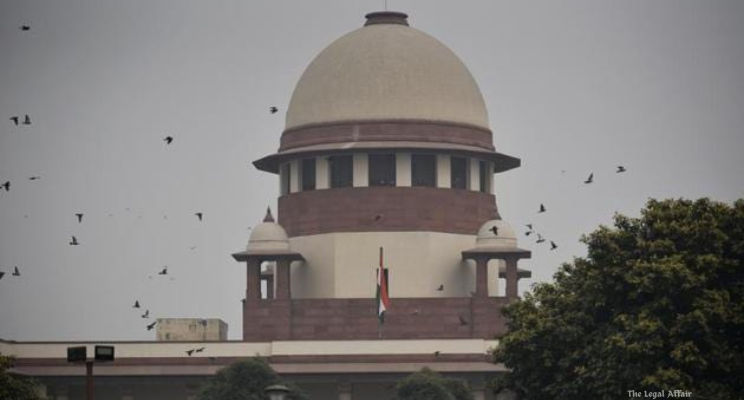
Introduction:
In a significant ruling reinforcing the sanctity of financial recovery mechanisms and the rule of law, the Supreme Court of India directed the permanent closure of a private educational institution in Kolhapur, Maharashtra, after its management repeatedly obstructed lawful recovery proceedings initiated under the Securitisation and Reconstruction of Financial Assets and Enforcement of Security Interest Act, 2002 (SARFAESI Act). The case, Chaitanya Bahuuddeshiya Shikshan Prasarak Mandal & Ors. v. Auxilo Finserve Pvt. Ltd. & Ors., arose out of a prolonged dispute between the school management and a secured creditor over unpaid loan dues exceeding ₹5 crore. Despite multiple opportunities and assurances given before judicial forums, the borrowers failed to repay the outstanding amount and instead resorted to delaying tactics and physical obstruction of recovery efforts. A bench comprising Justice Dipankar Datta and Justice Satish Chandra Sharma came down heavily on the conduct of the appellants, observing that their actions demonstrated a complete disregard for judicial authority and legal obligations. Noting that the final examinations of the school had concluded and that sufficient time had already been granted, the Court ordered the closure of the institution with effect from May 1, 2026, while also permitting the secured creditor to seek police assistance to take peaceful possession of the property.
Arguments by the Petitioners (School Management):
The petitioners, representing the school management, advanced a multi-pronged argument primarily centered around equity, public interest, and the welfare of students. They contended that the institution was not merely a commercial entity but a functioning educational establishment catering to a large number of students whose academic future would be adversely impacted by abrupt closure. Emphasizing the social role of educational institutions, the petitioners urged the Court to adopt a lenient approach and allow additional time for repayment of dues.
They further argued that they had made bona fide attempts to arrange funds and clear the outstanding loan amount, but were unable to do so due to unforeseen financial constraints. According to them, the delays were neither intentional nor malicious but were a consequence of genuine financial distress. They also highlighted that at various stages of the proceedings, they had approached courts with proposals for settlement, indicating their willingness to resolve the dispute amicably.
Another key contention raised by the petitioners was that the secured creditor had not exhausted all possible alternatives before resorting to coercive measures such as taking possession of the school property. They argued that the drastic step of shutting down the institution would not only harm the management but also disproportionately affect students, teachers, and staff who were dependent on the institution.
Additionally, the petitioners sought to justify their conduct during the recovery proceedings by claiming that any resistance offered was not unlawful but was driven by a desire to protect the institution from abrupt disruption. They denied allegations of wilful disobedience of court orders and maintained that their actions were guided by the larger interest of preserving the educational environment.
The petitioners also invoked the Court’s equitable jurisdiction, urging it to balance the rights of the secured creditor with the broader public interest. They pleaded for a final opportunity to settle the dues and requested that the recovery proceedings be stayed to enable them to arrange the necessary funds.
Arguments by the Respondents (Secured Creditor):
The respondents, representing the secured creditor, strongly refuted the claims made by the petitioners and painted a picture of consistent default, deliberate delay, and blatant disregard for legal processes. They argued that the loan in question had been outstanding for a considerable period and that the borrowers had repeatedly failed to honour their repayment obligations despite multiple assurances.
The respondents emphasized that a demand notice had been duly issued under the SARFAESI Act, calling upon the borrowers to repay the outstanding dues exceeding ₹5 crore. Upon failure to comply, the creditor had initiated recovery proceedings in accordance with law, including steps to take possession of the secured asset, which comprised the school premises.
It was contended that the petitioners had misused the judicial process by repeatedly approaching courts to seek extensions of time, making promises of repayment that were never fulfilled. This pattern of conduct, according to the respondents, clearly demonstrated that the petitioners had no genuine intention to repay the loan and were merely attempting to delay the inevitable.
A crucial aspect of the respondents’ argument was the allegation of physical obstruction and resistance during the recovery process. They submitted that when attempts were made to take possession of the property, the petitioners and their associates created disturbances and blocked lawful proceedings, thereby preventing the secured creditor from exercising its statutory rights.
The respondents further argued that such conduct not only violated the provisions of the SARFAESI Act but also undermined the authority of the courts and the rule of law. They stressed that allowing such behavior to go unchecked would set a dangerous precedent, encouraging borrowers to defy legal processes with impunity.
Addressing the petitioners’ plea regarding the welfare of students, the respondents submitted that adequate notice had already been given and that the academic schedule had been taken into consideration. They argued that the management could not use students as a shield to avoid their financial liabilities and that the interests of justice required strict enforcement of the law.
The respondents ultimately urged the Court to dismiss the appeal and grant them full liberty to take possession of the secured asset, including seeking police assistance if necessary, to ensure that the recovery process was carried out without further obstruction.
Court’s Judgment:
The Supreme Court delivered a firm and unequivocal judgment, dismissing the appeal and upholding the rights of the secured creditor under the SARFAESI Act. The Court observed that the conduct of the petitioners reflected an “extreme lack of solicitude for the rule of law” and demonstrated a pattern of wilful default and non-compliance with judicial orders.
At the outset, the Court noted that the petitioners had been given multiple opportunities over an extended period to repay the outstanding dues. Despite making repeated assurances before various judicial forums, they had failed to honour any of their commitments. This, according to the Court, clearly indicated that the petitioners were not acting in good faith and were merely attempting to delay the recovery process.
The Court took serious note of the allegations regarding physical obstruction and resistance during the recovery proceedings. It observed that the right of a secured creditor to take possession of a secured asset under the SARFAESI Act is a statutory right that cannot be defeated by force or unlawful means. The Court categorically stated that it would not tolerate any attempt to block lawful recovery proceedings through intimidation or obstruction.
In a significant direction, the Court granted liberty to the secured creditor to approach the Superintendent of Police, Kolhapur, and the jurisdictional Station House Officer for assistance in taking peaceful and vacant possession of the school premises. The Court emphasized that law enforcement authorities are duty-bound to ensure that judicial orders are implemented effectively and without obstruction.
Addressing the petitioners’ plea regarding the impact on students, the Court observed that sufficient indulgence had already been shown and that the academic interests of students had been duly considered. It noted that the final examinations had been completed and that parents had been informed in advance, thereby minimizing disruption.
The Court further held that the petitioners could not be permitted to take advantage of their own wrongdoing by invoking considerations of public interest. It stressed that allowing such conduct would undermine the integrity of the legal system and erode public confidence in the enforcement of judicial decisions.
In a decisive move, the Court ordered the closure of the school with effect from the forenoon of May 1, 2026, “once and for all times to come.” This direction underscored the seriousness with which the Court viewed the petitioners’ conduct and its commitment to upholding the rule of law.
The Court also issued a stern warning to the petitioners, cautioning them against creating any further hindrance in the recovery proceedings. It made it clear that any such attempt would be at their own risk and peril, indicating that strict action would follow in case of non-compliance.
Ultimately, the appeal was dismissed, and the secured creditor was granted full liberty to proceed with the recovery process in accordance with law, including taking possession of the secured asset with police assistance if required.