


Introduction:
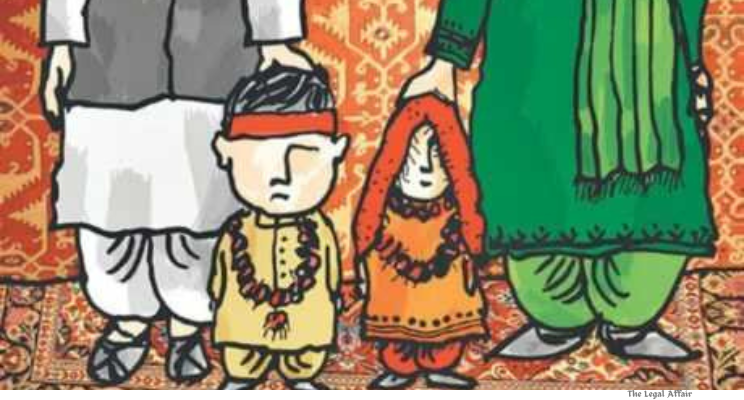
In a significant judgment, the Supreme Court of India, in the Society for Enlightenment and Voluntary Action & Anr. v. Union of India & Ors. (WP(C) No. 1234/2017), ruled that child marriages are a grave violation of children’s fundamental rights under Article 21 of the Constitution. The petition, filed by the NGO Society for Enlightenment and Voluntary Action, sought several directions to address the persistent issue of child marriages in India. The judgment, delivered by Chief Justice D.Y. Chandrachud, extensively discussed the detrimental impact of child marriages on children’s rights to self-determination, autonomy, sexuality, health, and education, while also recognizing the adverse effects on both boys and girls forced into early marriages. The Court emphasized that child marriage violates the right to life with dignity, depriving children of their agency, bodily autonomy, and their fundamental right to enjoy a full and unhindered childhood.
Petitioner’s Argument:
The petitioners, represented by Advocate Mugdha, argued that despite legal measures such as the Prohibition of Child Marriage Act, of 2006, child marriage remains a widespread issue in India. They cited the National Family Health Survey (NFHS-5) (2019-2021), which reported that 23.3% of girls under the age of 18 and 17.7% of boys under the age of 21 were victims of child marriage. The petitioners pointed out that although the prevalence of child marriages has decreased since the enactment of the Prohibition of Child Marriage Act, the numbers remain unacceptably high.
The petitioners contended that child marriage not only violates the rights of children under Article 21 (right to life and personal liberty), but also infringes upon several other Constitutional rights. These include the right to bodily autonomy, the right to health, the right to education (Article 21-A), and the right to choose one’s partner and determine one’s sexual and reproductive life. They argued that children, especially girls, are disproportionately affected by child marriages, facing social isolation, mental health issues, and a lack of access to education and healthcare.
The petitioners also highlighted that child marriage objectifies children by imposing responsibilities on them far beyond their physical and emotional capabilities. For girls, marriage at an early age forces them into the role of wife and mother, stripping them of their right to make choices about their reproductive health and sexuality. The petitioners urged the Court to recognize child marriage as a violation of the rights guaranteed under the United Nations Convention on the Rights of the Child, to which India is a signatory.
Further, they called for the enforcement of stricter legal frameworks, enhanced educational programs, and greater accountability for law enforcement officials to curb the practice of child marriage in India. The petitioners sought a series of court-mandated guidelines to address the loopholes in the current legal system and prevent child marriages from continuing unchecked.
Respondent’s Argument (Union of India):
The Union of India, represented by Additional Solicitor General Aishwarya Bhati, argued that the government has already taken substantial steps to prevent child marriages through legislation and awareness campaigns. The Prohibition of Child Marriage Act, of 2006, is in place to penalize those who facilitate or partake in child marriages, and it has helped reduce the prevalence of the practice significantly since its enactment.
The respondent noted that the government had launched several initiatives aimed at educating communities about the harmful consequences of child marriages, particularly in rural and economically disadvantaged areas where the practice is most prevalent. These initiatives include public awareness campaigns, the promotion of girls’ education, and schemes such as Beti Bachao Beti Padhao, which aim to empower girls and improve gender equality.
The Union argued that child marriage is deeply rooted in social and cultural traditions, and while legal frameworks and policy interventions are crucial, change cannot occur overnight. The government emphasized the need for community-based efforts and collaboration between civil society organizations, law enforcement, and local authorities to combat the issue.
Additionally, the respondent pointed out that significant progress has already been made in reducing child marriage rates. According to the National Family Health Survey-5 (2019-2021), child marriages among girls have reduced from 47% in 2006 to 23.3% in 2021. The government argued that while the problem persists, the efforts undertaken so far have shown a positive trajectory, and the legislative and policy measures in place are adequate to address the issue.
The Union urged the Court to consider the ongoing governmental efforts to curb child marriages and to refrain from imposing additional judicial mandates that may overlap with or undermine the existing framework.
Court’s Judgment:
The Supreme Court, led by Chief Justice D.Y. Chandrachud, acknowledged the grave consequences of child marriages on the lives of children, particularly girls. In a detailed judgment, the Court recognized that child marriage violates a range of Constitutional rights, including the rights to self-determination, choice, autonomy, sexuality, health, and education. The Court held that child marriages, which are still prevalent despite the Prohibition of Child Marriage Act, of 2006, infringe upon the right to life with dignity under Article 21.
The Court highlighted that child marriage deprives children of their agency and autonomy, and robs them of the opportunity to fully develop and enjoy their childhood. Girls married at an early age are often subjected to social isolation, cut off from their natal family and support systems, and forced into roles as wives and mothers before they are emotionally or physically prepared. For boys, early marriage imposes responsibilities that burden them with the role of a provider, placing undue pressure on them to fulfil economic obligations for their families.
Addressing the objectification of children through marriage, the Court observed that child marriage imposes mature burdens on children who are not yet equipped to understand or navigate the complexities of marriage. Girls are often forced to marry to protect their ‘chastity’ and ‘virginity,’ stripping them of their bodily autonomy and the freedom to make personal choices. Child marriages not only deny girls their right to education and health but also push them into a life of compulsory heterosexuality and gendered expectations.
The Court expressed particular concern over the impact of child marriage on the right to reproductive choice. Upon marriage, girls are often pressured to prove their fertility by bearing children, and decisions about reproduction are taken out of their hands and placed in the control of the family or in-laws. This infringement of reproductive rights leads to serious physical and mental health consequences for minor girls, who may experience post-traumatic stress, depression, and irreversible damage from being forced into conjugal relations and motherhood at a young age.
The judgment also touched upon the right to education, noting that child marriage effectively ends a girl’s educational journey. Once married, girls are typically expected to prioritize their marital and familial responsibilities over their education. The Court reiterated that the right to education, enshrined under Article 21-A, is fundamental to children’s overall development and the realization of their potential.
The Court, while dismissing the arguments that existing frameworks were sufficient, issued several guidelines aimed at preventing child marriages and ensuring that the rights of children are upheld. The judgment called for stronger enforcement of the Prohibition of Child Marriage Act enhanced educational programs, and comprehensive awareness campaigns targeted at communities where child marriage remains prevalent.
In conclusion, the Court ruled that child marriage is a violation of Constitutional rights and must be addressed through stronger legal and social interventions. The judgment serves as a reminder that children must be allowed to fully enjoy their childhood, free from the burdens and constraints imposed by early marriage.
Conclusion:
The Supreme Court’s judgment on child marriage is a landmark decision that recognizes the violation of children’s Constitutional rights and emphasizes the need for stronger enforcement of laws to protect them. The ruling acknowledges the detrimental effects of child marriage on children’s autonomy, education, health, and overall well-being. The Court’s guidelines underscore the importance of ensuring that every child has the opportunity to experience a full and unburdened childhood, free from the oppressive institution of child marriage.