


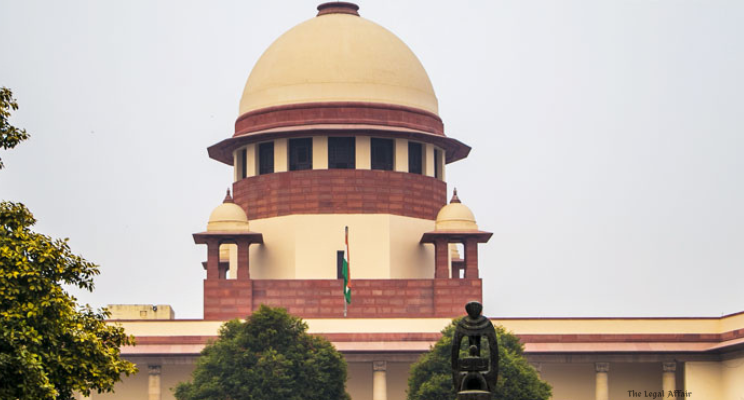
Introduction:
In a landmark judgment aimed at ensuring the safety and dignity of pedestrians across the nation, the Supreme Court of India on October 7, 2025, delivered a significant order in the long-standing writ petition S. Rajaseekaran v. Union of India and Others [W.P.(C) No. 295/2012]. The Bench comprising Justice J.B. Pardiwala and Justice K.V. Viswanathan issued a series of final directions to all States and Union Territories, mandating them to frame specific rules within six months under the Motor Vehicles Act, 1988, particularly under Sections 138(1A) and 210D. These directions aim to regulate the activities and access of pedestrians and non-mechanically propelled vehicles to public spaces, national highways, and urban roads while setting uniform standards for the design, construction, and maintenance of roads. The Court’s directions came after an extensive examination of statutory provisions, guidelines by the Indian Roads Congress (IRC), and the constitutional recognition of the right to safe passage as part of the right to life under Article 21. Senior Advocate Gaurav Agarwal acted as Amicus Curiae, assisting the Court in framing its guidelines, and the judgment is being hailed as a monumental step toward institutionalizing pedestrian safety and responsible driving behavior across India.
Arguments of the Petitioner:
The petitioner, Dr. S. Rajaseekaran, a noted road safety activist and orthopedic surgeon, had filed this public interest litigation in 2012 seeking judicial intervention to reduce road accidents and improve pedestrian safety mechanisms. He argued that despite India witnessing one of the highest numbers of road fatalities globally, little had been done to protect the most vulnerable road users—pedestrians, cyclists, and persons with disabilities. Through his counsel, he emphasized that the lack of proper footpaths, inadequate street lighting, unsafe road designs, and poor enforcement of helmet and traffic regulations had turned Indian roads into zones of peril rather than safe public utilities. He referred to the Olga Tellis v. Bombay Municipal Corporation judgment, which recognized the right to livelihood and safe movement under Article 21, asserting that the same constitutional protection extended to pedestrians’ right to safe mobility. The petitioner further submitted that the absence of rules under Section 138(1A) and Section 210D of the Motor Vehicles Act had created a regulatory vacuum, leading to unmonitored encroachments, unsafe crossings, and fatal road designs. He also urged the Court to take cognizance of the unauthorized use of red and blue beacons, blaring sirens, and hooters on private vehicles, which not only violated traffic norms but also endangered pedestrians by causing confusion and panic on roads. The petitioner insisted that comprehensive enforcement and uniformity of safety rules were essential to protect citizens and fulfill the State’s obligation under Articles 21 and 47 of the Constitution.
Arguments of the Respondents:
The Union of India and the respective State Governments, represented through their counsel, assured the Court of their commitment to road safety but maintained that several measures had already been undertaken. They cited the Central Government’s Motor Vehicles (Driving) Rules, 2020, framed under Section 210C, which provided guidelines for the construction, maintenance, and management of national highways. The respondents submitted that local authorities were already engaged in implementing the IRC’s guidelines of June 2022, which emphasize pedestrian crossings, traffic calming measures, and footpath maintenance. They contended that State governments had been instructed to incorporate these standards into their infrastructure projects. The respondents, however, acknowledged certain lapses in uniform enforcement and highlighted budgetary and administrative challenges in urban and rural areas. They argued that the Motor Vehicles Act’s structure provides States the discretion to frame rules under Section 138(1A) and Section 210D, implying that timelines may differ depending on local conditions. The Union Government also pointed out that penalties for helmet violations, wrong-lane driving, and unauthorized use of hooters were already prescribed under the Act, but enforcement depended on State-level authorities. The respondents assured the Court that a uniform action plan would be developed to ensure compliance once the Court issued its final directions.
Court’s Judgment:
Delivering its comprehensive order, the Supreme Court bench led by Justice J.B. Pardiwala and Justice K.V. Viswanathan outlined an extensive framework for pedestrian and road user safety. The Court directed all States and Union Territories to formulate and notify Rules under Section 138(1A) of the Motor Vehicles Act, 1988, within six months if not already framed. These Rules are to regulate the activities and access of non-mechanically propelled vehicles and pedestrians to public places and national highways. Similarly, it directed States and UTs to formulate Rules under Section 210D for ensuring design, construction, and maintenance standards for all roads other than national highways within the same timeframe. The Court emphasized that road design and infrastructure standards must not only meet the technical requirements set forth by the Indian Roads Congress but also conform to the constitutional guarantees under Article 21, ensuring safe and dignified movement for all citizens. Justice Pardiwala noted that the right to use footpaths and pedestrian crossings is an inseparable facet of the right to life, reaffirming the Court’s May 2025 order where it had directed that all footpaths be made accessible to persons with disabilities. The judgment also highlighted the importance of implementing the IRC’s “Guidelines for Pedestrian Facilities, Second Revision, June 2022,” which provide detailed specifications for pavement width, tactile tiles for the visually impaired, pedestrian crossings, and lighting standards.
In addition to framing Rules, the Court issued specific directives addressing behavioral and enforcement-related issues. It reaffirmed the mandatory use of helmets for two-wheeler riders and their pillion passengers, warning that failure to comply would invite strict penal consequences. The Court condemned wrong-lane driving, unsafe overtaking, and the use of high-beam white LED lights that blind oncoming drivers, calling these acts “a reckless disregard for human life.” Furthermore, it ordered strict prohibition and penalization of the unauthorized use of red, blue, or other colored beacons, as well as hooters and sirens on non-emergency vehicles. The Court observed that such misuse creates a false sense of privilege on the roads, endangering pedestrians and regular commuters. Addressing a specific issue raised about chaotic traffic conditions near the Delhi High Court complex, the bench directed local authorities to prioritize decongestion, proper signage, and pedestrian management in that area as a pilot example for other jurisdictions.
Justice Viswanathan emphasized that the States must ensure coordination between Public Works Departments, urban development bodies, and traffic police to maintain uniform implementation. The Court also noted the significance of Section 198A, which penalizes failure to comply with standards for road design, construction, and maintenance, observing that accountability of contractors and engineers must be ensured. Justice Pardiwala remarked that judicial intervention could only go so far—“everything now depends on implementation.” He cautioned States against bureaucratic delay and reminded them that any further negligence could attract contempt proceedings.
The judgment underscored that road safety is not merely a matter of traffic discipline but an expression of constitutional morality—where the State must protect the lives of citizens, particularly the vulnerable. Drawing from precedents like Olga Tellis v. Bombay Municipal Corporation and M.C. Mehta v. Union of India, the bench reiterated that public spaces, including roads and footpaths, belong equally to pedestrians and drivers, and the State’s obligation is to ensure coexistence through planning and enforcement. The Court’s final directions signal a paradigm shift toward a rights-based approach to road use, emphasizing safety, inclusivity, and accountability at every level of governance. With this verdict, the Supreme Court has effectively mandated a nationwide framework for pedestrian protection and sustainable mobility, transforming the long-standing litigation into a foundation for modern traffic governance.