


INTRODUCTION:
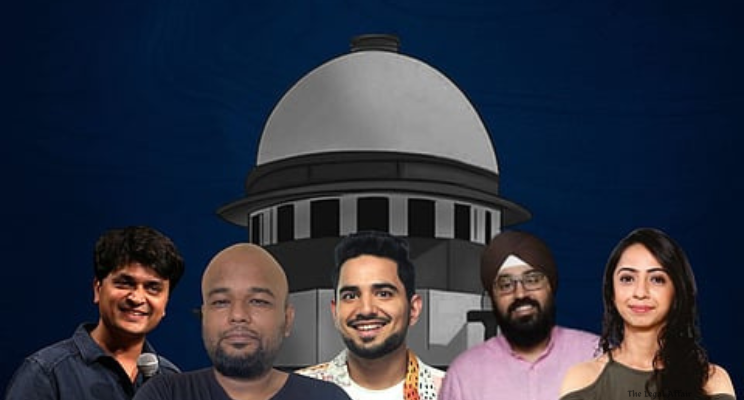
In the significant writ petition titled M/S. Cure SMA Foundation of India vs. Union of India and Others, W.P.(C) No. 460/2025, the Supreme Court of India addressed an unprecedented question at the intersection of humour, social responsibility, and constitutional dignity. The petitioner, Cure SMA Foundation of India, approached the Apex Court alleging that certain stand-up comedians—Samay Raina, Vipul Goyal, Balraj Paramjeet Singh Ghai, Sonali Thakkar and Nishant Jagadish Tanwar—had made insensitive, humiliating, and derogatory jokes targeting persons suffering from disabilities, particularly children affected by Spinal Muscular Atrophy (SMA), a rare genetic disorder demanding immediate and expensive treatment. The petitioner asserted that such jokes not only tarnished the dignity of vulnerable individuals but also directly impeded the critical fundraising efforts required for life-saving treatments. The matter came before a bench comprising the Chief Justice of India, Surya Kant, and Justice Joymalya Bagchi, who treated the issue as extending beyond mere comedic expression and into the protected sphere of constitutional rights, human dignity, and the broader social fabric surrounding disabled persons. The case required the Court to consider whether artistic liberties, comedic satire, and freedom of speech under Article 19(1)(a) permit humour at the cost of degrading those already placed at the margins of society.
ARGUMENTS OF THE PETITIONER:
The petitioner, Cure SMA Foundation of India, represented by Senior Advocate Aparajita Singh, submitted that the comedians’ performances had crossed constitutional boundaries and were no longer a matter of artistic expression but an attack upon the dignity of disabled individuals protected under Articles 14, 19, and 21. Counsel emphasised that children suffering from SMA often survive and progress only through collective goodwill and crowdfunding initiatives. She produced before the Court a compilation of inspiring success stories reflecting how, despite immense physical limitations, several SMA-affected individuals had achieved remarkable milestones: one such person was working at Microsoft, another pursuing higher studies at Michigan State University, one had become a classical singer, one an Assamese writer and publisher, and yet another was enrolled in a PhD programme in Bioinformatics. These stories were not tales of mere endurance but examples of potential, proving how disability does not negate talent and worth. Counsel argued that when comedians mock these children by name or by insinuation, the public perception shifts from empathy to ridicule, directly curtailing the willingness of citizens to contribute funds essential for their treatment, thus inflicting life-altering harm. She further asserted that such jokes created a hostile social environment, normalised stereotyping, and breached the dignity guaranteed by fundamental rights. Counsel rejected Samay Raina’s offer to compensate the Foundation with Rs. 2.5 lakhs, arguing that the issue was not monetary but moral, involving the intrinsic respect and social perception of the disabled. She pleaded for clear judicial guidelines preventing comedians and public influencers from weaponising humour against disability, and urged the Court to direct the Government to establish a dedicated CSR-funded corpus for treating those with rare diseases. She submitted that without stringent regulatory intervention, humour becomes a legitimised tool of oppression.
ARGUMENTS OF THE RESPONDENTS (COMEDIANS):
The comedians, through their counsel, did not deny making the statements in question but contended that stand-up comedy, like satire, must enjoy wide freedom under Article 19(1)(a). They insisted that their content was never intended to demean or harm but was merely comedic performance taking place in a culture where exaggeration and dark humour are common artistic devices. They argued that the Constitution does not mandate conformity to subjective standards of offence and that audiences voluntarily choose whether or not to consume comedic material. They claimed that imposing judicial restraints on humour would create a chilling effect, stifle creativity, and set a dangerous precedent where emotional sensitivity replaces legal thresholds. The counsel highlighted that the comedians were not habitual offenders, had already issued public apologies, and expressed remorse before the Court. They further emphasised that hosting two shows a month was practically difficult because live performances were organised by sponsors, not under their personal control, and their platforms did not always run monthly events. However, they expressed willingness to feature persons with disabilities, raise awareness on SMA, and utilise social media for generating funds. They requested the Court to reconsider or moderate its direction to avoid turning voluntary remorse into a judicial compulsion.
COURT’S JUDGMENT AND REASONING:
The Supreme Court rejected the respondents’ attempt to dilute the responsibility placed upon them, holding that humour can never be a vehicle for humiliation. The bench observed that constitutional freedoms are embedded within constitutional duties, and speech loses its protective character the moment it harms the dignity of vulnerable groups. The Court acknowledged that comedy is a valid artistic form, yet declared that no art form is elevated above human dignity. CJI Surya Kant, delivering sharp observations, remarked that mocking disabled persons may seem inconsequential to performers, but for families struggling to raise lakhs of rupees for treatment, such jokes can be devastating. He further remarked that comedians often wield widespread influence without accountability, turning humour into a social weapon. In a significant socio-legal intervention, the Court ordered the comedians to host at least two programs every month on their platforms—including YouTube and other digital spaces—showcasing success stories of specially-abled persons and using those events as fundraising tools to build a corpus for the treatment of SMA and similar rare diseases. The Court dismissed the respondents’ argument regarding logistical constraints, stating firmly that social responsibility cannot be avoided on grounds of convenience. “How difficult is it to host on their YouTube?” the Court asked rhetorically, asserting that the digital era provides limitless avenues for outreach. The Court clarified that this direction was not punitive but reparative: a step toward restoring dignity damaged by careless humour. The CJI suggested the need for a legislation akin to the SC/ST Act, criminalising humiliation of persons with disabilities, thereby signalling the urgency of statutory protection. The Solicitor General concurred that humour cannot trample upon dignity. The Court reiterated that remorse without corrective action is meaningless, and ordered compliance before the next hearing. The tone of the judgment reflected constitutional empathy, affirming that a rights-based society must evolve from mere tolerance to active respect. The decision thus stands as a landmark pronouncement where the judiciary stepped beyond traditional constitutional adjudication and entered the realm of moral responsibility, transforming freedom of speech into a tool for social redemption rather than ridicule.