


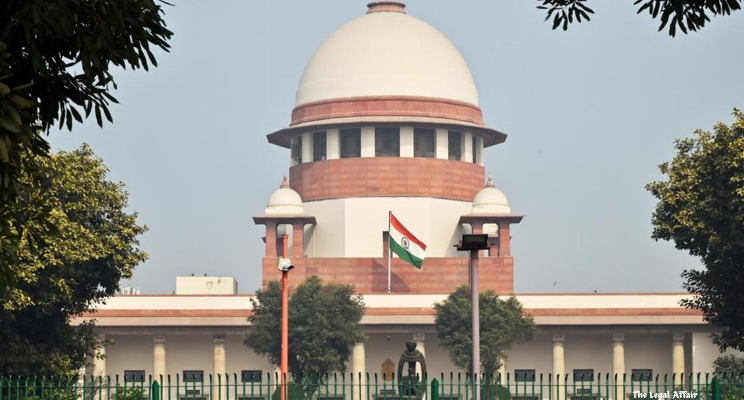
Introduction:
In RANIMOL & ORS. v. State of Kerala & Anr., 2025 LiveLaw (SC) 1148, the Supreme Court of India, comprising Justices M.M. Sundresh and Satish Chandra Sharma, delivered a significant ruling clarifying the legal principle concerning multiple complaints arising out of the same alleged incident, reiterating that once a closure report has been filed in the original proceedings and the complainant has not availed the statutory remedy of filing a protest petition before the Magistrate, the subsequent filing of another complaint under Section 200 of the Code of Criminal Procedure cannot be treated as maintainable merely because a new offence or section has been added, especially when the complainant and the occurrence are the same. The case originated from Kerala where the appellants had initially been named in an FIR relating to an altercation leading to allegations that could constitute offences under the Indian Penal Code; however, after investigation, the police filed a closure report (also referred to as a negative report) exonerating the appellants and choosing to proceed against only the remaining accused. Crucially, the de facto complainant neither challenged the closure report nor invoked remedies available under law at that stage. After a considerable lapse of more than two and a half years, the same complainant filed a fresh private complaint under Section 200 Cr.P.C., now adding Section 308 IPC—attempt to commit culpable homicide—and sought to reopen proceedings against the appellants, resulting in issuance of process by the Magistrate, which was affirmed by the Kerala High Court under Section 482 Cr.P.C. The appellants approached the Supreme Court, asserting that the subsequent complaint was nothing but an impermissible improvement upon earlier allegations, constituting gross abuse of process, contrary to established jurisprudence on the concept of sameness articulated in decisions including T.T. Antony v. State of Kerala (2001), Surender Kaushik v. State of U.P. (2013), and other precedents prohibiting the lodging of multiple complaints/FIRs relating to the same incident by the same complainant. The Supreme Court’s judgment thus assumes significance for criminal procedure jurisprudence as it prevents complainants from circumventing statutory safeguards by filing repeated complaints after investigations have concluded, thereby ensuring procedural sanctity, finality of proceedings, and the protection of citizens from vexatious litigation.
Arguments:
The appellants, represented by counsel Mr. M. Gireesh Kumar and others, forcefully argued that the High Court erred in refusing to quash the subsequent private complaint filed by the de facto complainant under Section 200 Cr.P.C., contending that the essence of criminal procedure does not allow a complainant to revive or reinvestigate allegations merely by adding another offence in a successive complaint after having abandoned the remedies available to them under law at the earlier stage. They submitted that once the closure report was filed and the Magistrate accepted it without protest, and the complainant deliberately chose not to file objections or a protest petition, the criminal law attained finality concerning the appellants. The filing of a fresh complaint after a substantial period, they argued, was a blatant abuse of the legal process, contravening the well-established principle that there cannot be multiple investigations into the same set of facts based on the same occurrence by the same informant. The appellants relied extensively on authoritative precedents such as Surender Kaushik & Ors. v. State of U.P. (2013) 5 SCC 148, T.T. Antony v. State of Kerala (2001) 6 SCC 181, Babubhai v. State of Gujarat (2010), and other decisions which categorically held that lodging multiple complaints or FIRs in respect of the very same incident is impermissible, particularly when the object of the second complaint is not to present a distinct version of the occurrence but to improve the earlier narrative by including additional offences or sharpening allegations. They argued that the complainant’s attempt to introduce Section 308 IPC after more than two years constituted nothing more than a calculated effort to re-litigate matters already investigated, thereby harassing the appellants, defeating the purpose of procedural safeguards, and violating the doctrine that the criminal process cannot be used as a tool for oppression. They further contended that the complainant’s reliance on Surender Kaushik was misplaced because that judgment carved out only a narrow exception permitting a second FIR when a different version of the incident emerges from a different complainant, whereas in the present case both the complainant and the allegations were identical except for the addition of Section 308 IPC, which cannot justify a fresh prosecution.
Conversely, the respondents—including the State of Kerala and the de facto complainant, represented by Dr. K.P. Kylasanatha Pillay, Senior Advocate, and others—argued that the second complaint deserved to be entertained because it contained an additional, more serious offence that the investigating authorities allegedly failed to examine earlier. The complainant maintained that the closure report filed by the police was perfunctory, incomplete, and contrary to medical evidence which could reasonably support a charge under Section 308 IPC, and therefore, the subsequent complaint was a legitimate invocation of prosecutorial rights under Section 200 Cr.P.C., allowing a private citizen to approach the Magistrate directly. The respondents argued that the High Court correctly exercised its discretion under Section 482 Cr.P.C., declining to quash the complaint and thereby preserving the complainant’s right to seek remedy where investigative lapses had occurred. They claimed that criminal law does not prohibit the invocation of a more appropriate section of the IPC at a later date when previously overlooked, asserting that the addition of Section 308 IPC materially altered the gravity and nature of the allegations, creating sufficient cause for the Magistrate to issue process. They attempted to distinguish T.T. Antony and Surender Kaushik, asserting that the precedents do not expressly bar subsequent complaints when additional offences are introduced, and that procedural justice demands that serious crimes should not go unpunished merely because earlier procedural steps were not undertaken. The respondents emphasized the principle that justice should not become a casualty of technicalities, advocating that the complainant had the right to pursue remedies even if delayed, particularly where the prosecution initially failed to bring the proper offence on record.
Judgment:
The Supreme Court categorically rejected the respondents’ arguments, holding that the second complaint constituted a gross and impermissible abuse of the criminal process, and setting aside the High Court’s refusal to quash the complaint. The Bench emphasized that the filing of a subsequent complaint after the original closure report, without having filed any protest petition earlier, amounted to an attempt to reopen an investigation concluded under due process, solely by adding another section. The Court relied heavily on the doctrine of sameness, reaffirming that criminal law does not permit multiple complaints concerning the same incident by the same complainant seeking to improve earlier allegations. The Court quoted its earlier jurisprudence, particularly Surender Kaushik, clarifying that the exception allowing multiple FIRs applies only when there are genuinely distinct rival versions, typically from different complainants, and not when the same informant merely supplements allegations years later. The Court stressed that permitting such repetitive litigation would undermine the purpose of closure reports, render criminal investigations endless, and vest complainants with unchecked power to pursue accused persons indefinitely, contrary to the rule of finality in criminal jurisprudence. The Court held that the High Court committed a jurisdictional error by refusing to quash the complaint despite acknowledging that the second complaint stemmed from the same transaction. Observing that a subsequent complaint cannot be used to reinsert those dropped from the original charge sheet, the Court described the filing of such a complaint as an abuse of process, intended not to correct injustice but to harass the accused. Consequently, the Supreme Court allowed the appeal, quashed the second complaint, and reaffirmed that once an informant chooses not to challenge the closure report, they cannot later seek to reopen the proceedings through a new complaint introducing additional offences.