


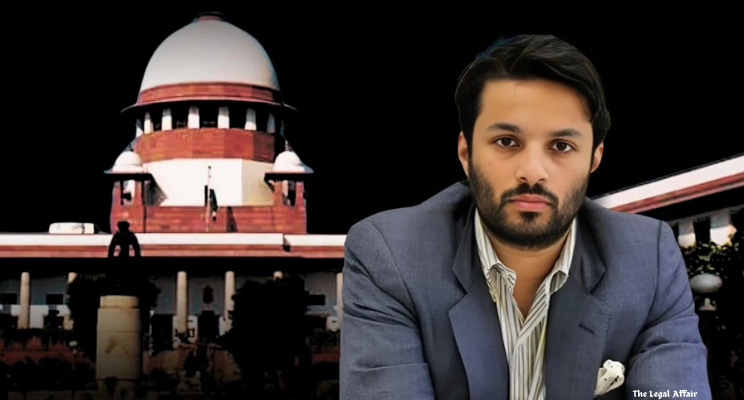
Introduction:
In the case of Mohammad Amir Ahmad @ Ali Khan Mahmudabad versus State of Haryana [W.P.(Crl.) No. 219/2025], the Supreme Court on May 21, 2025, granted interim bail to Ashoka University Professor Ali Khan Mahmudabad, who had been arrested by Haryana Police on May 18 in connection with social media posts related to ‘Operation Sindoor,’ a military response by India following a terrorist attack. A bench comprising Justices Surya Kant and NK Singh took a balanced view of the ongoing investigation and the personal liberty of the petitioner, declining to stay the investigation but ordering his release on bail with conditions. As part of the bail order, the Court directed the Director General of Police, Haryana, to constitute a Special Investigation Team (SIT) within 24 hours, comprising senior IPS officers not from Haryana or Delhi, including one woman officer and headed by an IG-rank officer, to examine the substance and implications of Mahmudabad’s posts. The Court imposed a restraint on the professor from writing or speaking publicly about the subject matter or the terrorist attack and India’s counteraction, while also ordering him to surrender his passport and fully cooperate with the ongoing investigation.
Arguments:
Senior Advocate Kapil Sibal, appearing for Mahmudabad, argued that the professor’s statements were a critique of war rooted in his anti-war ideology, ending with a patriotic expression, “Jai Hind,” and lacked criminal intent. He highlighted Mahmudabad’s scholarly credentials, his intent to provoke critical discussion, and also pointed to his wife’s impending childbirth.
In contrast, Additional Solicitor General SV Raju, representing the State of Haryana, maintained that the professor’s words were not innocent, that they were laced with double meanings and constituted a “dog whistle” meant to sow discord and undermine national unity, especially in a sensitive time following a terrorist attack. The Court, while acknowledging the fundamental right to freedom of speech, expressed concern over the language used in the posts and their timing.
Judgement:
Justice Surya Kant, in particular, criticised the professor for lacking sensitivity and for not using neutral and respectful language that could avoid communal discomfort, especially during a national crisis. He opined that while critique is a part of democracy, deliberate choices of words that can insult or humiliate cannot be protected under Article 19. The bench also dismissed the State’s plea for custodial interrogation, and refused to restrain future FIRs, albeit orally advising the State to refrain from filing them unnecessarily. The petitioner’s conduct, especially the style and content of his public posts, was described as “dog-whistling,” and the Court emphasised that while the substance of speech might not be criminal, its nuanced implications and the intent behind the timing can be problematic. Nonetheless, the interim relief granted to Mahmudabad was seen as essential to maintain the balance between liberty and law enforcement, emphasising that the bail was not an exoneration but a means to facilitate fair and thorough investigation.