


Introduction:
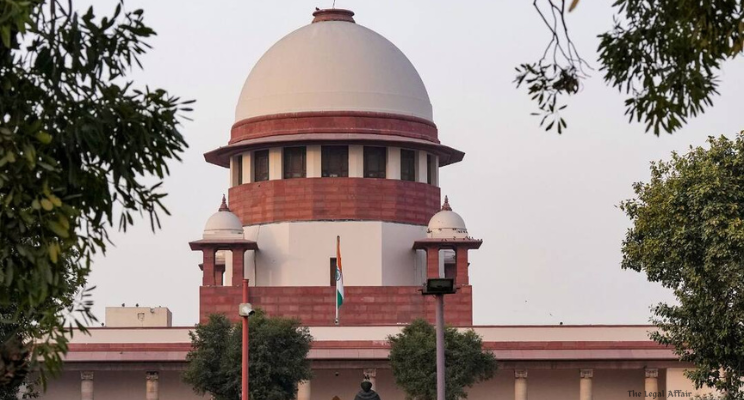
In a significant development highlighting the intersection of privacy rights, digital media responsibility, and criminal procedure, the Supreme Court of India recently directed the State of Rajasthan to take appropriate action under Section 72 of the Bharatiya Nyaya Sanhita, 2023 (BNS), which prohibits the disclosure of the identity of victims in certain offences, particularly of a sexual nature. The direction came in a case involving petitioner Arpit Narainwal, who is accused under Section 69 of the BNS for allegedly engaging in sexual intercourse with multiple women by making false promises of marriage. The matter came before a bench comprising Justice Aravind Kumar and Justice N.V. Anjaria, which was informed that the petitioner had allegedly publicized the names, faces, and court proceedings of the complainants on various YouTube channels. Expressing concern over the breach of victim privacy, the Court observed that the statutory protection under Section 72 serves as a “complete answer” to such misconduct and granted liberty to the State or the victims to take appropriate legal recourse. The case, stemming from multiple complaints by women who claimed deception in relationships under false promises of marriage, raises critical questions about consent, misuse of digital platforms, and the balance between free speech and the right to privacy.
Arguments on Behalf of the Petitioner:
Appearing for the petitioner, Senior Advocate Pinky Anand presented a robust defense, contending that the allegations against her client were malicious and fabricated. She submitted that the FIRs filed by the complainants were not genuine cases of sexual exploitation but rather deliberate attempts to “honey-trap” the petitioner. Anand emphasized that the relationships between the petitioner and the complainants were consensual and in the nature of live-in arrangements, and that the accusations had been unfairly reframed as cases of sexual exploitation under the guise of a false promise of marriage. According to her, such allegations blur the line between genuine sexual offences and personal relationships that have turned sour due to emotional or personal disagreements.
Pinky Anand further argued that in two of the FIRs lodged against the petitioner, the police, after due investigation, had submitted negative final reports under Section 173(2) of the Code of Criminal Procedure (CrPC). These reports, she highlighted, contained detailed reasoning and evidence that exposed the “patent falsity” of the prosecution’s case. The learned senior counsel submitted that despite these reports clearly exonerating the petitioner, the complainants continued to misuse the criminal process to harass him, thereby causing immense mental distress and reputational harm. She argued that the petitioner was a victim of vindictive litigation and digital defamation, and that the publication of case details online was part of a larger campaign to malign his image.
Anand also drew the Court’s attention to Section 69 of the Bharatiya Nyaya Sanhita, clarifying that the alleged acts, even if proven, do not amount to rape but constitute a distinct offence punishable with up to ten years of imprisonment. She submitted that the criminal law should not be misused to penalize failed relationships, and that the petitioner’s case falls within the category of consensual relationships that have deteriorated over time. In conclusion, she urged the Supreme Court to quash the proceedings under its inherent powers, arguing that the continuation of the trial would serve no purpose other than to perpetuate injustice.
Arguments on Behalf of the State and the Complainants:
On the other hand, the counsel representing the State of Rajasthan opposed the plea for quashing, stating that the allegations were serious and deserved to be tried in accordance with law. The State emphasized that the petitioner’s conduct—specifically, the public dissemination of victims’ identities, photographs, and case proceedings on YouTube—was a blatant violation of Section 72 of the Bharatiya Nyaya Sanhita, 2023, which expressly prohibits revealing the identities of victims involved in sexual offence cases. The provision prescribes punishment of up to two years’ imprisonment and a fine, reflecting the legislature’s intent to safeguard victims from secondary trauma and public shaming.
The State’s counsel further submitted that beyond the issue of victim privacy, the petitioner’s actions amounted to interference with the administration of justice, as such online publications could influence public perception and potentially intimidate the complainants. The counsel underscored that the judiciary has repeatedly held that protecting the dignity and anonymity of victims of sexual offences is an essential aspect of fair trial principles under Article 21 of the Constitution.
In addition, Respondent No. 2, one of the complainants, appeared before the Court in person and made an emotional submission, alleging that the petitioner had not only threatened her but also attempted to exert pressure on her through social media and other means. She claimed that she had filed a separate complaint before the jurisdictional police regarding these threats and further alleged that even the Station House Officer (SHO) of Pratap Nagar Police Station in Bhilwara, Surjeet Tholiya, had threatened her, suggesting that the petitioner was receiving undue support from local authorities. These allegations added another layer of seriousness to the matter, raising questions about witness protection and the integrity of the investigation.
Responding to these concerns, the State’s counsel assured the Supreme Court that immediate instructions would be issued to ensure the safety and protection of the complainant, reaffirming that no individual, regardless of influence or position, would be allowed to intimidate victims or obstruct justice. The State reiterated that the matter was still under judicial scrutiny and that all parties should refrain from making any public statements or online posts that could prejudice the proceedings.
Court’s Observations and Judgement:
After hearing both sides, the Supreme Court bench comprising Justice Aravind Kumar and Justice N.V. Anjaria expressed grave concern over the unauthorized disclosure of victims’ identities and details of ongoing proceedings on YouTube. The Court took serious note of the fact that videos containing the names, photographs, and personal details of the complainants had been uploaded, which not only violated statutory provisions but also undermined the privacy and dignity of the victims. The bench referred specifically to Section 72 of the Bharatiya Nyaya Sanhita, 2023, which mirrors the protective intent earlier found under Section 228A of the Indian Penal Code, 1860.
The Court observed that this provision serves as a “complete answer” to any instance where the identity of a victim of a sexual offence is revealed without authorization. It emphasized that such actions are not only punishable under criminal law but also amount to contempt of the court’s authority and the violation of the victim’s fundamental rights. The bench clarified that the legislature’s intent behind incorporating Section 72 was to ensure that victims of sexual offences are not subjected to secondary victimization through media trials, online harassment, or public defamation.
In this light, the Supreme Court directed that it would be open to the State of Rajasthan or the victims themselves to initiate appropriate proceedings against the individual or channel responsible for uploading such content. The Court made it clear that it expected the State to act promptly and in accordance with the law to ensure that such violations are not repeated in the future. It further reiterated that the dignity and privacy of individuals, especially women involved in sensitive cases, must be protected at all costs.
The bench also took cognizance of the allegations of threats made against one of the complainants and noted the assurance given by the State’s counsel regarding protection measures. The Court directed the authorities to ensure the safety of all complainants and warned that any failure to do so would attract serious consequences. It observed that the petitioner, being an accused, should refrain from any action that could be construed as influencing witnesses or obstructing the course of justice.
Referring to its earlier interim order dated June 26, wherein the Supreme Court had directed that no coercive steps be taken against the petitioner pending the proceedings, the bench maintained that protection would continue until further orders but emphasized that this protection should not be misused to intimidate victims or manipulate the legal process. The Court’s balanced approach aimed to preserve the petitioner’s right to legal remedy while simultaneously upholding the sanctity of victim protection laws.
The bench’s remarks carry wider implications for the digital age, where the boundaries between free speech and privacy are constantly tested. The judgment implicitly reaffirmed that digital platforms cannot become instruments for character assassination or trial by media. It recognized that while public access to court proceedings ensures transparency, it cannot extend to compromising the anonymity of victims, particularly in offences involving sexual exploitation. The Court underscored that legal reforms under the Bharatiya Nyaya Sanhita have been designed to strengthen the protective framework around victims, and therefore, any attempt to circumvent such provisions through online disclosures must be dealt with sternly.
In conclusion, the Supreme Court’s order reaffirms its long-standing jurisprudence that the identity of victims in sexual offences must be shielded from public view, and that any breach of this confidentiality will attract penal consequences. It directed the State of Rajasthan to take immediate and appropriate action under Section 72 BNS and to submit a compliance report if necessary. By doing so, the Court sent a strong message that the digital dissemination of sensitive case details will not be tolerated, and that the justice system must adapt to modern challenges while preserving constitutional morality and human dignity.