


Introduction:
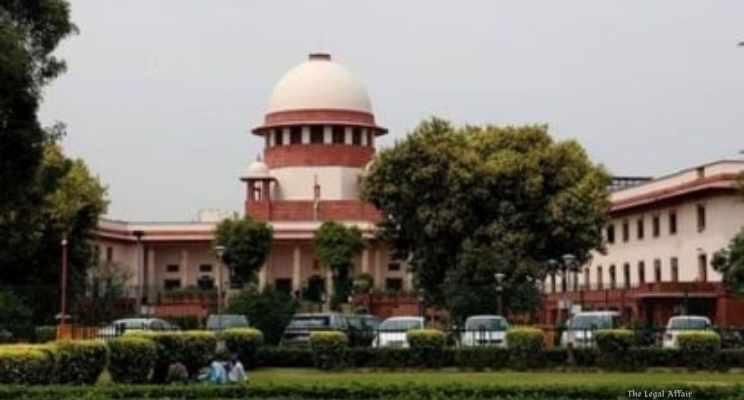
The Supreme Court of India is currently hearing a Presidential Reference concerning the interpretation of Article 200 of the Constitution, which deals with the Governor’s powers regarding assent to Bills passed by State Legislatures. The matter has triggered deep constitutional debate and judicial scrutiny, especially regarding whether a Governor can independently exercise the power of “withholding” assent without returning the Bill to the legislature. The Constitution Bench, comprising Chief Justice of India B.R. Gavai, Justice Surya Kant, Justice Vikram Nath, Justice P.S. Narasimha, and Justice A.S. Chandurkar, is examining the issue in light of divergent interpretations advanced by the Union of India and various States. Prominent legal luminaries, including Senior Advocate Harish Salve representing the State of Maharashtra, Solicitor General Tushar Mehta representing the Union, and Senior Advocates Neeraj Kishan Kaul and Maninder Singh representing Madhya Pradesh and Rajasthan respectively, have advanced complex arguments, making this one of the most significant constitutional hearings in recent times. The central controversy revolves around whether Article 200 vests Governors with a standalone, veto-like power to withhold assent, and if so, whether such a power could extend even to money bills, thereby upsetting the balance between the legislature and the executive within the federal framework.
Arguments of the Union and Supporting States:
The Union of India, represented by Solicitor General Tushar Mehta and supported by the submissions of senior counsel representing States like Madhya Pradesh and Rajasthan, took the position that Article 200 provides four distinct options to the Governor—granting assent, withholding assent, reserving the Bill for the President’s consideration, or returning the Bill to the legislature (except in the case of a money bill). According to the Union, the substantive provision of Article 200(1) expressly recognizes the Governor’s discretion to withhold assent, and this option is not dependent upon or linked to the proviso which contemplates the return of the Bill for reconsideration. The Union argued that if the Governor decides to withhold assent, the natural consequence is that the Bill lapses and does not become law. This, it submitted, was constitutionally permissible and consistent with the Governor’s role as a constitutional check in the law-making process. The Union also rejected the interpretation advanced in earlier judgments, including those relating to the Tamil Nadu Governor and the Punjab Governor, that withholding necessarily required returning the Bill to the Assembly.
Solicitor General Tushar Mehta further invoked Article 207 to argue that the fear of Governors withholding money bills was misplaced. Article 207 requires that a money bill can only be introduced with the recommendation of the Governor. Therefore, he reasoned, once a money bill is introduced in the legislature, it already has the Governor’s endorsement at the threshold, eliminating the possibility of its being arbitrarily withheld at the assent stage. He emphasized that constitutional design itself provides safeguards to prevent misuse of power in such sensitive financial matters.
Supporting this interpretation, Senior Advocate Neeraj Kishan Kaul and Maninder Singh underscored that the Constitution does not provide any express limitation on the Governor’s power to withhold assent, and judicially reading in restrictions or timelines would amount to rewriting the Constitution. They pointed out that Article 200 does not set any timeframe for gubernatorial action, and that the political process must be allowed to take its course without judicial interference. They highlighted the Constituent Assembly Debates, where Dr. B.R. Ambedkar had opposed imposing strict timelines on constitutional authorities like the President or Governors, indicating that flexibility was an intended feature of the constitutional scheme. According to them, the Governor, being appointed by the President and holding office during his pleasure, serves as a constitutional channel of communication between the Union and the States. Hence, his role in assenting to or withholding assent from Bills cannot be mechanically equated to that of a rubber stamp, but must be seen as part of a broader federal balance.
Arguments of the States Opposing the Union’s Stand:
On the other hand, Senior Advocate Harish Salve, appearing for the State of Maharashtra, advanced a nuanced but somewhat supportive view of the Union’s position, though with important qualifications. He argued that the plain text of Article 200 recognizes “withholding” as a distinct fourth option, separate from assent, return, and reservation. He cautioned against reading into the provision limitations that were not explicitly included by the framers. According to Salve, constitutional interpretation should adhere to the language of the provision rather than importing “preconceived notions” about what the power ought to be. He suggested that if the framers had intended to restrict the withholding power or exclude money bills from its purview, they would have expressly done so, especially given that they included specific safeguards under Article 207 for money bills.
At the same time, Salve candidly acknowledged the problematic implications of this interpretation. He noted that if withholding were treated as an independent and unqualified power, Governors could theoretically withhold even money bills, thereby paralyzing legislative functioning. He conceded that such a situation would indeed be “problematic” but maintained that constitutional interpretation cannot simply be guided by perceived undesirable consequences. In his view, if the Constitution has given such power, the solution lies in the political process rather than in judicially imposed restrictions. He also opposed the idea of the Court fixing timelines for gubernatorial action, arguing that political negotiations and executive-legislative interactions are integral to the process and cannot be constrained by judicially mandated deadlines.
Salve also stressed that the Court should not attempt to review the subjective reasons for which a Governor withholds assent. When asked directly by the Chief Justice whether the Court could question the Governor on why he withheld a Bill, Salve replied emphatically in the negative. He asserted that absent explicit constitutional standards, judicial review in such matters would be impossible, as there would be no “judicially manageable standards” to assess the Governor’s reasons. Salve’s submission therefore straddled both sides—acknowledging the dangers of unlimited withholding power but insisting that the Court must respect the textual choices made by the framers and leave the checks to the political sphere.
Concerns Expressed by the Supreme Court:
The Constitution Bench, however, expressed serious reservations about the interpretation advanced by the Union and partly supported by Salve. Justice P.S. Narasimha, in particular, articulated the core concern: if withholding is treated as an independent and standalone power, then even money bills could be withheld at the outset. He observed that the proviso to Article 200 permits the Governor to return a Bill for reconsideration, except in the case of a money bill. If withholding is independent, then this safeguard is bypassed, and the Governor can effectively veto a money bill—something that runs counter to the established understanding that Governors are bound to assent to money bills. Justice Narasimha described this as a “big problem,” noting that it would empower Governors to frustrate the functioning of State Legislatures and paralyze the financial operations of the State.
The Bench also noted the potential dangers of indefinite withholding. In earlier days of the hearing, the Court had remarked that if Governors could simply withhold assent without returning Bills, it would leave elected governments at the mercy of unelected constitutional heads, undermining the democratic process. The Chief Justice and other judges also questioned whether such a power, if it exists, could be subject to any judicial scrutiny or timelines, given the constitutional silence on these aspects. The Court was mindful of its earlier rulings in cases involving Tamil Nadu and Punjab, where it had held that withholding could not be an indefinite inaction but must result in either assent, return, or reservation. Reconciling these precedents with the arguments now advanced was one of the key challenges before the Bench.
Justice Narasimha’s pointed queries to Salve highlighted the tension between textual literalism and constitutional purposivism. He asked how one could reconcile the interpretation that allows the Governor to reject a money bill outright with the constitutional scheme that otherwise obligates assent to such bills. While Salve attempted to test the argument through hypotheticals, the Court remained unconvinced about the practical implications. The oral observations suggest that the Bench is wary of endorsing an interpretation that could vest Governors with a veto-like power over the legislative will, especially in financial matters, which are the very lifeblood of governance.
Court’s Judgement (So Far in Progress):
As of now, the Court has not yet rendered a final judgment, since the hearings are ongoing. However, the oral observations provide critical insight into the Court’s likely approach. The Bench appears inclined to resist the Union’s contention that withholding is an unfettered fourth option that results in the Bill lapsing. Instead, the judges seem to favor a reading that harmonizes the Governor’s powers with the larger constitutional purpose of ensuring legislative primacy and democratic accountability. The repeated concerns expressed about money bills and the potential for abuse indicate that the Court may reaffirm its earlier rulings in the Tamil Nadu and Punjab cases, emphasizing that withholding must necessarily culminate in the Bill being returned to the legislature or reserved for Presidential consideration.
The Court is also likely to engage with the argument about timelines, even though it has previously signaled reluctance to impose judicial deadlines. By highlighting the political solutions available when Governors sit on Bills, the Court may ultimately strike a balance—clarifying that indefinite inaction is unconstitutional while leaving room for reasonable discretion. Importantly, the Court’s final opinion in this Presidential Reference will shape the contours of the Governor’s role in the legislative process and could have long-term consequences for Centre-State relations in India’s federal framework.