


Introduction:
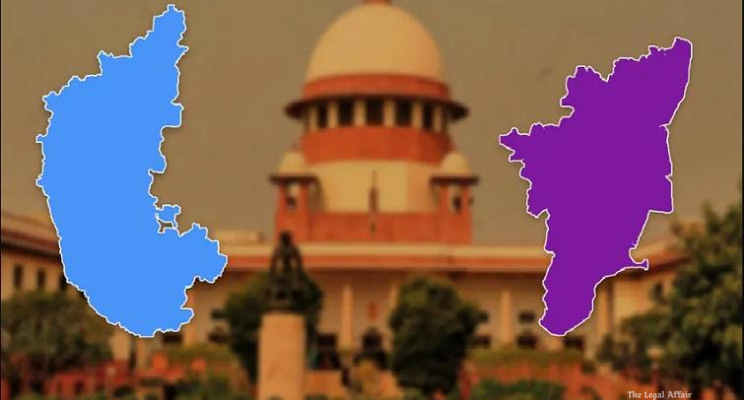
In a significant development, the Supreme Court has intervened in the longstanding water dispute between Tamil Nadu and Karnataka over the sharing of Pennaiyar river water resources. The dispute reached the apex court through a suit filed by Tamil Nadu under Article 131 of the Constitution. During the hearings, the suggestion arose to constitute a Tribunal, but Karnataka’s newly elected government expressed its desire to re-explore negotiations. The Court, led by Justices Hrishikesh Roy and Prashant Kumar Mishra, directed the formation of a fresh Negotiation Committee within two weeks to seek a settlement. This move aims to exhaust negotiation possibilities before considering the formation of a Tribunal.
Arguments of Both Sides:
Tamil Nadu, represented by Senior AAG V. Krishnamurthy and Senior Advocate G Umapathy, objected to the revival of negotiations, emphasizing the Union government’s initial intent to constitute a Tribunal. They referred to previous court orders and contended that Karnataka’s government change did not justify reinitiating negotiations. On the other side, ASG Aishwarya Bhati and Senior Advocate Wasim Qadri, appearing for the Union of India, highlighted Karnataka’s request for renewed negotiations. They urged the Court to give settlement efforts a fair chance and emphasized the sensitivity of water disputes.
Court’s Judgment:
The Supreme Court acknowledged the disagreement between the parties and noted the failure of the previous Negotiation Committee. Citing Section 4 of the Inter-States River Water Disputes Act, 1956, the Court clarified that a Tribunal can be constituted only after the Central government deems negotiations unsuccessful. Considering Karnataka’s request and the lack of serious endeavors by the prior Committee, the Court directed the Ministry of Jal Shakti to form a fresh Negotiation Committee within two weeks. The Committee is tasked with making earnest efforts to reach a negotiated settlement of the inter-state dispute over the Pennaiyar river.