


Introduction:
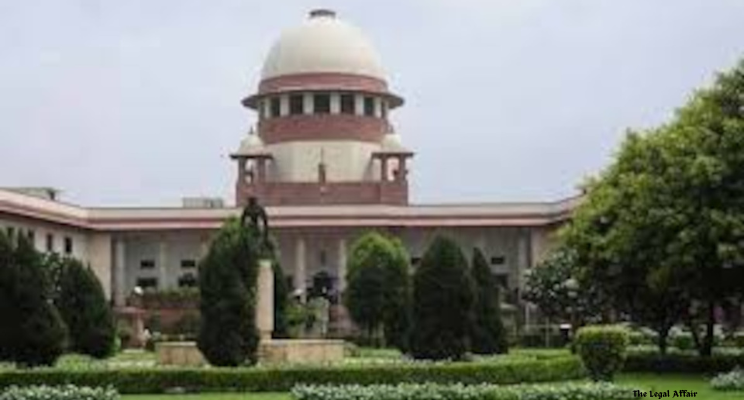
The Supreme Court of India recently dismissed a Public Interest Litigation (PIL) challenging Article 348(1) of the Constitution, which mandates that all proceedings in the Supreme Court and High Courts be conducted in English. The petition, brought forward by Kishan Chand Jain, sought a directive that hearings in the Supreme Court be conducted in Hindi, arguing that this change would ease access to justice for non-English-speaking citizens. However, a bench led by Chief Justice of India (CJI) D.Y. Chandrachud, alongside Justices J.B. Pardiwala and Manoj Misra, dismissed the plea, emphasizing the logistical and constitutional challenges associated with the proposal. CJI Chandrachud highlighted the diversity of languages spoken across India and questioned the practicality and inclusivity of limiting proceedings to Hindi alone.
Arguments by the Petitioner:
- Barriers to Justice Due to Language Limitations:
The petitioner argued that requiring proceedings in the Supreme Court to be conducted solely in English limits access to justice for many Indian citizens who are not proficient in the language. Hindi, being one of the most widely spoken languages in India, was presented as a more accessible option. The petitioner asserted that this language barrier inherently disadvantages those who cannot effectively communicate in English, thus restricting their ability to fully participate in and understand legal proceedings.
According to the petitioner, many citizens across the country find it challenging to navigate the complex language of the judiciary, which is rooted in English. The argument was that this language disparity creates an exclusionary environment for litigants, particularly those from rural and non-English-speaking backgrounds. By adopting Hindi as the medium for Supreme Court proceedings, the petitioner argued that the Court would ensure broader access to justice for a larger segment of the population.
- Challenges to the Constitutionality of Article 348(1):
The petitioner sought to challenge the validity of Article 348(1) of the Constitution, which stipulates that all proceedings in the Supreme Court and High Courts be conducted in English. He argued that while Article 348(1) was part of the original Constitution, it could be revised to reflect India’s linguistic diversity and to make the legal system more accessible to the general public. The petitioner contended that the Constitution should evolve to better serve the needs of the people, and by recognizing Hindi as a medium for legal proceedings, the judiciary could uphold the constitutional principle of equal access to justice.
The petitioner further argued that limiting the official language of the Court to English discriminates against non-English speakers and thus violates their fundamental rights. He emphasized that amending Article 348(1) to permit Hindi would not only ease the process for many litigants but would also acknowledge Hindi as a national language with a significant role in India’s identity and legal system.
Counter-Arguments:
- Linguistic Diversity and Practical Limitations:
CJI D.Y. Chandrachud, representing the bench, expressed concern over the implications of adopting Hindi as the sole language of the Supreme Court. He questioned why the petitioner was advocating only for Hindi, given India’s linguistic diversity. The CJI pointed out that the Supreme Court hears cases from individuals across all states of the country, each with its own official language, culture, and linguistic identity. Switching to Hindi, he argued, would disadvantage those from non-Hindi-speaking regions, creating a new language barrier and potentially causing discrimination against non-Hindi speakers.
The Court highlighted that India officially recognizes 22 languages under the Eighth Schedule of the Constitution, each representing a distinct linguistic community. Adopting Hindi alone could lead to new accessibility challenges, particularly for litigants from states where Hindi is not widely spoken. The CJI stressed that the Court must be inclusive of all Indian languages rather than prioritizing one over others, as such prioritization would undermine the unity in diversity that India strives to uphold.
- Original Intent and Constitutional Validity of Article 348(1):
The Supreme Court also addressed the petitioner’s challenge to the validity of Article 348(1), pointing out that it is part of the original Constitution. The CJI emphasized that challenging an original constitutional provision is inherently complex, as it reflects the framers’ intent and the context of India’s legal and administrative structures at the time of independence. The framers had designated English as the official language for legal proceedings in higher courts to ensure clarity, consistency, and uniformity in judicial processes across India’s states and regions.
CJI Chandrachud remarked that while India’s linguistic landscape is diverse, the use of English in the Supreme Court and High Courts was intended to provide a common platform that transcends regional linguistic boundaries. He further noted that modifying Article 348(1) to mandate Hindi or any other language would require a more extensive national debate and a constitutional amendment, rather than a judicial directive from the Supreme Court.
- Logistical and Administrative Challenges:
The Court also raised concerns about the logistical feasibility of allowing proceedings in Hindi or any language other than English. CJI Chandrachud noted that translating legal terminology, case law, and complex judicial concepts into multiple languages would pose substantial challenges. Moreover, India’s legal education and training largely operate in English, which is deeply entrenched in judicial practice and precedents. Any shift in language, particularly to Hindi, would necessitate significant changes in legal training, resources, and infrastructure, and could disrupt the functioning of the judiciary, at least in the short term.
Court’s Judgement and Rationale:
After considering the petitioner’s arguments and reviewing the existing constitutional provisions, the Supreme Court ultimately dismissed the PIL. The Court observed that the petitioner’s plea lacked legal merit and did not adequately consider the practical implications of mandating Hindi as the official language for proceedings in the Supreme Court. In its judgment, the Court emphasized the following key points:
- Inclusivity and Linguistic Neutrality:
The Supreme Court reiterated that its role is to serve all citizens across India, regardless of linguistic background. Adopting Hindi as the medium of proceedings would inherently disadvantage non-Hindi speakers, especially those from states where Hindi is not prevalent. By retaining English, the Court argued that it can maintain a neutral linguistic platform, accessible to litigants from all regions. This neutrality, the Court held, is essential to ensuring inclusivity and fairness within the judicial system.
- Original Constitutional Framework:
In addressing the challenge to Article 348(1), the Court underscored that the Constitution’s framers had chosen English to promote uniformity and coherence in India’s legal system. Changing this framework, the Court observed, would not only involve substantial administrative reforms but would also require a broader consensus among lawmakers and the public. A judicial directive, the Court clarified, would be insufficient to make such a fundamental alteration to the Constitution, particularly as it pertains to an original provision.
- Balancing Accessibility and Judicial Efficiency:
The Supreme Court acknowledged the petitioner’s concern regarding accessibility to justice. However, the Court concluded that the use of English in proceedings provides a standardized legal language that enables efficient communication and understanding across India’s judicial landscape. Additionally, the Court pointed out that many legal terms and doctrines lack direct translations in Hindi and other regional languages. Shifting to Hindi would thus require creating new legal vocabulary, which would be time-consuming and could lead to misinterpretations, affecting judicial efficiency and consistency.
The bench, therefore, decided not to entertain the matter further and dismissed the PIL, stating that it lacked sufficient merit. The Court concluded that while accessibility to justice is a critical concern, it must be balanced with the practicality of maintaining an efficient and uniform judicial system.