


Introduction:
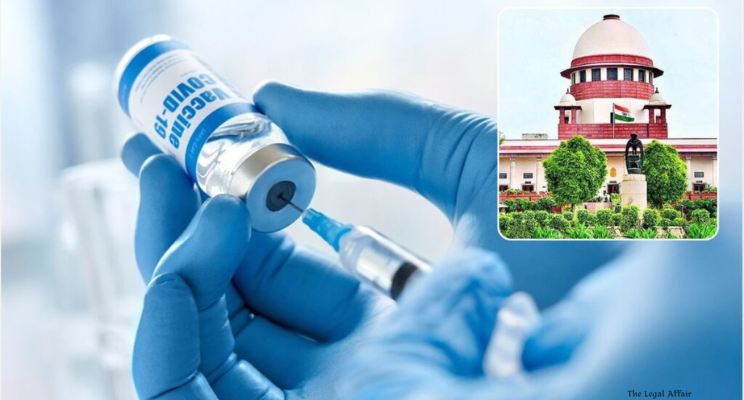
In Rachana Gangu & Anr v. Union of India & Ors. – WP(C) No. 1220/2021 along with Union of India v. Sayeeda K.A. & Ors., SLP (C) No. 16452/2023, the Supreme Court of India delivered a significant judgment addressing the issue of compensation for individuals who allegedly suffered serious adverse events following COVID-19 vaccination. The matter came before a Bench comprising Justice Vikram Nath and Justice Sandeep Mehta. The petitions were filed by parents who alleged that their daughters had died due to complications arising after receiving COVID-19 vaccines. Another connected matter arose from a case where a woman claimed that her husband died following vaccination, leading to an interim order from the Kerala High Court directing the Union Government to consider framing a compensation policy. The petitioners approached the Supreme Court seeking compensation from the Union Government and requested the constitution of an independent expert committee to investigate vaccine-related adverse events and alleged suppression of data during the nationwide vaccination drive. The Union Government contested these claims, maintaining that the vaccination programme was voluntary and undertaken by citizens based on informed consent regarding potential risks. After extensive arguments and deliberations, the Supreme Court delivered its judgment directing the Union Government, through the Ministry of Health and Family Welfare, to frame a no-fault compensation policy for individuals who suffer serious adverse events following immunization. At the same time, the Court clarified that this direction does not imply any admission of liability on the part of the Government or vaccine manufacturers. The Court also declined the request to establish a separate court-appointed expert body, stating that the existing monitoring framework for Adverse Events Following Immunization (AEFI) remains adequate.
Arguments of the Petitioners:
The petitioners contended that the nationwide COVID-19 vaccination drive, although implemented for public health reasons, had resulted in tragic consequences for certain individuals who allegedly experienced severe adverse reactions. The primary grievance raised by the petitioners was that their family members had died shortly after receiving the COVID-19 vaccine, and they believed that these deaths were linked to vaccine-related complications. According to them, the absence of a clear and structured compensation mechanism left affected families without any meaningful remedy. The petitioners argued that when the State encourages or promotes mass vaccination programmes in the interest of public health, it has a corresponding obligation to ensure that individuals who suffer harm as a result of such programmes are adequately compensated. They contended that the principle of fairness and equity requires the State to support families who have suffered severe consequences allegedly linked to vaccination undertaken for the collective good of society. The petitioners also expressed concern regarding the transparency of the system used to track and investigate adverse events following immunization. They alleged that there had been instances of systemic suppression or underreporting of data relating to vaccine-related complications during the COVID-19 vaccination campaign. On this basis, they requested the Supreme Court to constitute an independent expert committee to investigate the issue and examine the alleged adverse effects of COVID-19 vaccines. The petitioners further argued that the existing monitoring mechanism was insufficient and lacked independence, which created doubts regarding the accuracy and reliability of the findings concerning vaccine safety. They therefore urged the Court to intervene and establish an independent mechanism to ensure that all vaccine-related adverse events were thoroughly investigated and properly documented. In addition to seeking the formation of an expert committee, the petitioners sought compensation for the deaths allegedly caused by vaccine-related complications. They contended that the absence of a dedicated compensation framework forced affected individuals to resort to lengthy litigation processes, which placed an additional burden on families already dealing with personal tragedy. The petitioners argued that several countries around the world have adopted no-fault compensation schemes for vaccine-related injuries. Under such schemes, individuals who suffer serious adverse events are compensated without the need to prove negligence or wrongdoing on the part of the government or vaccine manufacturers. They submitted that India should adopt a similar framework to ensure fairness and accountability in its public health programmes. According to the petitioners, such a system would provide financial relief to victims and their families while also maintaining public confidence in vaccination initiatives.
Arguments of the Union Government:
The Union Government opposed the petitioners’ claims and defended the existing vaccination framework. In its counter-affidavit filed in 2022, the Government argued that COVID-19 vaccination was not mandatory but voluntary. Citizens chose to receive the vaccine after being informed of the potential risks and benefits. Therefore, the Government contended that it could not automatically be held liable for adverse outcomes associated with vaccination. The Government emphasized that the COVID-19 vaccination drive was implemented in extraordinary circumstances during a global pandemic. The objective was to protect public health and save lives on a large scale. According to the Government, vaccines were developed, tested, and approved following established scientific and regulatory procedures. The Government also highlighted the existence of a robust monitoring mechanism for tracking adverse events following immunization. This system, known as the Adverse Events Following Immunization (AEFI) surveillance mechanism, operates at multiple levels and is designed to detect, investigate, and respond to any safety concerns arising from vaccination. The Government argued that the AEFI system already provides a structured process for reporting and examining adverse events. Through this mechanism, medical experts and public health authorities assess whether a particular adverse event is causally linked to vaccination or is merely coincidental. Therefore, the Government maintained that there was no need to create a separate court-appointed expert committee to review such cases. The Government also expressed concern that establishing an independent committee through judicial intervention could undermine the credibility of the existing public health infrastructure and create unnecessary confusion regarding vaccine safety. It argued that the scientific and regulatory institutions responsible for vaccine monitoring are better equipped to handle such matters. Furthermore, the Government submitted that any decision regarding compensation policies should be taken by the executive branch after considering various policy and financial implications. It contended that the judiciary should exercise caution before directing the creation of new policy frameworks in complex areas involving public health administration.
Court’s Analysis and Observations:
After hearing extensive arguments from both sides, the Supreme Court undertook a careful analysis of the issues involved. The Court recognized that vaccination programmes are essential tools for protecting public health, particularly during a global pandemic such as COVID-19. At the same time, the Court acknowledged that rare but serious adverse events can occur following vaccination, and individuals affected by such events may require support and assistance. The Court observed that the principle of no-fault compensation has been adopted in several jurisdictions around the world for vaccine-related injuries. Such schemes provide financial assistance to affected individuals without requiring them to prove negligence or wrongdoing. The Court noted that the objective of such frameworks is not to attribute blame but to ensure fairness and compassion in addressing the consequences of rare adverse events. The Bench also referred to its earlier judgment delivered in the Dr. Jacob Puliyel case in 2021, where the Court had emphasized the importance of transparency and public disclosure of data relating to vaccine safety. In that judgment, the Court had directed that relevant information regarding adverse events should be made available to the public in order to maintain trust in the vaccination programme. The Court reaffirmed this principle and directed that data relating to adverse events following immunization should continue to be periodically placed in the public domain. This measure, the Court observed, would help maintain transparency and allow independent researchers and experts to study the available data.
Court’s Judgment and Directions:
In its final judgment, the Supreme Court directed the Union Government, through the Ministry of Health and Family Welfare, to formulate a no-fault compensation policy for individuals who suffer serious adverse events following COVID-19 vaccination. The Court clarified that the purpose of such a policy is to provide support and relief to affected individuals and their families without requiring them to establish fault or negligence. However, the Court made it clear that the creation of such a compensation framework should not be interpreted as an admission of liability on the part of the Union Government or any other authority involved in the vaccination programme. The Court emphasized that vaccination programmes are undertaken in the public interest, and the existence of a compensation scheme should not be viewed as acknowledgment of wrongdoing. The Court also declined the petitioners’ request to constitute an independent expert committee to examine vaccine-related adverse events. According to the Court, the existing AEFI surveillance and monitoring framework already performs this function and should continue to operate. The Court found no compelling reason to create a parallel mechanism through judicial intervention. Additionally, the Court directed that relevant data relating to adverse events should continue to be placed in the public domain in accordance with the principles laid down in earlier judgments. This step, the Court noted, would enhance transparency and strengthen public confidence in the vaccination programme. The Court also clarified that the creation of a no-fault compensation framework does not prevent affected individuals from pursuing other legal remedies that may be available to them under law. If individuals believe that they have valid claims against any authority or manufacturer, they remain free to pursue such remedies through appropriate legal proceedings. By issuing these directions, the Supreme Court sought to strike a balance between protecting public health initiatives and ensuring fairness for individuals who may suffer rare adverse consequences of vaccination.