


Introduction:
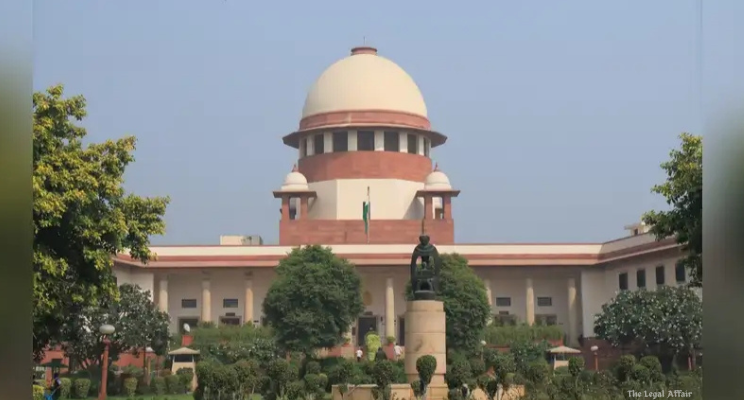
In Dinesh Chander v. State of Haryana (SLP (Crl) No. 9540/2025), the Supreme Court, led by Justices Pankaj Mithal and K.V. Viswanathan, declined to interfere with the Punjab & Haryana High Court’s refusal of anticipatory bail under the Narcotic Drugs and Psychotropic Substances Act, 1985 (NDPS Act). The bench categorically stated, “anticipatory bail is never granted in ndps cases,” while allowing the appellant to surrender and pursue regular bail. This decision reaffirms that courts must exercise extreme caution before granting pre-arrest relief in NDPS matters, especially those involving commercial quantities of contraband.
Arguments of the Petitioner:
- False Implication: The petitioner argued his name surfaced only in co-accused statements and was not reflected in the FIR, suggesting a frame-up.
- Reliance on Disclosure Statements: He claimed the only link to him was the disclosure statement and lacked corroborative evidence.
Arguments of the State/Prosecution:
- Commercial Quantity: The recovery of 60 kg doda post and 1.8 kg opium from co-accused triggered Section 37 of the NDPS Act, categorizing it as a commercial quantity case.
- Need for Custodial Interrogation: Investigators asserted that custodial interrogation was necessary to uncover the lead network and modus operandi.
- Corroboration: Investigation revealed phone conversations and banking transactions between the petitioner and co-accused, reinforcing culpability.
High Court’s Decision:
- Recognized petitioner as supplier named by co-accused.
- Found corroborative evidence via calls and financial transactions.
- Concluded no grounds for anticipatory bail, as detention was essential to further probe roles and criminal conspiracy.
Supreme Court’s Ruling:
- The bench emphasized that anticipatory bail is virtually barred in NDPS cases, especially involving commercial quantities.
- It found no error in the High Court’s refusal of anticipatory bail.
- While declining anticipatory bail, the Court allowed the petitioner to surrender and apply for regular bail, to be judged independently on merits.
- The Court reinforced previous observations, including one from September last year, expressing alarm at any anticipatory bail granted in NDPS cases and directing states to consider cancellation of such relief.
- The only exception noted was a case involving Tapentadol Hydrochloride (a non-scheduled substance), where anticipatory bail was granted since it did not fall under the NDPS schedules.
Legal Significance & Observations:
- Reinforces the principle: No anticipatory bail in commercial NDPS offences.
- Custodial interrogation remains essential for unraveling supply chains and larger syndicates.
- Differentiates between scheduling categorization—non‑scheduled substances may still qualify.
- Signals focus on judicial restraint in pre-arrest relief where NDPS offences can carry severe penalties.
Conclusion:
The Supreme Court’s ruling in Dinesh Chander v. State of Haryana reaffirms the judicial view that anticipatory bail in NDPS cases—especially those involving commercial quantities—should not be granted. It underscores the seriousness with which narcotics offences are treated, emphasizing that regular bail applications post-surrender are the proper legal remedy. This decision clarifies the narrow path for anticipatory bail under the NDPS Act and aligns with prior observations cautioning against premature relief in drug cases.