


Introduction:
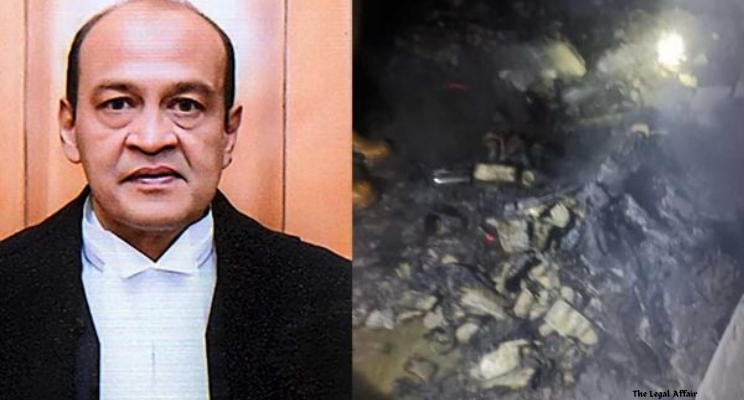
On March 28, 2025, the Supreme Court of India addressed a writ petition filed by Advocate Mathews J. Nedumpara, seeking the registration of a First Information Report (FIR) against Justice Yashwant Varma, a former judge of the Delhi High Court. The petition was prompted by the alleged discovery of a significant amount of unaccounted cash at Justice Varma’s official residence following a fire incident on March 14. A bench comprising Justices Abhay S. Oka and Ujjal Bhuyan presided over the matter.
Petitioner’s Contentions:
Advocate Mathews J. Nedumpara argued that the discovery of unaccounted cash at Justice Varma’s residence necessitated an immediate criminal investigation. He contended that the in-house inquiry initiated by the judiciary lacked statutory authority and could not substitute for a formal police investigation. Nedumpara emphasized that the in-house committee was not a statutory body and, therefore, its proceedings could not replace the criminal investigations typically undertaken by specialized agencies. He highlighted public concerns regarding the delay in registering an FIR, the absence of a seizure mahazar, and the perceived secrecy surrounding the incident. Furthermore, Nedumpara challenged the precedent set by the Supreme Court’s judgment in K. Veeraswami v. Union of India, which requires prior consultation with the Chief Justice of India before initiating criminal proceedings against a sitting High Court or Supreme Court judge. He argued that this effectively grants judges immunity from standard criminal procedures, creating a privileged class beyond the reach of ordinary law enforcement mechanisms.
Respondent’s Position:
The bench, while acknowledging the gravity of the allegations, maintained that the in-house inquiry was the appropriate initial response. Justice Oka noted that upon the conclusion of the in-house inquiry, several options would be available, including the potential registration of an FIR or referral of the matter to Parliament for further action. The Court emphasized that intervening at this premature stage would be inappropriate, as the in-house procedure was designed to address such situations involving members of the judiciary. The bench also highlighted the importance of adhering to established protocols that balance the need for accountability with the preservation of judicial independence.
Court’s Judgment:
The Supreme Court dismissed the writ petition, deeming it premature given the ongoing in-house inquiry. The bench underscored that the in-house procedure serves as a preliminary mechanism to assess allegations against judges and that subsequent actions, including criminal investigations, could be considered based on the findings of this inquiry. The Court refrained from addressing the broader challenge to the K. Veeraswami judgment at this stage, indicating that it was unnecessary to delve into those aspects until the completion of the current inquiry. The order concluded by stating that, subject to the observations made, the petition was disposed of.
Background of the Case:
The controversy began on March 14, 2025, when a fire at Justice Yashwant Varma’s official residence led to the discovery of a substantial amount of unaccounted cash. In response, on March 21, the Chief Justice of India constituted a three-member committee to conduct an in-house inquiry into the incident. This action followed a report from Delhi High Court Chief Justice D.K. Upadhyay, which recommended further investigation. Subsequently, on March 24, the Delhi High Court withdrew judicial work from Justice Varma, and the Supreme Court Collegium recommended his transfer to the Allahabad High Court. Justice Varma has denied the allegations, asserting that he is the target of a conspiracy.
Legal Precedents and Implications:
The K. Veeraswami v. Union of India case, decided in 1991, established that judges of the Supreme Court and High Courts are considered public servants under the Prevention of Corruption Act, 1947. However, it also mandated that prior sanction from a competent authority, typically involving consultation with the Chief Justice of India, is required before initiating criminal proceedings against a sitting judge. This framework aims to protect judicial independence while ensuring accountability. The current case brings this precedent into focus, highlighting the delicate balance between upholding the integrity of the judiciary and adhering to due process.
Conclusion:
The Supreme Court’s decision to dismiss the petition seeking an immediate FIR against Justice Yashwant Varma underscores the judiciary’s commitment to following established protocols when addressing allegations against its members. By allowing the in-house inquiry to proceed, the Court emphasizes the importance of internal mechanisms designed to uphold judicial integrity while preserving independence. This approach ensures that any subsequent actions are grounded in thorough and impartial investigations, maintaining public confidence in the judicial system.