


Introduction:
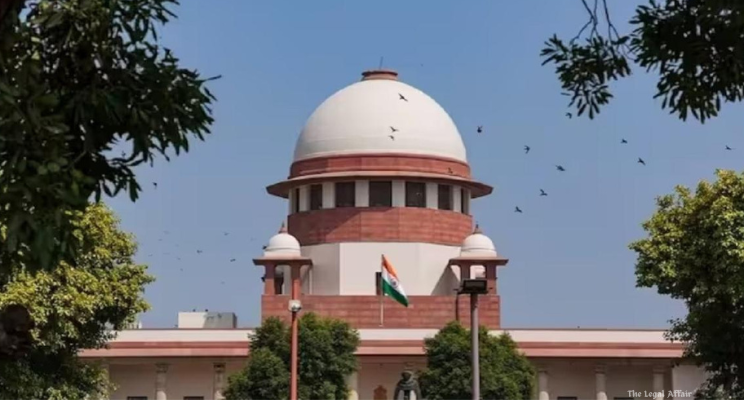
The Supreme Court of India, in a significant ruling delivered on Friday, January 16, set aside the conviction of accused persons in a murder case, holding that a conviction cannot be sustained merely on the basis of so-called confessional statements made to the police under Section 27 of the Indian Evidence Act, 1872, and an alleged discovery pursuant to such statements, particularly when the chain of circumstantial evidence remains incomplete. The Bench comprising Justice Sanjay Karol and Justice Vipul M. Pancholi overturned the judgment of the Karnataka High Court, which had reversed the acquittal granted by the Trial Court and convicted the accused primarily on the strength of disclosure statements and recovery of the dead body.
The appellants, Tulasareddi @ Mudakappa and another, had been acquitted by the Trial Court on the ground that the prosecution failed to establish a complete chain of circumstances linking them to the crime, and that the sole “last seen” witness was unreliable. However, the Karnataka High Court reversed this acquittal, treating the disclosure statements under Section 27 and the alleged recovery as decisive evidence. Aggrieved by this reversal, the accused approached the Supreme Court, contending that the High Court had erred in law by convicting them without satisfying the settled principles governing circumstantial evidence and without showing that the Trial Court’s view was perverse or unreasonable.
The Supreme Court, after examining the entire material on record, restored the acquittal and reaffirmed two fundamental principles of criminal jurisprudence: first, that disclosure statements under Section 27 are a weak form of evidence and cannot by themselves establish guilt; and second, that in cases based entirely on circumstantial evidence, the prosecution must establish an unbroken chain of circumstances that leads only to the guilt of the accused and excludes every possible hypothesis of innocence.
Facts of the Case:
The case related to an alleged murder in which the prosecution had no direct eyewitness to the act of killing. The prosecution’s case was built entirely on circumstantial evidence. The main pillars of the prosecution story were: (i) alleged disclosure statements made by the accused to the police under Section 27 of the Evidence Act; (ii) recovery of the dead body allegedly pursuant to those disclosure statements; (iii) alleged motive; (iv) last seen evidence through PW-5; and (v) allegation of conspiracy.
According to the prosecution, the deceased was last seen in the company of the accused shortly before his death. It was alleged that after the accused were taken into custody, they made statements leading to the discovery of the dead body. The prosecution sought to rely on this recovery as a crucial link in the chain of circumstances connecting the accused to the offence.
However, during trial, serious doubts arose regarding the credibility of the prosecution witnesses, the manner in which the discovery was effected, and the consistency of the prosecution version with the medical evidence. The medical evidence did not fully support the timeline suggested by the prosecution, and there were contradictions regarding when and how the body was recovered. The Trial Court also found that PW-5, the sole witness relied upon for the “last seen” theory, was not reliable due to inconsistencies and lack of corroboration.
Findings of the Trial Court:
After appreciating the evidence in detail, the Trial Court acquitted the accused. It held that the prosecution had failed to prove the case beyond reasonable doubt and that the chain of circumstances was incomplete. The Trial Court recorded several important findings:
Unreliable Last Seen Evidence: The testimony of PW-5, who claimed to have last seen the deceased with the accused, was not found to be trustworthy. There were discrepancies regarding time, place, and conduct, and no independent corroboration was available.
Weakness of Section 27 Disclosure: The Trial Court observed that disclosure statements made to the police under Section 27 can only be used to the limited extent of proving the fact discovered, and cannot be treated as confessions of guilt.
Doubtful Recovery: The recovery of the dead body was not proved beyond doubt. The circumstances surrounding the discovery were suspicious, and there was no clear evidence that the information provided by the accused led to the discovery in a legally acceptable manner.
Medical Evidence Not Supporting Prosecution Version: The medical evidence regarding the time and cause of death did not conclusively support the prosecution’s timeline, creating further doubt about the prosecution narrative.
Absence of Complete Chain of Circumstances: The Trial Court held that essential links such as motive, last seen evidence, recovery, and conduct of the accused were not established in a manner that could form an unbroken chain pointing only to the guilt of the accused.
On these grounds, the Trial Court concluded that the prosecution had failed to prove the guilt of the accused beyond reasonable doubt and acquitted them.
Judgment of the Karnataka High Court:
The State preferred an appeal against the acquittal before the Karnataka High Court. The High Court reversed the acquittal and convicted the accused. While doing so, the High Court treated the disclosure statements recorded under Section 27 of the Evidence Act and the recovery of the dead body as decisive links connecting the accused to the crime.
The High Court took the view that once the recovery of the dead body was established pursuant to the disclosure statements of the accused, it constituted a strong incriminating circumstance. The High Court also relied upon surrounding factors such as alleged motive and conspiracy, even though these aspects were not supported by strong independent evidence.
Importantly, the High Court did not undertake a detailed exercise of examining whether the entire chain of circumstances was complete and whether the evidence excluded every hypothesis other than the guilt of the accused. Nor did it demonstrate that the view taken by the Trial Court was perverse, unreasonable, or contrary to law.
Issues Before the Supreme Court:
Before the Supreme Court, the primary issues that arose for consideration were:
- Whether the High Court was justified in reversing the acquittal granted by the Trial Court without establishing that the Trial Court’s view was perverse or unreasonable.
- Whether conviction can be sustained solely on the basis of disclosure statements made under Section 27 of the Evidence Act and the alleged discovery pursuant thereto.
- Whether the prosecution had succeeded in establishing a complete chain of circumstantial evidence linking the accused with the crime beyond reasonable doubt.
Arguments on Behalf of the Appellants (Accused):
Counsel for the appellants contended that the High Court had committed a serious error of law in reversing a well-reasoned acquittal. It was argued that in an appeal against acquittal, the appellate court must first record a finding that the view taken by the Trial Court is either perverse or wholly unreasonable. Merely because another view is possible on the same evidence, the acquittal cannot be interfered with.
It was further argued that the prosecution case rested almost entirely on Section 27 disclosure statements, which are inherently weak and cannot form the sole basis of conviction. The so-called discovery of the dead body was itself doubtful and not proved in accordance with law. Moreover, even if recovery is accepted, recovery alone cannot prove guilt unless supported by other strong circumstances.
The appellants also pointed out that the sole “last seen” witness, PW-5, was unreliable and his testimony was riddled with contradictions. No corroborative evidence was produced to support his version. The alleged motive and conspiracy were not established through credible evidence.
It was therefore submitted that the prosecution had failed to establish the complete chain of circumstances, and hence the benefit of doubt must necessarily go to the accused.
Arguments on Behalf of the Respondent State:
The State, on the other hand, supported the judgment of the High Court and argued that the recovery of the dead body pursuant to the disclosure statements of the accused constituted a strong incriminating circumstance. It was contended that such recovery is admissible under Section 27 of the Evidence Act and can be relied upon to connect the accused with the offence.
The State also argued that when several circumstances, such as motive, last seen evidence, recovery, and conduct of the accused, are considered together, they form a chain sufficient to establish guilt. It was submitted that the High Court was justified in re-appreciating the evidence and arriving at its own conclusions.
Supreme Court’s Analysis:
The Supreme Court carefully examined the evidence and reiterated settled principles of law relating to circumstantial evidence and appellate interference with acquittals.
- On Section 27 Disclosure Statements
The Court emphasised that statements made to the police are generally inadmissible, except to the limited extent permitted under Section 27, namely, that portion of the information which distinctly relates to the fact thereby discovered. Even then, such evidence is only corroborative in nature and cannot by itself establish guilt.
The Court described the reliance placed by the High Court on “so-called confessional statements” as legally unsustainable. It observed that a disclosure statement is not equivalent to a confession, and the fact discovered must be proved to have been discovered solely on the basis of information provided by the accused.
- On Recovery of Dead Body
The Court noted that the recovery itself was doubtful and not duly proved. There were inconsistencies regarding the place, time, and manner of recovery. The prosecution failed to establish a clear and credible link between the disclosure statement and the discovery.
The Court reiterated that even if recovery is proved, it is only one circumstance and cannot be treated as conclusive proof of guilt in the absence of other strong links.
- On Circumstantial Evidence
The Court reaffirmed that in cases based entirely on circumstantial evidence, the prosecution must establish:
Each circumstance beyond reasonable doubt.
That all circumstances together form a complete chain.
That the chain leads only to the conclusion that the accused committed the crime.
That the chain excludes every other reasonable hypothesis of innocence.
In the present case, the Court found that essential links such as last seen evidence, motive, and conduct were either weak or not proved at all. The sole eyewitness, PW-5, was unreliable. Medical evidence did not fully support the prosecution timeline. Thus, the chain was clearly incomplete.
- On Interference with Acquittal
The Court strongly criticised the High Court for reversing the acquittal without demonstrating that the Trial Court’s view was perverse. It reiterated the settled principle that if two reasonable views are possible on the basis of evidence, the appellate court must not disturb the acquittal.
Justice Pancholi, authoring the judgment, observed that merely because another view is possible, it does not justify reversing an acquittal, especially when the Trial Court has taken a plausible view based on appreciation of evidence.
Court’s Judgment:
The Supreme Court concluded that the High Court had erred in reversing the acquittal solely on the basis of disclosure statements under Section 27 and an alleged recovery, without ensuring that the complete chain of circumstantial evidence was established.
The Court held:
That reliance on disclosure statements alone is insufficient for conviction.
That recovery of the dead body, even if proved, cannot substitute for proof of guilt.
That the prosecution failed to establish motive, last seen evidence, and medical consistency.
That the High Court exceeded its appellate jurisdiction by substituting its view without finding perversity in the Trial Court’s judgment.
Accordingly, the Supreme Court allowed the appeals, set aside the conviction, and restored the Trial Court’s order of acquittal.