


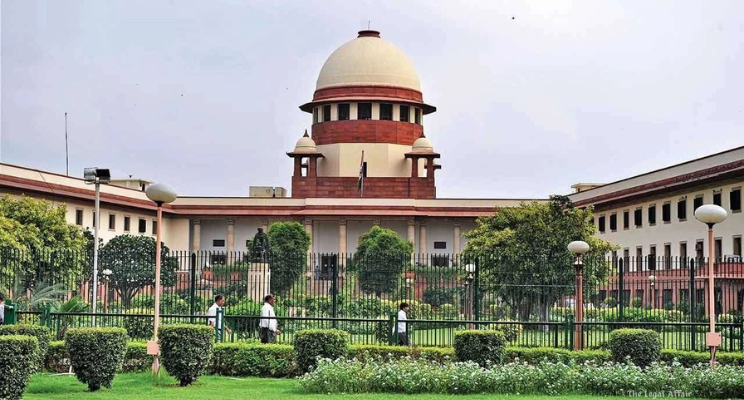
Introduction:
In a significant development, the Supreme Court of India, comprising Justices Sandeep Mehta and Joymalya Bagchi, lent its approval to Tamil Nadu’s pioneering use of preventive detention under its Goondas Act against a cyber fraud suspect. The Court was reviewing a petition filed by the father of Abhijeet Singh—a Delhi-based businessman—who challenged a Madras High Court ruling that dismissed his habeas corpus plea. The petition contested Abhijeet’s twelve-month preventive detention, imposed on August 23, 2024, by the Theni District Collector under the Tamil Nadu Prevention of Dangerous Activities of Bootleggers, Drug Offenders, Goondas, Immoral Traffic Offenders and Slum Grabbers Act, 1982, and subsequently confirmed by the Advisory Board on September 25, 2024, and ratified by the state government on November 9, 2024. The matter returned before the Supreme Court on June 23, 2025, with further hearing scheduled for Wednesday, June 25, 2025.
Arguments of the Petitioner:
Abhijeet Singh’s counsel, appearing before the apex court, challenged the legality and constitutionality of the detention order, advancing several key contentions:
- The preventive detention was based on a single incident of alleged cyber fraud involving ₹84.5 lakh, of which only ₹12.14 lakh reached the detenu’s account under the name M/s Creative Craaft. The counsel emphasized that this did not pose a serious threat to public order.
- No prior criminal antecedents were attributed to Abhijeet, further undermining the justification for such a stringent preventive measure.
- The detenu was served notice on September 23, 2024, for a hearing on September 25, 2024, a meager two-day window that was inadequate. Worse, the hearing venue in Chennai posed logistical challenges for a person domiciled in Madurai—preventing him from effectively preparing a representation.
- The application before the Advisory Board had included all these points, but the Board still proceeded to confirm the detention, hence violating procedural fairness and due process under Article 22(5) of the Constitution.
- The counsel urged that these cumulative procedural lapses rendered the entire detention order void. He argued that notwithstanding the state’s discretion over detention duration, such power must rest on legally sound and factually robust grounds.
Arguments of the State:
The State of Tamil Nadu defended its use of the Goondas Act for preventive detention in cybercrime cases, asserting:
- Ordinary criminal prosecution frameworks proved insufficient in tackling sophisticated cyber offenders who exploit legal and procedural loopholes in digital frauds, using shell companies and multiple accounts. Hence, preventive detention under the Goondas Act is both justified and necessary.
- The state’s counsel informed the Court that a counter-affidavit had been filed and urged the Supreme Court to consider it. Accordingly, the Court directed the Registry to upload the affidavit for official records and listed the matter for further hearing on June 25, 2025.
- While admitting that the period of detention lay within the state’s discretion, the counsel emphasized that it was properly executed following statutory guidelines and after due consideration by the Advisory Board.
Court’s Observations and Interim Outcome:
Justice Mehta expressed a positive stance toward Tamil Nadu’s approach, remarking:
“This is a good trend coming from the state that preventive detention laws are being used against cyber law offenders. It’s a very welcome approach. Normal criminal laws are not proving successful against these offenders.”
- However, he also pointedly noted that once a preventive detention order is issued, it is not within judicial purview in writ jurisdiction to modify its duration; a court can only annul it if found baseless. Summing up the legal position, he stated,
- “That is the discretion of the state… If there is no basis for detention then the order itself has to go, period cannot be curtailed on that.”
- He further queried whether the petitioner had raised procedural fairness concerns before the Advisory Board, to which the counsel confirmed affirmatively.
- Given these developments, the Court deferred its detailed adjudication to the next hearing, ensuring the state’s counter-affidavit formed part of the record.
Madras High Court’s Earlier Judgment
- In its habeas corpus petition judgment, the Madras High Court had dismissed all arguments presented by Abhijeet. The High Court found:
- There was no undue delay between the arrest (July 25, 2024) and imposition of preventive detention (August 23, 2024).
- Documentation served to Abhijeet met legal standards, with adequate notice period for his representation.
- The Advisory Board had been provided with enough material and gave due consideration to the representations filed.
- The High Court concluded that no procedural or constitutional violation had occurred, and that preventive detention was warranted under the circumstances.
Broader Legal and Public Order Context:
This case surfaces a broader legal question: Can States legitimately deploy preventive detention statutes, originally conceived for tackling organized crime, to curb digital fraud? Justice Mehta’s favorable remarks signal a potential shift in the judicial narrative—endorsing preventive detention as a viable tool for combatting cybercrime when prisons and prosecutions, bound by procedural delays and evidentiary hurdles, may falter.
Yet, preventive detention is an extraordinary state power. Its constitutional validity hinges on procedural rigors: clear legal justification, substantive material indicating threat to public order or administration, and strict adherence to due process, especially the detainee’s right to representation as enshrined under Article 22(5).
Key Legal Tensions Highlighted:
The interplay of legal and constitutional principles in this case illustrates several tensions:
- Public Order vs Individual Liberty: Preventive detention allows pre-emptive confinement based on potential threat to public order, a standard that may seem stretched when applied to a private cyberfraud. The critical consideration lies in whether the act’s scale and sophistication indeed posed a destabilizing threat.
- Judicial Oversight and Procedural Fairness: The Supreme Court reaffirmed that it cannot substitute its judgment for the executive’s discretion regarding detention duration. However, it retains the power to strike down the order if factual or procedural basis is absent or defective.
- Efficacy of Criminal Law vs Preventive Measures: Justice Mehta’s comment underscores the limitations of standard criminal processes in tackling tech-savvy cyber offenders—thus warranting alternate preventive mechanisms.
- Rights of the Detainee: The petition raises vital concerns on Article 22(5), mandating reasonable opportunity for making representation. Questions of notice adequacy, language clarity, and reasonable distance and timeframe are fundamental to determining procedural validity.