


Introduction:
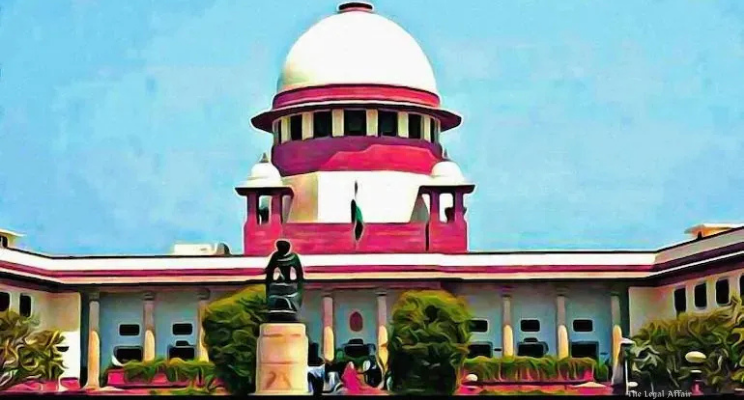
The Supreme Court of India in the case Devendra Kumar versus The State (NCT of Delhi) & Anr. delivered a significant judgment on 20th August 2025, clarifying the scope of obstruction under Section 186 of the Indian Penal Code. The case arose when Devendra Kumar, a Station House Officer (SHO) in Delhi, challenged the registration of an FIR against him following allegations of misconduct made by a court process server, Respondent No. 2 in the case. The process server alleged that when he visited the police station to serve summons and warrants, the SHO not only refused to accept the documents but also verbally abused him, forced him to stand with raised hands as punishment, and detained him for hours, thereby preventing him from performing his lawful duty. The complaint was lodged with the District Judge, which led to the registration of an FIR under Section 186 IPC against the SHO. The Delhi High Court upheld the FIR’s validity, leading the petitioner to approach the Supreme Court for relief. The bench of Justices JB Pardiwala and R Mahadevan refused to interfere with the High Court’s decision and clarified that obstruction under Section 186 IPC does not require physical force or violence but also includes acts of intimidation, threats, and deliberate non-cooperation that hinder a public servant from discharging lawful duties.
Arguments of the Petitioner:
The petitioner, Devendra Kumar, through his counsel, argued that the FIR registered against him was unsustainable in law and was a misuse of judicial process. His primary contention was that Section 186 IPC requires an element of physical obstruction or use of force, and mere verbal exchange or non-cooperation should not constitute an offence under this provision. Counsel submitted that the allegations, even if accepted at face value, did not meet the statutory requirement of obstruction as envisaged under Section 186 IPC. Further, it was argued that the complaint made by the process server suffered from mala fides, as the police station and its officers cannot be subjected to criminal liability merely for disagreements over procedural handling of documents. The petitioner highlighted that as an SHO, he had certain responsibilities and discretionary powers, and not every refusal or delay in accepting court documents should amount to obstruction. Moreover, the defence relied upon Section 195 of the Code of Criminal Procedure (CrPC), which places a bar on courts taking cognizance of certain offences relating to obstruction of public servants unless a proper complaint is filed by the concerned public authority. The petitioner argued that the offences alleged were connected to Sections 172–188 IPC, and splitting up the allegations to bypass Section 195 CrPC would amount to an abuse of law. Therefore, according to the petitioner, the FIR was liable to be quashed as it was not maintainable in the absence of proper authorization and did not disclose the essential ingredients of an offence under Section 186 IPC.
Arguments of the Respondents:
On the other hand, the respondent process server, supported by the State, argued that the allegations in the complaint clearly established obstruction in the discharge of lawful duty. The process server was on official duty as an officer of the court, entrusted with the service of summons and warrants, and his obstruction by the SHO was not only unlawful but also amounted to an affront to the administration of justice. It was submitted that the SHO’s conduct went beyond mere refusal, as it included verbal abuse, humiliation by forcing the complainant to stand with raised hands as punishment, and unlawful detention for hours, all of which directly prevented the complainant from performing his lawful functions. The respondent emphasized that obstruction need not be physical; threats, intimidation, and deliberate non-cooperation are equally capable of hindering the performance of duty and fall within the ambit of Section 186 IPC. To interpret the section narrowly would defeat the very purpose of protecting public servants and would embolden individuals to harass and intimidate officials without fear of consequences. On the issue of Section 195 CrPC, the respondent argued that the offence under Section 186 IPC was squarely made out, and the bar under Section 195 could not be misused to shield the accused from accountability. The attempt by the petitioner to split the offences was seen as a technical defence to escape liability. The State further submitted that the allegations prima facie disclosed commission of an offence, and therefore, the FIR was valid and required investigation. Any premature interference by the Court would obstruct the process of justice.
Court’s Judgement:
The Supreme Court, in a judgment authored by Justice JB Pardiwala and concurred by Justice R Mahadevan, upheld the validity of the FIR and refused to interfere with the High Court’s decision. The Court made a crucial clarification that the term “obstruction” under Section 186 IPC is not confined to acts involving physical force or violence. It held that obstruction could also take the form of threats, intimidation, humiliation, or deliberate acts of non-cooperation that effectively prevent a public servant from carrying out their lawful duties. The Court observed that accepting the petitioner’s narrow interpretation would lead to dangerous consequences, encouraging individuals to frustrate investigations and thwart public justice without technically using force, which cannot be the intent of the legislature. Referring to the facts, the Court noted that the allegations of verbal abuse, punishment, and detention amounted prima facie to obstruction, since they directly impeded the process server’s ability to serve summons and warrants. It was not necessary for the complainant to prove physical resistance; the act of unlawfully preventing a public servant from performing his duty was sufficient to constitute an offence under Section 186 IPC. On the issue of Section 195 CrPC, the Court laid down clear principles, ruling that offences connected to Sections 172–188 IPC cannot be artificially split up to bypass the statutory bar. However, in this case, the complaint and subsequent FIR were valid, as they disclosed obstruction within the meaning of Section 186 IPC. The Court reiterated that criminal liability under this section extends to both violent and non-violent forms of obstruction, as the purpose of the law is to ensure smooth functioning of public administration. In conclusion, the Supreme Court held that the complaint did not suffer from legal infirmity, and the FIR against the SHO was maintainable. This judgment broadens the scope of Section 186 IPC by recognizing non-physical forms of obstruction and reinforces the principle that public servants must be protected from unlawful impediments to their duties.