


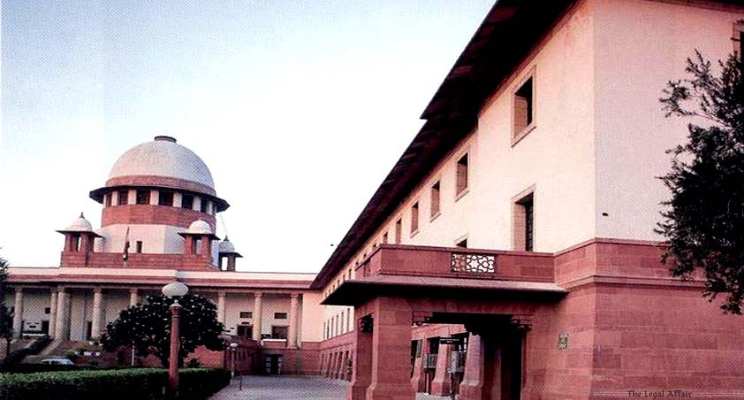
Introduction:
In the landmark case of Rajiv Ghosh v. Satya Narayan Jaiswal, the Supreme Court of India provided significant clarity on the application of Order XII Rule 6 of the Civil Procedure Code (CPC). This provision empowers courts to pronounce judgments based on admissions made by parties, either in pleadings or otherwise, without awaiting the determination of other questions in the suit.
Background of the Case:
The dispute arose when the respondent, Satya Narayan Jaiswal (plaintiff), filed an eviction suit against the petitioner, Rajiv Ghosh (defendant). Ghosh’s father was the original tenant of Jaiswal’s property. Following his father’s demise in 2016, Ghosh continued the tenancy. Under the West Bengal Premises Tenancy Act, 1997, such tenancy could extend up to five years post the tenant’s death. In 2018, Jaiswal served an eviction notice to Ghosh, who did not vacate the premises by 2021, leading to the eviction suit.
Plaintiff’s Contentions:
- Jaiswal argued that Ghosh had made clear admissions in his written statement that negated his defense.
- Based on these admissions, Jaiswal sought a judgment under Order XII Rule 6 CPC without proceeding to a full trial.
Defendant’s Contentions:
- Ghosh contended that his admissions were neither clear nor unequivocal.
- He argued that a full trial was necessary to address and resolve all pertinent issues.
Court’s Observations and Judgment:
The bench, comprising Justices JB Pardiwala and R Mahadevan, upheld the decisions of the lower courts, emphasizing several key points:
Scope of Admissions:
- The Court highlighted that, post the 1976 amendment, Order XII Rule 6 CPC allows judgments based on admissions made “in the pleading or otherwise,” whether orally or in writing.
- This means courts can consider admissions beyond formal pleadings, including those made in documents or oral statements recorded in court.
Discretionary Power:
- The Court reiterated that the power to pass a judgment on admission is discretionary.
- Such power should be exercised only when admissions are clear, unambiguous, and unequivocal.
- If there is any ambiguity or doubt regarding the admission, the matter should proceed to a full trial.
Suo-Motu Judgments:
The Court noted that a separate application under Order XII Rule 6 CPC is not mandatory.
Courts have the authority to pass judgments on admission on their own motion (suo-motu) at any stage of the suit.
Precedents Cited:
The Court referred to Uttam Singh Duggal & Co. Ltd. v. United Bank of India, where it was held that judgments on admission expedite justice when claims are admitted.
The Court also cited the Delhi High Court’s decision in ITDC Limited v. Chander Pal Sood and Son, emphasizing that admissions can be considered from statements recorded under Order X Rules 1 and 2 CPC.
Conclusion:
The Supreme Court’s ruling in this case underscores the importance of clear and unequivocal admissions for courts to exercise their discretionary power under Order XII Rule 6 CPC. It clarifies that such judgments can be based on admissions made beyond pleadings and that courts can act suo-motu without a separate application. This judgment aims to streamline judicial processes by allowing expedited decisions when admissions are evident, thereby reducing unnecessary litigation and promoting judicial efficiency.