


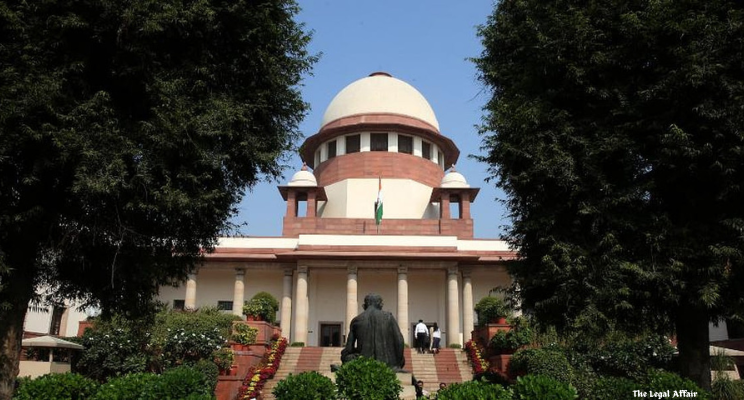
Introduction:
In Dilip Mehta v. Rakesh Gupta & Ors., the Supreme Court delivered a significant judgment clarifying the legal position regarding challenges to Lok Adalat awards passed under the Legal Services Authorities Act, 1987. The appellant, Dilip Mehta, approached the Court after the Madhya Pradesh High Court refused to entertain his writ petition filed under Article 227 of the Constitution challenging a compromise decree passed by the Jabalpur Lok Adalat. The High Court dismissed the petition on the ground that he had already filed objections before the Executing Court under Order XXI Rule 101 of the Code of Civil Procedure and therefore had an alternative remedy. The Supreme Court, however, held that Lok Adalat awards are endowed with statutory finality under the LSA Act and cannot be set aside by an Executing Court, whose role is strictly confined to execution of the award. It ruled that the only legally recognized avenue for challenging such an award is the constitutional supervisory jurisdiction of the High Court under Article 227, which is exceptional, limited and not equivalent to an appellate remedy. The judgment reinforces the objective of Lok Adalats to ensure finality in dispute resolution, prevent multiplicity of litigation and uphold the sanctity of consensual settlements while preventing misuse of ordinary civil procedures to reopen compromise awards.
Arguments of the Appellant:
The appellant, Dilip Mehta, argued before the Supreme Court that the compromise decree passed by the Jabalpur Lok Adalat was fundamentally flawed and had been obtained without free and informed consent. He submitted that the decree did not reflect a lawful or voluntary settlement and therefore required judicial scrutiny. The appellant contended that the High Court erred in holding that objections before the Executing Court under Order XXI Rule 101 CPC constituted an alternate remedy. According to him, the Executing Court had no jurisdiction under the Legal Services Authorities Act to question, annul or set aside a Lok Adalat award because such awards carry statutory finality and are deemed decrees of a civil court. He further submitted that his writ petition under Article 227 was the only available constitutional safeguard through which he could challenge the validity of the award. The appellant also argued that the High Court misunderstood the scheme of the LSA Act, since a Lok Adalat does not decide disputes on merits but passes an award solely based on compromise, making the validity of the compromise the foundation of the award. If the compromise itself is vitiated by fraud, coercion, misrepresentation or lack of consent, the only forum capable of judicially examining such issues is the High Court in its supervisory capacity. He emphasized that denying this remedy would render Lok Adalat proceedings immune even from fraud or illegality, which could never have been the intention of the Legislature. The appellant therefore sought setting aside of the High Court’s dismissal order, restoration of his writ petition, and an opportunity to demonstrate before the High Court the invalidity of the compromise that formed the basis of the Lok Adalat decree.
Arguments of the Respondents:
The respondents argued that the appellant’s challenge to the Lok Adalat decree was not maintainable and that the High Court was correct in holding that objections under Order XXI Rule 101 CPC constituted an effective alternative remedy. They contended that since the decree had already entered the execution stage, the appellant was required to raise all his objections before the Executing Court, whose jurisdiction, in their view, extended to determining disputes relating to possession, rights and interests arising during execution. The respondents argued that the appellant was attempting to bypass the procedural safeguards of the CPC by invoking Article 227 and that allowing such writ petitions would defeat the principles of finality attached to Lok Adalat awards. They maintained that the compromise decree was voluntarily executed, that no fraud or coercion was involved, and that the appellant was merely seeking to resile from an agreed settlement. The respondents also submitted that the writ jurisdiction cannot be used to reopen factual disputes or to undo compromise arrangements that were voluntarily entered into. They insisted that the execution proceedings were the appropriate forum to settle any ancillary questions and that the High Court correctly exercised judicial restraint by declining to examine the merits of the compromise in a supervisory writ petition. They therefore urged the Supreme Court to uphold the High Court’s decision and to reinforce the principle that writ jurisdiction should not be invoked to bypass statutory remedies or to obstruct execution of valid decrees.
Court’s Judgment:
The Supreme Court, after examining the statutory framework and judicial precedents, held that the High Court’s approach was legally unsustainable and contrary to the fundamental principles governing Lok Adalat awards under the Legal Services Authorities Act, 1987. The Court reiterated that a Lok Adalat does not adjudicate disputes on merits but facilitates settlement through compromise. Accordingly, an award passed by a Lok Adalat is not an adjudicated decree but a recognition and formalization of a settlement mutually agreed upon by the parties. This nature of the award grants it statutory finality, and Section 21 of the LSA Act expressly states that such an award is deemed to be a decree of a civil court and is final and binding on the parties. Crucially, the Act does not provide any appellate or plenary civil remedy for setting aside such an award. The Court observed that the very purpose of Lok Adalats would be defeated if parties were allowed to indirectly challenge compromise awards through civil suits, execution proceedings, or objections under Order XXI Rule 101 CPC. The Executing Court, it held, is confined strictly to executing the decree and cannot examine its legality or validity. It has no jurisdiction to annul or question the award, nor can it determine whether the underlying compromise was vitiated. The Supreme Court clarified that while Lok Adalat awards are final, they are not immune from scrutiny altogether. The only permissible avenue of challenge is through the High Court’s supervisory jurisdiction under Article 227, which can be invoked in exceptional situations where the compromise suffers from fraud, coercion, misrepresentation, or lack of consensus. The Court emphasized that the High Court, instead of dismissing the writ petition on the ground of an “alternative remedy,” ought to have examined the challenge on merits because no alternate statutory remedy exists for questioning a Lok Adalat award. The Executing Court, by statutory design, cannot entertain evidence or arguments related to the validity of the compromise. Therefore, the High Court committed a jurisdictional error in refusing to entertain the petition. The Supreme Court set aside the High Court’s decision, restored the appellant’s writ petition, and remanded the matter to the High Court for examination on merits. It held that the High Court must scrutinize the validity of the compromise, the circumstances under which the Lok Adalat decree was passed, and whether the award suffers from any legal infirmity warranting interference under Article 227. The judgment underscores the doctrinal position that Lok Adalat awards ensure finality, reduce litigation, and foster dispute resolution, but at the same time cannot foreclose constitutional remedies in exceptional cases. The Court concluded by reaffirming that Lok Adalats are vital institutions within the justice delivery system and must be protected from challenges disguised as execution objections or civil suits, while still allowing constitutional courts to intervene when justice demands such oversight.