


Introduction:
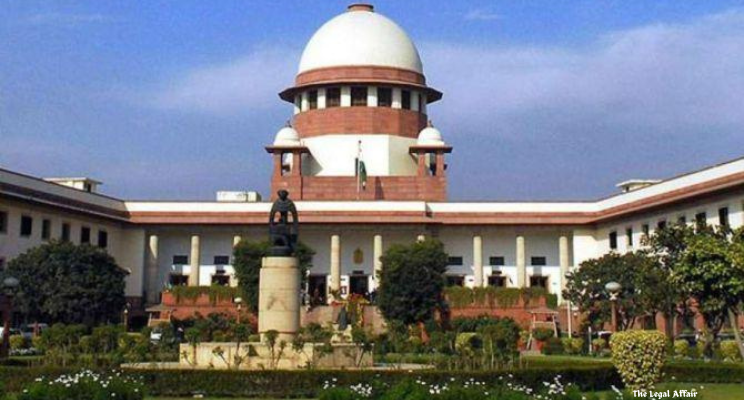
In a significant ruling,the Supreme Court of India in Hari Nandan Singh v. State of Jharkhand [2025 LiveLaw (SC) 280] examined the scope of Section 298 of the Indian Penal Code (IPC), which penalizes deliberate acts intended to wound religious sentiments. A Bench comprising Justices B.V. Nagarathna and Satish Chandra Sharma was hearing an appeal against the Jharkhand High Court’s refusal to discharge the appellant from criminal proceedings. The case arose from a complaint lodged by an Urdu translator and acting clerk (Right to Information) at the Sub-Divisional Office, Chas, who alleged that the appellant insulted him by calling him “Miyan-Tiyan” and “Pakistani” while he was performing his official duties. He further claimed that the appellant used criminal force to obstruct him. Based on these allegations, charges were framed against the appellant under Sections 353 (assault or criminal force to deter a public servant from duty), 298 (uttering words with deliberate intent to wound religious feelings), and 504 (intentional insult with intent to provoke breach of peace) of the IPC. The Supreme Court, however, found that the allegations did not meet the legal threshold for these offences, emphasizing that while the remarks were in poor taste, they did not amount to a deliberate attempt to wound religious feelings under Section 298 IPC. The Court also ruled that the charges under Sections 353 and 504 were not maintainable as there was no evidence of the use of criminal force or provocation likely to breach the peace.
Arguments of Both Sides:
The appellant, represented by Senior Advocate A. Sirajudeen and advocates Arya Kumari, Divya Singhvi, Pardeep Gupta, Parinav Gupta, Mansi Gupta, and Vipin Gupta, argued that the FIR was politically and personally motivated. They contended that mere verbal exchanges, even if offensive, do not constitute an offence under Section 298 IPC unless there is a clear intention to hurt religious feelings. The defense emphasized that calling someone “Miyan-Tiyan” or “Pakistani” might be improper, but it does not necessarily invoke religious sentiments or amount to an insult directed at a person’s faith. Furthermore, they argued that Section 353 IPC requires the use of criminal force to deter a public servant, and no such force was used in this case. The defense also pointed out that Section 504 IPC applies only when an intentional insult provokes an immediate breach of peace, which was not the case here, as there was no evidence that the complainant or anyone else was incited to violence. The appellant’s counsel also submitted that in a democratic society, stray remarks should not be criminalized unless they cause actual harm as per the legal provisions.
On the other hand, the State of Jharkhand, represented by Standing Counsel Vishnu Sharma and advocates Shiv Ram Sharma, Tulika Mukherjee, Venkat Narayan, and Beenu Sharma, argued that the appellant’s remarks were not casual statements but targeted insults meant to demean the complainant based on his religious identity. They contended that such remarks perpetuate social division and should be taken seriously in a diverse society like India. The prosecution emphasized that the appellant’s conduct went beyond mere verbal abuse and sought to obstruct the complainant’s official duties by using intimidation. They maintained that the appellant’s words had the effect of wounding the religious feelings of the complainant and, therefore, attracted Section 298 IPC. The prosecution also argued that while there was no direct evidence of physical force, the appellant’s aggression and verbal hostility could be seen as an attempt to obstruct an official’s duties under Section 353 IPC. Regarding Section 504 IPC, the State argued that calling someone derogatory names based on their religious or national identity could incite tensions, and the legal threshold for provocation of breach of peace should be broadly interpreted in sensitive cases.
Court’s Judgment:
After a thorough examination of the case, the Supreme Court concluded that the appellant’s remarks, while distasteful and unnecessary, did not fulfill the essential ingredients of the offence under Section 298 IPC. The Court held that for an act to be punishable under Section 298, there must be a deliberate and conscious intent to wound religious feelings, which was not established in this case. The Bench observed, “The appellant is accused of hurting the religious feelings of the informant by calling him ‘Miyan-Tiyan’ and ‘Pakistani.’ Undoubtedly, the statements made are in poor taste. However, it does not amount to hurting the religious sentiments of the informant.” The Court further noted that while the remarks could be offensive and inappropriate in a social context, criminalizing such speech under Section 298 would set a dangerous precedent and could lead to unnecessary curtailment of free expression.
Regarding Section 353 IPC, the Court ruled that the allegations did not establish the use of criminal force against the complainant. The Bench highlighted that mere verbal altercations, unless accompanied by physical aggression, do not fall within the ambit of Section 353, which specifically requires an act of force to prevent a public servant from discharging his duties. The judgment stated, “Evidently, there was no assault or use of force by the appellant to attract Section 353 IPC.”
As for Section 504 IPC, the Court observed that the prosecution had failed to show that the appellant’s remarks had provoked an imminent breach of peace. The Bench clarified that while offensive speech can be condemned in a civil society, not every offensive remark qualifies as a criminal offence under Section 504. It further added that unless a statement incites violence or disrupts public order, it should not attract penal consequences under this section. The Court held, “The appellant cannot be charged under Section 504 IPC, as there was no act on his part that could have provoked a breach of peace.”
Consequently, the Supreme Court set aside the Jharkhand High Court’s order and discharged the appellant from all charges, reaffirming the principle that not every offensive or inappropriate remark constitutes a criminal offence unless it meets the specific legal criteria established under the IPC. The judgment serves as an important precedent in defining the limits of free speech and the scope of laws protecting religious sentiments.