


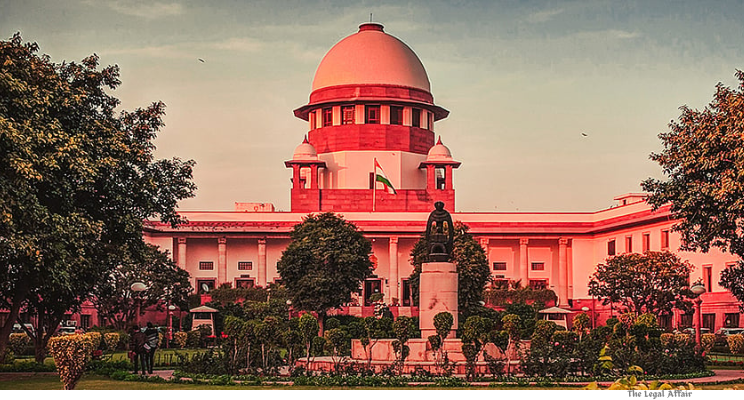
Introduction:
The Supreme Court in Manoj Rameshlal Chhabriya v. Mahesh Prakash Ahuja & Anr., 2025 LiveLaw (SC) 272, addressed the issue of how High Courts should assess applications for leave to appeal under Section 378(3) Cr.P.C. The bench comprising Justices JB Pardiwala and R Mahadevan held that the High Court should not deny leave solely based on whether the acquittal would be overturned but must determine whether a prima facie case exists or if arguable points have been raised. The case arose from the Bombay High Court’s decision to reject the State’s application for leave to appeal against an acquittal, reasoning that the trial court’s view was a “possible view.”
Arguments:
The informant, Manoj Rameshlal Chhabriya, challenged this decision before the Supreme Court, arguing that the High Court failed to apply its mind to whether the appeal raised substantial points requiring review.
Judgement:
The Supreme Court, after hearing arguments from Senior Advocates Gaurav Agrawal (for the appellant), R. Basant (for the respondent), and Sanjay Kharde (for the State), found the High Court’s approach flawed. It held that at the leave stage, the High Court must consider whether there is a prima facie case and not whether the acquittal will necessarily be set aside. Relying on State of Maharashtra v. Sujay Mangesh Poyarekar (2008) 9 SCC 475, the Supreme Court clarified that denying leave without examining the existence of arguable points is an error. Consequently, it granted leave to appeal and remitted the matter to the High Court for fresh consideration. The Court refrained from ruling on whether the informant had locus standi to challenge the High Court’s decision but underscored that the case hinged on circumstantial evidence, with a key witness— the deceased’s 15-year-old son— turning hostile. The judgment reinforces the principle that appeals against acquittals require thorough scrutiny to ensure justice.