


Introduction:
The Supreme Court has clarified that a disputed signature, handwriting or finger impression does not automatically have to be referred to a handwriting or forensic expert. The Court has held that where the material available before it enables a judicial comparison, the Court is required to exercise its own power of comparison under Section 72 of the Bharatiya Sakshya Adhiniyam, 2023 (BSA). Expert opinion may certainly be sought where the circumstances warrant it, particularly where the Court entertains a genuine doubt or where the writing or impression is smudgy, vague or very light. However, the mere fact that the Court is not technically a handwriting expert cannot, by itself, be treated as a reason for routinely directing expert examination.
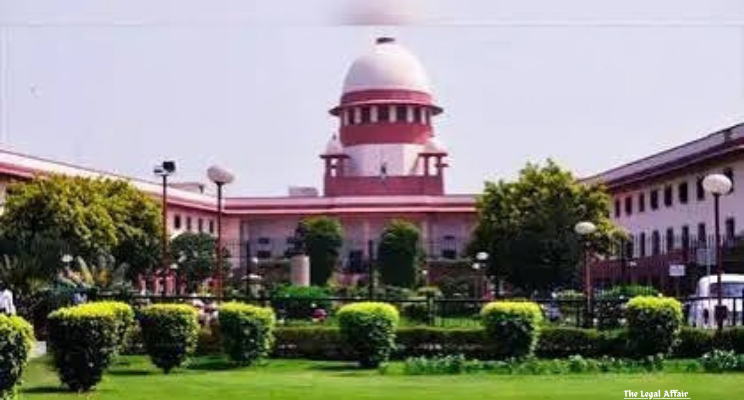
The ruling was delivered by a Bench comprising Justice Ahsanuddin Amanullah and Justice Manmohan in Gopal Pathak v. Nitin Alias Pappu & Anr., Civil Appeal No. 13004 of 2026, arising out of SLP (C) No. 513 of 2026. The dispute arose from proceedings concerning the genuineness of a Will and the rights claimed on the basis of that document. The Supreme Court set aside an order of the Madhya Pradesh High Court at Gwalior which had directed that the disputed signatures appearing on the Will be examined by a handwriting expert. The Court restored the order of the trial court which had declined the request for expert examination. The judgment was delivered on September 18, 2026.
The controversy essentially required the Supreme Court to examine the relationship between two provisions of the BSA. Section 39 deals with the relevance of expert opinions, including opinions concerning the identity of handwriting or signatures. Section 72, on the other hand, expressly empowers the Court to compare a disputed signature, writing or seal with another signature, writing or seal which has been admitted or proved to the satisfaction of the Court to have been made by the same person. The provision also permits the Court to direct a person present before it to write words or figures for the purpose of comparison and expressly extends the provision to finger impressions.
The issue, therefore, was not whether a Court possesses the power to seek expert assistance. The Supreme Court accepted that such power exists. The real question was whether expert evidence becomes indispensable every time the genuineness of a signature or handwriting is disputed. The Court answered the question in the negative.
The litigation originated before the trial court, where the respondent sought examination by a handwriting expert for comparison of signatures appearing on the disputed Will. The trial court declined the application. The Madhya Pradesh High Court at Gwalior subsequently interfered with that decision and allowed the application, reasoning that expert evidence was essential to determine the genuineness of the Will because the Court itself was not an expert in handwriting examination.
Aggrieved by the High Court’s intervention, Gopal Pathak approached the Supreme Court. His central contention was that Section 72 BSA gives the Court an independent statutory power to compare signatures and handwriting. Consequently, a party cannot insist upon expert examination as an automatic procedural step merely because the authenticity of a signature is questioned.
The Supreme Court’s ruling is significant because it clarifies the manner in which expert evidence is to be approached under the new evidentiary framework. While expert assistance remains an important evidentiary tool, the Court has made it clear that it cannot be transformed into a mandatory requirement in every case involving disputed handwriting, signatures or finger impressions. The decision also explains the proper understanding of the Supreme Court’s earlier observations in Thiruvengada Pillai v. Navaneethammal & Anr., which had cautioned courts against casually relying upon their own comparison of disputed impressions.
The judgment thus seeks to maintain a balance between judicial responsibility and scientific assistance. Courts are not expected to mechanically send every disputed document to an expert, but neither are they expected to make a casual visual comparison where the material is unclear or the Court genuinely requires specialised assistance.
Arguments of the Parties:
The appellant, Gopal Pathak, challenged the Madhya Pradesh High Court’s decision principally on the ground that the power to obtain expert evidence under Section 39 of the BSA could not be exercised as a matter of routine. According to the appellant, the High Court had proceeded on an erroneous assumption that expert evidence was necessarily required whenever the genuineness of a signature or handwriting was disputed.
The appellant argued that Section 72 BSA specifically empowers a Court to compare a disputed signature or writing with a signature or writing which has been admitted or proved to have been made by the same person. Therefore, where the Court is capable of undertaking the comparison on the basis of the material before it, there is no legal requirement that the document must first be examined by a handwriting expert.
The submission was not that expert evidence is impermissible. Rather, the appellant contended that the decision whether to seek such evidence must remain within the judicial discretion of the Court. A party cannot claim expert examination as an automatic entitlement merely by raising a dispute regarding a signature. If such an approach were accepted, every disputed signature would necessarily result in expert examination, regardless of whether the Court itself could effectively compare the documents.
The appellant also relied upon the evidentiary nature of an expert’s opinion. An expert does not determine the ultimate issue for the Court. The opinion merely constitutes relevant evidence which assists the Court in arriving at its own conclusion. Consequently, describing expert evidence as “essential” merely because a judge is not technically trained as a handwriting expert would improperly elevate an expert’s opinion above the judicial function of appreciating evidence.
Another submission advanced on behalf of the appellant concerned the respondent’s own pleadings and assertions. It was contended that the respondent had referred, in the application filed under Section 39 BSA, to the father being a tenant. According to the appellant, this admission was inconsistent with the respondent’s attempt to simultaneously challenge the genuineness of the Will by questioning the signatures appearing on it. The appellant therefore urged that the application for expert examination should not be permitted to become a means of unnecessarily prolonging the adjudication.
The appellant further placed reliance upon the statutory scheme under Section 72 BSA. The submission was that the new evidence law expressly preserves the Court’s power to compare disputed writings and signatures. Thus, the existence of Section 39, which recognises expert opinion as a relevant fact, does not nullify or restrict the independent judicial power under Section 72.
On the other hand, the respondents defended the Madhya Pradesh High Court’s order directing expert examination. Their case was that the genuineness of the Will was a material issue in the proceedings and that the signatures appearing on the document were disputed. Since the validity of the Will had consequences for the rights claimed by the parties, the respondents argued that the safest course was to obtain an opinion from a handwriting expert rather than leave the question to the Court’s own visual comparison.
The respondents relied particularly upon the Supreme Court’s decision in Thiruvengada Pillai v. Navaneethammal & Anr., reported in (2008) 4 SCC 530. They argued that the Supreme Court had previously recognised the dangers associated with courts themselves comparing disputed handwriting, signatures and finger impressions. In their submission, such comparison could be hazardous or risky, and expert assistance was therefore necessary in circumstances where the authenticity of a document was seriously disputed.
The reliance upon Thiruvengada Pillai was intended to demonstrate that the Court should exercise caution before determining the genuineness of a signature merely by looking at it. According to the respondents, a handwriting expert possesses specialised knowledge and experience which a judge ordinarily does not possess. Consequently, directing an expert examination would provide an additional safeguard against an erroneous conclusion.
The respondents therefore supported the High Court’s reasoning that expert evidence was essential for determining whether the Will was genuine. Their position was, in substance, that where the very foundation of a party’s claim rested upon the disputed Will, the Court should not undertake the comparison without the assistance of an expert.
The competing arguments consequently presented two different approaches to the role of expert evidence. The appellant’s case emphasised judicial discretion and the statutory power under Section 72 BSA, while the respondents stressed caution and the recognised risks involved in judicial comparison of disputed writings. The Supreme Court was therefore required to reconcile these two considerations rather than simply decide whether expert evidence could ever be obtained.
Court’s Judgment:
The Supreme Court found force in the appellant’s submissions and set aside the Madhya Pradesh High Court’s order directing examination by a handwriting expert. The Court held that the High Court had proceeded on an incorrect understanding of the legal position by treating expert evidence as essential merely because the Court itself was not an expert in handwriting.
At the outset, the Court emphasised the statutory power contained in Section 72 of the BSA. The provision enables the Court to compare a disputed signature, writing or seal with another signature, writing or seal which has been admitted or proved to the satisfaction of the Court to have been made by the same person. The provision also extends to finger impressions.
The significance of Section 72 lies in the fact that the law itself contemplates judicial comparison. The Court is not required to remain dependent upon expert evidence whenever the identity or genuineness of a signature becomes an issue. The statute expressly recognises comparison by the Court as one of the permissible methods of determining whether a particular signature or writing belongs to the person to whom it is attributed.
The Supreme Court accordingly rejected the proposition that a judge can avoid exercising this statutory power simply by stating that the judge is not a handwriting expert. The Court observed that it is its duty to compare the signature or writing and arrive at its own conclusion where the circumstances permit such comparison. Expert evidence, by contrast, remains an opinion which assists the Court but does not bind it.
This distinction between judicial determination and expert assistance is fundamental to the law of evidence. An expert may possess specialised knowledge and may provide an opinion based on that expertise, but the ultimate responsibility for appreciating evidence and deciding the dispute continues to rest with the Court. Therefore, the existence of an expert opinion does not transfer the adjudicatory function from the judge to the expert.
The Court also clarified that its ruling should not be understood as discouraging the use of expert evidence. There can be circumstances in which expert assistance is both appropriate and necessary. The Court specifically recognised situations where it entertains doubt regarding the genuineness of the disputed writing or impression, or where the writing or impression is smudgy, vague or very light. In such cases, the Court has full discretion to obtain expert assistance.
This qualification is important because the judgment does not establish an inflexible rule that courts must always compare signatures themselves. Instead, it establishes a principle of judicial discretion. A Court may compare the disputed and admitted writings where the material is sufficiently clear and the comparison can reasonably be undertaken. Where the Court finds itself unable to reach a satisfactory conclusion, it may seek the assistance of an expert.
The Supreme Court’s approach is therefore neither an unconditional preference for judicial comparison nor an unconditional preference for expert examination. The decisive factor is the nature of the material and the circumstances of the particular case.
The Court’s treatment of Thiruvengada Pillai v. Navaneethammal & Anr. is particularly significant. The respondents had relied upon that judgment to contend that disputed handwriting or signatures should ordinarily be referred to an expert because judicial comparison could be hazardous and risky.
The Supreme Court rejected the interpretation that Thiruvengada Pillai makes expert evidence mandatory in every case involving disputed handwriting, signatures or finger impressions. It clarified that the observations in that judgment cannot be read in isolation or stretched to mean that examination of an expert witness is essential in every such dispute.
In Thiruvengada Pillai, the Supreme Court had cautioned courts against arriving at conclusions based upon a casual glance or routine visual comparison. The Court had recognised that where a disputed finger impression is unclear, smudged or vague, a judge should not simply hazard a guess. At the same time, the judgment itself acknowledged that where the disputed and admitted impressions are clear and the Court is in a position to identify their relevant characteristics, the Court may record its own finding even without expert evidence.
The present judgment consequently treats Thiruvengada Pillai as a decision emphasising caution rather than as one creating an absolute requirement of expert examination. The distinction is crucial. A warning against careless comparison cannot be transformed into a statutory mandate requiring expert evidence in every case.
The Supreme Court’s approach is also consistent with the earlier jurisprudence concerning the corresponding provision of the Indian Evidence Act, 1872. Under the old Section 73, courts possessed the power to compare disputed handwriting and signatures with admitted or proved specimens. Section 72 BSA substantially carries forward that statutory mechanism under the new evidentiary regime.
The Court’s reasoning is further informed by the established principle that expert evidence is opinion evidence. Expert testimony may assist the Court on questions requiring specialised knowledge, but the expert does not decide the dispute. The Court must independently evaluate the expert’s opinion along with the rest of the evidence.
This principle prevents Section 39 BSA from being interpreted in a manner that would make expert examination a compulsory preliminary step in every handwriting dispute. Section 39 identifies expert opinion as a relevant fact; it does not state that the Court is incapable of determining the issue without such opinion.
The decision also preserves the practical efficiency of civil adjudication. If every disputed signature were automatically sent to a handwriting expert, parties could potentially delay proceedings by simply disputing the signature of a document and insisting upon forensic examination. The Supreme Court’s ruling prevents the evidentiary process from becoming unnecessarily mechanical.
At the same time, the Court’s recognition of situations involving unclear or doubtful writings ensures that procedural efficiency does not come at the cost of accuracy. Where the Court genuinely requires specialised assistance, the power to obtain an expert opinion remains fully available.
The Supreme Court therefore placed responsibility on trial courts to exercise their discretion judicially. A trial judge must consider the nature and quality of the disputed writing, the availability of admitted signatures, the surrounding evidence and whether a reliable comparison can be undertaken. If the material is sufficiently clear, the Court may undertake the comparison contemplated under Section 72 BSA. If it is not, expert assistance may be sought.
The Court also made it clear that the existence of expert evidence would not itself determine the dispute. Even where an expert is examined, the ultimate conclusion remains that of the Court. This reinforces the broader principle that evidence, whether expert, documentary or oral, must ultimately be evaluated by the adjudicating court.
Applying these principles to the case before it, the Supreme Court concluded that the Madhya Pradesh High Court had erred in treating handwriting expert evidence as essential for determining the genuineness of the Will. The mere assertion that the Court was not an expert could not justify abandoning the statutory power of comparison under Section 72 BSA.
The High Court’s order was consequently set aside. The trial court’s decision declining the application for expert examination was restored. The appeal filed by Gopal Pathak was accordingly allowed. The Supreme Court thereby reaffirmed that a party cannot demand expert examination as an automatic consequence of disputing a signature or handwriting.
The judgment carries broader significance under the Bharatiya Sakshya Adhiniyam, particularly because courts and litigants are continuing to adapt to the new statutory framework. By expressly recognising the Court’s power under Section 72, the Supreme Court has clarified that the BSA does not transform expert evidence into an indispensable component of every dispute concerning signatures or handwriting.
The ruling also provides a useful judicial balance. On one side, it prevents courts from casually relying on expert evidence merely because it appears easier to outsource the comparison. On the other, it recognises that expert assistance may be necessary when the Court is genuinely unable to arrive at a reliable conclusion. The decisive consideration is therefore not whether a signature has been disputed, but whether the Court can responsibly determine the issue on the material available before it.
Ultimately, the Supreme Court’s decision underscores that expert evidence is an aid to adjudication, not a substitute for adjudication. Section 72 BSA places an active responsibility upon the Court to undertake comparison where appropriate, while preserving the discretion to seek specialised assistance where doubt or the condition of the material makes such assistance necessary. The judgment therefore establishes that a disputed signature does not, by itself, trigger an automatic right to handwriting examination. The Court must first exercise its judicial discretion, keeping in mind both the statutory power of comparison and the need for caution where the evidence is unclear or capable of producing an unreliable conclusion.