


Introduction:
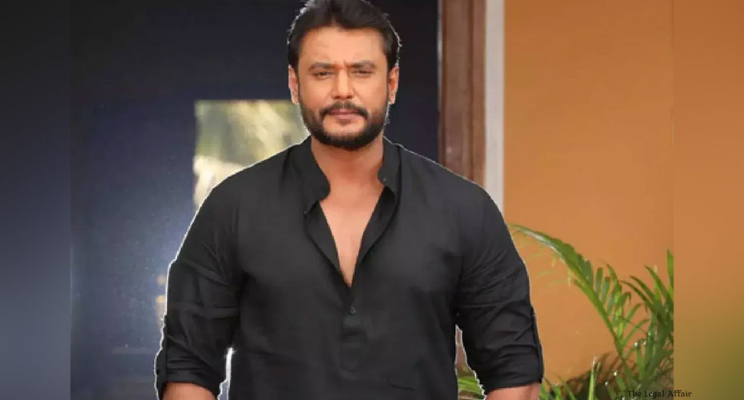
In a landmark ruling with strong implications for the criminal justice system, the Supreme Court of India on August 13, 2025, set aside the bail granted by the Karnataka High Court to Kannada film actors Darshan, Pavitra Gowda, and five other accused in the high-profile Renukaswamy murder case. The case, titled The State of Karnataka vs. Sri Darshan etc. etc., SLP (Crl) No. 516-522/2025, citation 2025 LiveLaw (SC) 801, stems from the brutal killing of Renukaswamy in June 2024, allegedly involving abduction, prolonged torture, and the eventual disposal of the body in a drain. The accused list includes prominent film star Darshan (A2), Pavitra Gowda, Nagaraju R., Anu Kumar @ Anu, Lakshman M., Jagadeesh @ Jagga, and Pradoosh S. Rao @ Pradoosh. The State of Karnataka challenged the Karnataka High Court’s December 13, 2024, order granting them bail, arguing that it was a miscarriage of justice. A Supreme Court bench comprising Justice J.B. Pardiwala and Justice R. Mahadevan allowed the State’s appeal, holding that the High Court’s decision suffered from “serious legal infirmities,” failed to record cogent reasons under Sections 302, 120B, and 34 IPC, and disregarded vital factors such as the gravity of the offence, the accused persons’ influence, and post-bail misconduct. The Court ordered immediate custody of the accused and directed expeditious trial proceedings, underscoring that “no one is above the law” and that celebrity status cannot be a shield against legal accountability.
Arguments on Behalf of the State of Karnataka:
The State, through its counsel, mounted a strong challenge to the High Court’s bail order, contending that it was perverse, mechanical, and ignored binding legal principles for granting bail in cases involving heinous offences such as murder and criminal conspiracy. It was argued that the High Court failed to appreciate the seriousness of the allegations under Sections 302, 120B, and 34 IPC, where the accused were alleged to have jointly conspired to abduct and brutally torture the victim for three days, leading to his death. The State stressed that there was compelling forensic and circumstantial evidence linking the accused to the crime scene, along with multiple witness statements that placed them in direct involvement. The prosecution pointed to allegations of witness intimidation and manipulation, including Darshan’s post-bail actions such as sharing a stage with prosecution witnesses and maintaining contact with police witnesses, thereby creating a chilling effect on the trial process.
The State also highlighted Darshan’s celebrity status as a liability, not an asset, in the bail context, arguing that his mass following, political connections, and financial power gave him the ability to subvert the justice process. Jail records, FIRs, and reports of VIP treatment during custody, including violation of prison protocols, were cited as clear indicators of his ability to influence and defy the system. This, the State argued, was a tangible and imminent threat to a fair trial. The State emphasised that the High Court had, at the pre-trial stage, embarked on an impermissible detailed evaluation of contradictions in witness statements, which is the exclusive domain of the trial court. The bail order, according to the prosecution, was a virtual “pre-acquittal” and an affront to the principle that bail discretion must be exercised with caution in cases of grave offences where public interest and justice are at stake.
Arguments on Behalf of the Accused:
The accused, represented by senior defence counsel, defended the High Court’s decision as a proper exercise of judicial discretion. They argued that the evidence against the accused, including Darshan, was primarily based on statements of two alleged eye-witnesses whose credibility was questionable due to contradictions and delays in reporting. The defence submitted that there was no direct evidence proving Darshan’s physical participation in the acts leading to the death of Renukaswamy. They also contended that the prosecution’s case was built on conjecture and circumstantial links, with no concrete proof of conspiracy beyond the accused’s alleged presence at certain locations.
The defence further claimed that the accused had cooperated with the investigation, that there was no real risk of flight, and that conditions could be imposed to ensure they did not tamper with evidence or approach witnesses. They criticised the State’s reliance on allegations of “VIP treatment” in jail, arguing that such claims were exaggerated or unproven and irrelevant to the bail question. The defence maintained that celebrity status should not be used to justify harsher bail standards, as equality before the law meant avoiding both undue leniency and undue prejudice. They urged the Supreme Court to respect the High Court’s discretionary jurisdiction, stressing that pre-trial incarceration should be an exception, not the rule, especially when the trial was likely to take a long time.
Supreme Court’s Judgment and Reasoning:
The Supreme Court bench, after reserving judgment on July 24, 2025, delivered a strongly worded verdict on August 13, cancelling the bail of all accused. Justice R. Mahadevan, authoring the judgment, held that the High Court’s order was legally flawed and exhibited “manifest perversity,” particularly in treating Darshan’s celebrity stature as a mitigating factor. The Court stated unequivocally that fame and public influence could not be grounds for leniency; in fact, they heightened the risk of witness intimidation and subversion of justice.
The Court observed that Darshan was “not a common undertrial” but a public figure with a mass following, political clout, and financial strength. His conduct while in custody—including reported violations of jail rules, misuse of facilities, and allegations of VIP treatment—demonstrated a capacity to defy institutional authority. Post-bail, his actions such as attending public events, sharing a stage with prosecution witnesses, and maintaining influence over police witnesses were cited as concrete instances that his liberty posed “a real and imminent threat” to the integrity of the trial. The Court underscored that celebrities serve as social role models and that accountability for them should be greater, not lesser, given their influence on public behaviour and values.
The bench criticised the High Court for undertaking a detailed pre-trial assessment of witness credibility, noting that such matters are the exclusive preserve of the trial court during cross-examination. The High Court’s focus on alleged contradictions and delays in witness statements at the bail stage amounted to prejudging the evidence, which was legally impermissible. The Supreme Court stressed that in cases involving grave charges like murder, the nature and gravity of the offence, potential interference with witnesses, and risk to the trial process must be primary considerations, and in this case, those factors overwhelmingly militated against bail.
Justice J.B. Pardiwala, concurring, delivered an oral remark describing the judgment as “ineffable” and a strong message that “no one is above the law, no one is below it.” He emphasised that obedience to law is a right demanded by the people, not a favour granted by the accused, and warned against any form of preferential treatment to accused persons, including in custody. He cautioned that if instances of “five-star” jail treatment came to light, immediate action including suspension of the jail superintendent and culpable officials would be warranted.
Ultimately, invoking its extraordinary jurisdiction under Section 439(2) of the Code of Criminal Procedure, the Court set aside the High Court’s December 13, 2024, order, cancelled the bail of all accused, and directed their immediate custody. The bench also ordered that the trial be conducted expeditiously, with judgment rendered on merits in accordance with law, and clarified that its observations were confined to the bail question and should not influence the trial outcome.
This ruling not only reaffirms the principle that bail in serious offences must be granted with utmost caution but also sends a powerful signal that celebrity status will not insulate individuals from the rigours of criminal law. The Court’s emphasis on equality before the law under Article 14 of the Constitution reinforces public faith in the impartiality of the justice system, especially in cases attracting intense public scrutiny.