


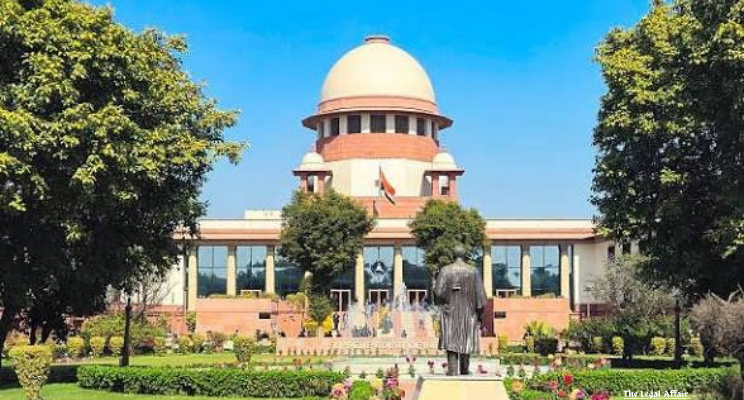
Introduction:
The Supreme Court of India has set aside an order granting anticipatory bail to a Karnataka-cadre Indian Police Service (IPS) officer accused of involvement in an alleged corruption and extortion racket operating in the name of Lokayukta officials. The Court held that the allegations against the officer, who was serving as the Superintendent of Police (SP) of the Lokayukta Police at the relevant time, required serious consideration, particularly in view of his position and the alleged abuse of authority within an institution established to investigate corruption.
A Bench comprising Justice Sanjay Kumar and Justice Sanjeev Sachdeva allowed an appeal filed by the Karnataka Lokayukta Police challenging the Karnataka High Court’s decision granting pre-arrest bail to IPS officer Srinath Joshi Mahadev. The Supreme Court observed that a senior police officer accused of abusing his official position within the Lokayukta establishment could not claim parity with an ordinary individual seeking protection against arrest. It further held that the prosecution had placed material on record that warranted deeper examination and that the High Court was not justified in foreclosing the possibility of custodial interrogation by granting anticipatory bail.
The case arose from allegations concerning an extortion racket allegedly operating in the name of Lokayukta officials. The allegations suggested that individuals associated with the police establishment were involved in exploiting the authority and reputation of the anti-corruption institution to facilitate unlawful activities. The matter assumed particular significance because the alleged misconduct involved a police officer holding a senior supervisory position within the very organisation entrusted with investigating corruption and misconduct by public servants.
Srinath Joshi Mahadev, a Karnataka-cadre IPS officer, was serving as the Superintendent of Police of the Lokayukta Police when the alleged offences were said to have occurred. The prosecution alleged that his position within the establishment and his alleged association with other individuals connected to the racket required investigation. The allegations were not limited to the conduct of an ordinary subordinate employee but extended to a senior officer who was entrusted with responsibilities within the anti-corruption machinery.
One of the important individuals referred to in the prosecution’s material was Ningappa Savantha, Accused No. 1, who was a police constable and had subsequently been dismissed from service. The prosecution alleged that Savantha was in contact with Joshi and used to visit his office. This alleged association became relevant to the prosecution’s challenge against the grant of anticipatory bail, as it was argued that the material required further investigation into the possible involvement of the senior officer.
Joshi had approached the Karnataka High Court seeking anticipatory bail, invoking the legal protection available under Section 438 of the Code of Criminal Procedure, 1973. Anticipatory bail is a discretionary remedy intended to protect an individual against arrest where the circumstances justify such protection. However, the grant of such relief requires the court to consider the nature and gravity of the accusations, the material available against the applicant, the possibility of custodial interrogation and other relevant circumstances.
The High Court granted anticipatory bail to Joshi. Aggrieved by this decision, the Karnataka Lokayukta Police approached the Supreme Court, contending that the High Court had failed to adequately consider important materials collected during the investigation and the seriousness of the allegations against the officer.
The principal issue before the Supreme Court was whether anticipatory bail had been correctly granted despite the allegations of abuse of official position, the seniority of the accused officer and the prosecution material indicating his alleged association with another accused person. The Court was also required to consider whether the circumstances justified preserving the possibility of custodial interrogation.
Arguments of the Parties:
The Karnataka Lokayukta Police, appearing as the appellant before the Supreme Court, challenged the High Court’s decision granting anticipatory bail to Srinath Joshi Mahadev. The prosecution’s central grievance was that the High Court had granted protection against arrest without adequately examining the material collected during the investigation and the seriousness of the allegations concerning the officer’s alleged involvement in the extortion racket.
The prosecution’s case was that the allegations required a thorough investigation because they involved the alleged misuse of authority within the Lokayukta establishment. The institution is primarily intended to investigate corruption and ensure accountability among public servants. Therefore, allegations suggesting that an officer holding a senior position within its police wing was himself involved in corruption warranted particularly careful judicial consideration.
The appellant emphasised the official position held by Joshi when the alleged offences were committed. As the Superintendent of Police of the Lokayukta Police, he occupied a position of responsibility within an organisation entrusted with investigating corruption-related offences. The prosecution’s challenge raised the concern that the alleged misuse of such authority could not be examined in the same manner as an ordinary allegation against an individual having no comparable institutional responsibilities.
Another significant aspect of the prosecution’s case concerned the alleged association between Joshi and Ningappa Savantha, Accused No. 1, who was a police constable and had since been dismissed from service. According to the material relied upon by the prosecution, Savantha was allegedly in contact with Joshi and used to visit his office.
The prosecution considered these circumstances relevant to determining the possible extent of Joshi’s involvement in the alleged racket. It maintained that the relationship between the two individuals and the circumstances surrounding their alleged interactions required further examination. Granting anticipatory bail at that stage, according to the appellant’s challenge, could prematurely restrict the investigative process by removing the possibility of custodial interrogation.
The Lokayukta Police accordingly questioned the High Court’s approach in granting pre-arrest protection without sufficiently assessing whether custodial interrogation might be necessary to investigate the allegations. The prosecution sought setting aside of the anticipatory bail order so that the investigation could proceed without the restrictions arising from such protection.
On the other hand, Srinath Joshi Mahadev, the respondent before the Supreme Court, defended the anticipatory bail granted by the Karnataka High Court. Through his legal representatives, he opposed the appeal filed by the Lokayukta Police and sought to sustain the protection against arrest.
The respondent’s position was that the High Court had already examined his application for anticipatory bail and exercised its discretion in his favour. The challenge before the Supreme Court therefore concerned whether there was sufficient justification to interfere with that discretionary decision.
However, the available case summary does not reproduce the respondent’s detailed written submissions or the specific grounds advanced in support of anticipatory bail. It would consequently be inappropriate to attribute particular factual or legal arguments to him that are not reflected in the material provided.
The Supreme Court was therefore called upon to examine the legality of the High Court’s decision in light of the prosecution material, the nature of the allegations and the respondent’s position within the Lokayukta establishment. The central consideration was whether the High Court had appropriately assessed the circumstances before granting protection against arrest or whether the prosecution’s material warranted allowing the investigation to proceed with the possibility of custodial interrogation.
Court’s Judgment:
The Supreme Court allowed the appeal filed by the Karnataka Lokayukta Police and set aside the Karnataka High Court’s order granting anticipatory bail to Srinath Joshi Mahadev. The Bench of Justice Sanjay Kumar and Justice Sanjeev Sachdeva held that the allegations against the respondent required serious consideration, particularly because he was a senior police officer accused of allegedly abusing his official position within the Lokayukta establishment.
The Court attached considerable importance to the respondent’s position as a member of the uniformed service holding the rank of Superintendent of Police. It observed that the allegations were not ordinary accusations against an individual but concerned the alleged misuse of official authority within an institution specifically established to investigate corruption.
The Supreme Court emphasised that the purpose behind establishing the Lokayukta is to ensure accountability and address corruption in public administration. In such circumstances, allegations that an officer entrusted with responsibilities within the Lokayukta Police was himself allegedly involved in corrupt activities required careful judicial examination.
The Court observed:
“The inescapable fact is that the respondent is a member of the uniformed service and is of the rank of no less than the Superintendent of Police. Grave accusations have been levelled against him in the context of his alleged abuse of office within the establishment of the Lokayuktha. As the very objective of the Lokayuktha’s establishment is to check corruption, the allegation against the respondent to the effect that he is himself a part of such corruption, warranted serious consideration.”
The observation reflects the Court’s concern regarding the nature of the alleged misconduct and the institutional responsibility attached to the respondent’s position. The Court did not treat the respondent’s official rank as establishing his guilt. Rather, it considered his position relevant while assessing the seriousness of the allegations and the circumstances surrounding the request for anticipatory bail.
The Supreme Court further observed that a senior officer of the uniformed service could not claim parity with an ordinary individual seeking protection from being implicated in a criminal case or subjected to investigation and arrest. The Court stated that the respondent’s position and the allegations concerning the alleged abuse of official authority required a more careful examination of the request for pre-arrest protection.
It observed:
“Being a member of a uniformed service, the respondent cannot claim parity with a layman, who seeks protection from being arraigned as an accused in a criminal case and being investigated/arrested in connection therewith.”
This observation must be understood in the context of the specific allegations and circumstances of the case. The Court’s reasoning was not that public servants or police officers are categorically ineligible for anticipatory bail. Rather, it highlighted that the respondent’s senior position, the nature of the alleged abuse of authority and the institutional context were relevant considerations that could not be overlooked while examining his entitlement to pre-arrest protection.
The Court also found fault with the High Court’s failure to give adequate consideration to the material collected by the prosecution. It noted that the investigating agency had procured material that required deeper examination before the possibility of custodial interrogation could be ruled out.
The prosecution’s material included allegations concerning the relationship between Joshi and Ningappa Savantha, Accused No. 1, who was a police constable and had subsequently been dismissed from service. According to the material relied upon by the prosecution, Savantha was allegedly in contact with Joshi and used to visit his office.
The Supreme Court considered this circumstance relevant to the assessment of the investigation. The alleged association between the senior officer and the dismissed constable was among the matters that required further examination. The Court was of the view that the prosecution material could not simply be disregarded while deciding whether the respondent should receive protection against arrest.
Importantly, the Court did not treat the alleged visits to Joshi’s office or the asserted association between the two individuals as conclusive proof of criminal involvement. Instead, it considered the material in the context of the investigation and the need to preserve the possibility of custodial interrogation.
The Court held that the High Court had committed an error by granting anticipatory bail without adequately considering these aspects. By granting pre-arrest protection, the High Court had effectively foreclosed the possibility of custodial interrogation despite the existence of material that warranted closer examination.
The Supreme Court observed:
“Given the material procured by the prosecution, which warranted deeper examination, the High Court was not justified in foreclosing the possibility of custodial interrogation by granting anticipatory bail to the respondent.”
The observation is significant in understanding the approach adopted by the Supreme Court towards anticipatory bail in cases involving allegations of serious corruption and abuse of official authority. The Court recognised that anticipatory bail is an important protection of personal liberty, but its exercise remains discretionary and must be guided by the circumstances of each case.
Under Section 438 of the CrPC, a court considering anticipatory bail must assess the nature and gravity of the accusation, the antecedents of the applicant, the possibility of the applicant fleeing from justice and whether the accusation appears to have been made with the object of injuring or humiliating the applicant through arrest. The provision also permits the imposition of appropriate conditions while granting protection.
The exercise of this discretion requires a careful balance between an individual’s right to personal liberty and the legitimate requirements of a criminal investigation. While arrest cannot be treated as an automatic consequence of an accusation, neither can anticipatory bail be granted without considering the nature of the allegations and the material available against the applicant.
In the present case, the Supreme Court found that the High Court had not adequately accounted for the prosecution material requiring further examination. The allegations involved the possible misuse of a senior official position within an anti-corruption institution, and the circumstances surrounding the alleged association between the respondent and another accused person required further investigation.
The Court’s decision therefore underscores that the possibility of custodial interrogation is a relevant consideration while deciding anticipatory bail, particularly where the prosecution demonstrates that important aspects of the alleged offence require deeper investigation.
At the same time, the judgment does not establish that custodial interrogation is mandatory in every corruption case or that senior police officers must be denied anticipatory bail merely because of their official rank. The Court’s conclusion was based on the combined circumstances before it, including the seriousness of the accusations, the respondent’s position and the material collected by the prosecution.
Having found that the High Court was not justified in granting anticipatory bail, the Supreme Court proceeded to set aside the impugned order. It directed Srinath Joshi Mahadev to surrender within three weeks from the date of the Supreme Court’s order.
The Court further clarified that the respondent would remain at liberty to seek regular bail after surrendering. Such an application could be filed before the appropriate forum and would have to be considered in accordance with law.
The Supreme Court accordingly held:
“We, therefore, set aside the order passed by the High Court granting anticipatory bail to the respondent and direct him to surrender within a period of three weeks from the date of this order. He would be at liberty to seek regular bail, thereafter, in accordance with law before the appropriate forum. The appeal is, accordingly, allowed.”
Thus, the Supreme Court allowed the appeal filed by the Karnataka Lokayukta Police, cancelled the anticipatory bail granted by the High Court and directed the respondent to surrender within the prescribed period. However, it did not foreclose his right to approach the competent court for regular bail.
The ruling is significant because it highlights the importance of examining allegations of corruption involving officials who hold positions of responsibility within anti-corruption institutions. An organisation established to investigate misconduct in public administration must be able to discharge its statutory responsibilities effectively, and allegations of abuse of authority within such an establishment cannot be treated lightly.
The judgment also reinforces that the grant of anticipatory bail must be based on a proper assessment of the prosecution material and the investigative requirements of the case. The status of an accused person, the nature of the allegations and the possibility of custodial interrogation may all be relevant while exercising judicial discretion.
Ultimately, the Supreme Court made it clear that the protection of personal liberty must be balanced against the legitimate requirements of a fair and effective investigation. By setting aside the anticipatory bail order, the Court ensured that the allegations against the senior IPS officer could be investigated without the pre-arrest protection granted by the High Court. At the same time, by preserving his liberty to seek regular bail, the Court maintained the distinction between the rejection of anticipatory bail and the independent consideration of a subsequent bail application.