


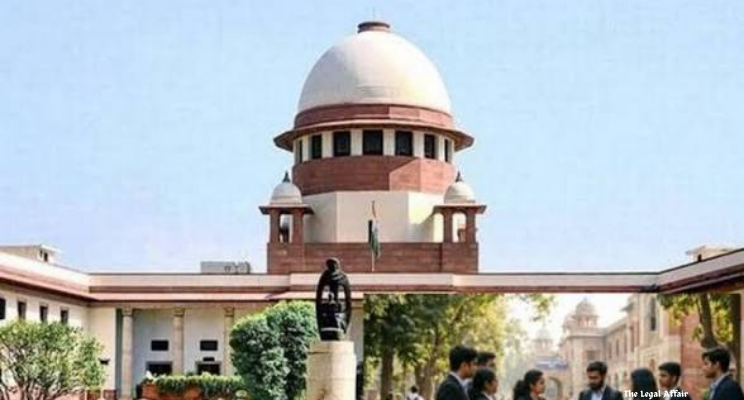
Introduction:
The Supreme Court of India has granted significant interim relief to a batch of law graduates whose applications for enrolment as advocates before the Telangana State Bar Council had been withheld because their bachelor’s degrees were obtained through open, distance, or correspondence education. The Court directed the provisional enrolment of the applicants, subject to verification of their educational qualifications and compliance with other applicable requirements, while making it clear that the arrangement would remain subject to the final outcome of the pending appeals.
A bench comprising Justice Vikram Nath and Justice Sandeep Mehta passed the interim order in STS Gladies v. Bar Council of India & Anr., reported as 2026 LiveLaw (SC) 950. The proceedings arose from a dispute concerning the interpretation and application of Rule 5 of the Rules of Legal Education, 2008, framed by the Bar Council of India (BCI). The central issue concerns whether a candidate who has obtained a bachelor’s degree through distance or open education can be denied enrolment as an advocate despite subsequently completing a three-year LL.B. course through the regular mode from a recognised university.
The dispute brings into focus the relationship between the mode of obtaining a pre-law educational qualification and the requirements governing entry into the legal profession. It also raises an important procedural question: whether candidates who have completed their regular law degrees should be permitted to enter the profession provisionally while the Supreme Court examines the legality of the restrictions applied to their enrolment.
The applicants had completed their school education before pursuing bachelor’s degrees through open or distance-learning institutions. They subsequently obtained three-year LL.B. degrees through regular classroom-based education from universities recognised for the purpose of legal education. Despite completing their law courses through the regular mode, their applications for enrolment were not processed because of the mode in which they had acquired their earlier educational qualifications.
One of the appellants had obtained a B.Com. degree through distance education from Madurai Kamaraj University in 2006. He later completed his LL.B. in 2020 through the regular mode from a college affiliated with Osmania University. When he approached the Telangana State Bar Council for enrolment as an advocate, his application was rejected on the basis of the interpretation adopted by the Council regarding Rule 5 of the Rules of Legal Education, 2008.
The appellant challenged the rejection before the Telangana High Court. However, the High Court upheld the decision of the Bar Council in 2024, thereby leaving the appellant without the opportunity to obtain enrolment despite having completed his law degree through regular education. Aggrieved by the High Court’s decision, he approached the Supreme Court.
The other applicants were similarly affected by the refusal to process their enrolment applications. Their preceding bachelor’s degrees had been obtained from Dr. B.R. Ambedkar Open University, Hyderabad, while their subsequent three-year LL.B. courses had been completed through the regular mode from BCI-recognised universities. They also approached the Supreme Court seeking relief against the denial of enrolment.
The legal controversy is rooted in the regulatory framework governing legal education in India. The Bar Council of India, established under the Advocates Act, 1961, is responsible for regulating legal education and prescribing the standards required for entry into the legal profession. The Rules of Legal Education, 2008, were framed to maintain academic standards and establish eligibility requirements for candidates seeking to pursue law courses.
Rule 5 of these Rules is central to the present dispute. Its interpretation has become significant because the applicants’ eligibility is being questioned not on account of the mode through which they completed their LL.B. degrees, but because of the educational route they followed before entering law school.
The applicants’ position raises a distinction between the validity of an educational qualification and the mode through which it was obtained. A bachelor’s degree obtained through distance education may satisfy the relevant academic requirements for admission to a law course, subject to the applicable regulations. However, the question of whether such a qualification can support enrolment as an advocate after completion of a regular LL.B. course is a separate issue requiring judicial determination.
The Supreme Court’s interim order does not finally resolve this legal controversy. Instead, it addresses the immediate consequences of withholding enrolment while the appeals remain pending. The Court recognised that the applicants had completed their regular law degrees and that continued exclusion from the profession could cause prejudice during the period required for final adjudication.
At the same time, the bench ensured that the interim relief would not determine the ultimate rights of the parties. By making provisional enrolment subject to the final outcome of the appeals, the Court preserved the legal controversy for a later decision while allowing the affected graduates an opportunity to enter the profession in the meantime.
The order is therefore significant for its treatment of interim relief in professional enrolment disputes. It demonstrates how a court may balance the immediate interests of candidates seeking entry into a regulated profession against the need to preserve the authority of the regulatory framework until the underlying legal question has been conclusively decided.
Arguments of the Parties:
The dispute before the Supreme Court arose from the appellants’ challenge to the refusal of the Telangana State Bar Council to process their enrolment applications. The principal question concerned the interpretation of Rule 5 of the Rules of Legal Education, 2008, and whether the mode of obtaining a bachelor’s degree could operate as a ground for denying enrolment to candidates who had subsequently completed their three-year LL.B. courses through regular education.
The available case summary does not reproduce the complete written submissions or the detailed oral arguments advanced by the parties. Accordingly, the following discussion identifies the positions reflected in the dispute and the considerations addressed by the Court, without attributing unrecorded submissions to individual counsel.
Appellants’ Position:
The appellants’ case rested on the distinction between their earlier educational qualifications and their subsequent professional law degrees. They had completed their bachelor’s degrees through open, distance, or correspondence education, but had thereafter pursued their three-year LL.B. courses through the regular mode from recognised universities.
Their grievance was that the Telangana State Bar Council had treated the mode of obtaining their bachelor’s degrees as an impediment to enrolment, notwithstanding their completion of the prescribed law course through regular education. According to the circumstances of the case, the immediate obstacle to their entry into the legal profession was therefore not the manner in which they had studied law, but the educational route they had followed before pursuing their LL.B.
The appellants sought relief against the continued withholding of their enrolment. Their applications raised the question whether a candidate who has successfully completed a regular law degree should remain excluded from professional enrolment solely because the preceding bachelor’s qualification was acquired through a different mode of education.
An important consideration in their favour was the undisputed completion of their three-year LL.B. courses through the regular mode. The Court subsequently recorded that the applicants and the appellant had completed these courses from recognised universities. This factual circumstance formed the basis for considering whether they could be permitted to obtain provisional enrolment without deciding the underlying legal controversy.
The appellants also had a practical interest in obtaining relief during the pendency of the proceedings. Enrolment is a necessary step for a law graduate seeking to enter the legal profession as an advocate. Continued withholding of enrolment would therefore prevent them from commencing professional practice during the period required for the Supreme Court to decide the appeals.
Their request for provisional enrolment offered a way to address this immediate difficulty without requiring the Court to determine the final interpretation of Rule 5 at the interim stage. Such relief would permit them to obtain enrolment subject to the outcome of the proceedings, rather than requiring the Supreme Court to decide the entire controversy before granting any effective relief.
The appellants’ position thus involved two connected aspects. The first concerned their challenge to the interpretation of Rule 5 adopted by the Bar Council and upheld by the Telangana High Court. The second concerned the need for temporary relief so that the disputed interpretation would not continue to prevent them from entering the legal profession while their appeals remained pending.
Respondents’ Position:
The respondents included the Bar Council of India and the concerned enrolment authorities. Their position arose from the regulatory framework governing legal education and enrolment, particularly the interpretation of Rule 5 of the Rules of Legal Education, 2008.
The refusal to process the appellants’ applications was based on the view that their preceding bachelor’s degrees, having been obtained through open, distance, or correspondence education, did not satisfy the applicable requirements for enrolment. In the case of the appellant who had completed his B.Com. through distance education from Madurai Kamaraj University, this interpretation had already been upheld by the Telangana High Court in 2024.
The respondents’ regulatory position must be understood in the context of the Bar Council of India’s responsibility to prescribe and enforce standards governing legal education. The requirements applicable to entry into the profession are intended to ensure that candidates satisfy the qualifications prescribed under the relevant legal framework.
From this perspective, the mode of obtaining a preceding degree was not treated as an irrelevant academic detail. Instead, it was considered a matter having a bearing on the eligibility of candidates seeking enrolment after completing their law degrees.
The respondents’ position also involved the question of whether provisional enrolment could be granted while the interpretation of Rule 5 remained disputed. Since the underlying controversy concerned compliance with the applicable educational requirements, any interim relief would necessarily have to preserve the authority of the regulatory framework and avoid creating an unconditional right to enrolment.
The Supreme Court’s final directions addressed this concern by making provisional enrolment subject to verification of the applicants’ educational and other requisite documents, fulfilment of the remaining applicable requirements, and the ultimate outcome of the respective appeals.
The order, however, does not record a detailed account of the respondents’ oral submissions or identify any separate argument advanced by the Bar Council of India regarding the precise scope of Rule 5. It would therefore be inappropriate to treat the Court’s interim directions as a final determination of the respondents’ interpretation or to suggest that the regulatory objection was rejected on its merits.
Central Legal Controversy:
The competing positions raised a question that extends beyond the individual circumstances of the appellants: whether the mode of obtaining a pre-law bachelor’s degree can prevent enrolment even where the candidate has subsequently completed a regular LL.B. course from a recognised university.
This question requires consideration of the distinction between eligibility for admission to a law course and eligibility for enrolment as an advocate. Although the two stages are closely connected, they involve different regulatory requirements. A candidate’s admission to a law course does not, by itself, conclusively determine every requirement applicable to subsequent professional enrolment.
Similarly, the completion of a recognised law degree does not automatically resolve a dispute concerning the interpretation of the rules governing enrolment. The question in the present case was whether Rule 5 permitted the Bar Council to rely upon the mode of obtaining the earlier bachelor’s degree as a ground for withholding enrolment.
The Supreme Court did not finally decide this question while considering the request for interim relief. Instead, it examined whether the circumstances justified permitting provisional enrolment without prejudging the legal issue.
The distinction is important because the appellants’ request for interim relief did not necessarily require the Court to accept their interpretation of Rule 5. The Court could address the immediate consequences of the dispute while leaving the competing interpretations open for final adjudication.
This approach allowed the Court to consider the interests of the applicants alongside the need to maintain the regulatory requirements governing the legal profession.
Court’s Judgment:
Supreme Court Limits Its Examination to Interim Relief:
The Supreme Court began by clarifying the scope of the proceedings before it. The bench made it clear that it was not examining the merits of the controversy concerning the interpretation of Rule 5 of the Rules of Legal Education, 2008, at that stage.
The question of whether the Bar Council had correctly interpreted the Rule would be considered at the final hearing of the appeals. The Court therefore refrained from expressing a final opinion on the validity of the objection raised against the appellants’ educational qualifications.
This clarification is central to understanding the nature of the order. The Court was not deciding whether distance education at the bachelor’s level could, in every case, satisfy the requirements for enrolment as an advocate. Nor was it declaring that every candidate who has completed a regular LL.B. degree is automatically entitled to enrolment, irrespective of other applicable eligibility conditions.
Instead, the bench confined its consideration to whether the appellants could be granted provisional enrolment during the pendency of the appeals.
By adopting this approach, the Court separated the immediate question of interim relief from the substantive legal controversy. The former could be addressed without conclusively determining the latter.
Completion of Regular LL.B. Courses Was an Important Consideration:
The bench next considered the undisputed factual circumstances of the applicants.
It noted that the applicants and the appellant had completed their three-year LL.B. courses through the regular mode from recognised universities. Their enrolment had been withheld because of the mode through which they had obtained their preceding educational qualifications.
This distinction was significant to the Court’s consideration of interim relief. The appellants had completed the law courses that formed the immediate academic basis for their intended entry into the legal profession. Nevertheless, they remained unable to obtain enrolment because of an objection relating to their earlier bachelor’s degrees.
The Court did not hold that the completion of a regular LL.B. course conclusively established eligibility under Rule 5. However, it treated the undisputed completion of those courses as a relevant circumstance when assessing the consequences of continued denial of enrolment.
The bench’s reasoning reflects a distinction between the existence of a disputed eligibility requirement and the immediate consequences of applying that requirement before the dispute has been finally resolved.
Where the legal question remains pending, the Court may consider whether temporary relief can be granted without undermining the final adjudication. In this case, the completion of the regular law degrees, coupled with the fact that the objection related to the preceding qualifications, supported the consideration of provisional enrolment.
Continued Denial of Enrolment Would Cause Avoidable Prejudice:
The most significant aspect of the Court’s reasoning concerned the prejudice that the appellants would suffer if enrolment continued to be withheld throughout the proceedings.
The bench observed:
“Continued denial of enrolment during the pendency of the appeals would cause avoidable prejudice to the persons concerned and prevent them from entering the legal profession notwithstanding completion of their regular law degrees.”
This observation identifies the immediate difficulty faced by the appellants. Although they had completed their regular law degrees, the pending dispute prevented them from entering the profession as advocates.
The prejudice was not limited to the continued pendency of a legal challenge. It concerned the practical consequences of remaining outside the profession during the period required for final adjudication.
For law graduates seeking to commence their professional careers, enrolment represents an important step between academic qualification and professional practice. A prolonged delay may therefore affect their opportunity to begin practising law, even though the underlying dispute remains unresolved.
The Court’s observation indicates that the consequences of withholding enrolment were relevant to its assessment of interim relief. It did not treat the pending legal controversy as a reason to leave the appellants without any temporary remedy.
At the same time, the bench did not suggest that the appellants’ professional interests automatically overrode the applicable enrolment requirements. The concern was addressed through a limited and conditional arrangement that would remain subject to the final decision.
Balancing the Interests Through Provisional Enrolment:
After recognising the prejudice arising from continued denial of enrolment, the Court considered whether the applicants’ interests could be protected without affecting the final adjudication of the appeals.
The bench concluded that provisional enrolment would provide an appropriate means of balancing the competing considerations.
It observed that the interests of the appellants could be adequately protected by directing that their enrolment be provisional and expressly subject to the final outcome of the respective civil appeals.
The significance of this reasoning lies in the conditional nature of the relief. The Court did not grant unconditional enrolment or finally resolve the question of eligibility. Instead, it permitted the applicants to obtain provisional enrolment while preserving the authority of the Court to determine the underlying dispute at the final hearing.
This approach enabled the Court to address the immediate hardship without converting the interim order into a final determination of the rights of the parties.
The arrangement also ensured that the legal position adopted by the Court at the interim stage would not prevent it from reaching a different conclusion after examining the merits of the appeals.
In effect, the Court separated the temporary protection of the appellants’ interests from the final determination of their legal entitlement to enrolment.
Provisional Enrolment Subject to Verification:
The Supreme Court imposed specific conditions t ensure that the relief remained limited and did not create an unconditio