


Introduction:
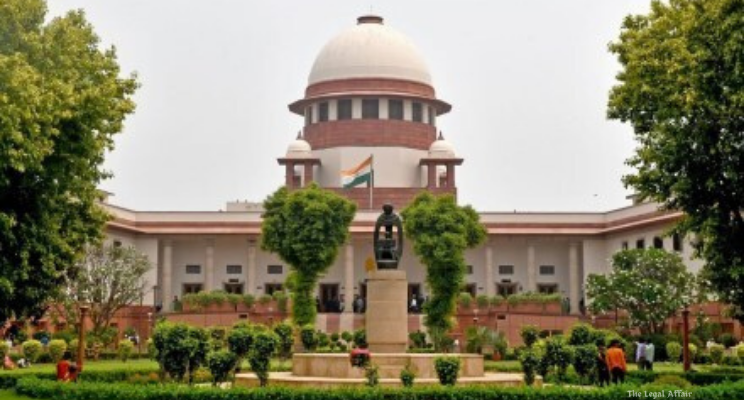
The Supreme Court of India on January 15, 2025, disposed of a Public Interest Litigation (PIL) filed in 2009 challenging the expenditure of public funds on constructing statues of former Uttar Pradesh Chief Minister Mayawati, her mentor Kanshi Ram, and elephants—symbolic of her party, the Bahujan Samaj Party (BSP). These statues were built in parks located in Lucknow and Noida during Mayawati’s tenure as Chief Minister (2007–2012). The petition questioned the propriety of using taxpayer money for this purpose, alleging that the constructions amounted to political glorification and misuse of public funds. A bench comprising Justices B.V. Nagarathna and Satish Chandra Sharma decided the case by emphasizing the necessity for all political parties to adhere to the Election Commission of India’s (ECI) directions prohibiting the use of public funds and resources for promoting party symbols or political agendas.
Arguments of Petitioners and Respondents:
The petitioners argued that the construction of these statues, including 90 elephant sculptures costing ₹52.2 crores, was an arbitrary misuse of public funds to glorify Mayawati and the BSP. They alleged that this act amounted to a violation of the principles of equality and free and fair elections, as the permanent display of BSP’s election symbol, the elephant, gave the party an undue electoral advantage. The petitioners contended that such acts violated constitutional duties to protect public resources and maintain public trust. Furthermore, they highlighted that the construction of stupas, domes, and memorials for Mayawati herself, including one in Delhi, constituted self-aggrandizement and abuse of public funds.
On the other hand, the respondents, including the Uttar Pradesh government and Mayawati, defended the expenditure, arguing that it was sanctioned through budgetary approvals by the state legislature by constitutional provisions under Article 282. The state contended that the constructions reflected the will of the people and honoured the legacy of BSP founder Kanshi Ram and other Dalit leaders. Mayawati, in her affidavit, stated that the statues and memorials were meant to promote the values and ideals of Dalit social reformers and not to glorify her or the BSP. She further emphasized that her life was dedicated to uplifting the marginalized and downtrodden, and the legislature had expressed the people’s will by approving the projects.
The state also argued that the elephant statues were part of Indian architectural traditions and had no exclusive connection to the BSP symbol. Citing Article 282 of the Constitution, it was asserted that the legislature’s power to allocate expenditure is not confined to subjects under the Seventh Schedule. Therefore, the petitioners’ claim of illegality in the budgetary process was unfounded.
Court’s Judgment:
The Supreme Court refrained from making any direct observations on the allegations of misuse of public funds. Instead, it relied on the Election Commission of India’s 2016 directions, which prohibit political parties from using public funds, government resources, or public spaces to promote their election symbols or political agendas. These directions were issued following the Delhi High Court’s order that called for safeguarding free and fair elections by preventing the misuse of public resources by political parties in power.
The Court noted that the constructions in question took place in 2009-2010, and no retrospective action could be taken against the BSP. However, it emphasized the need for strict compliance with the ECI’s instructions by all political parties to ensure a level playing field during elections. The bench directed that these instructions, or any modified versions issued by the ECI, must be adhered to by all political parties in the country to prevent the misuse of public funds and resources for partisan purposes.
While disposing of the petition, the Court highlighted the ECI’s responsibility to monitor and enforce these directions during elections to safeguard public trust and maintain electoral integrity. It reiterated that the principles of free and fair elections, as enshrined in the Constitution, must be upheld by preventing any undue advantage to political parties through public resources.