


Introduction:
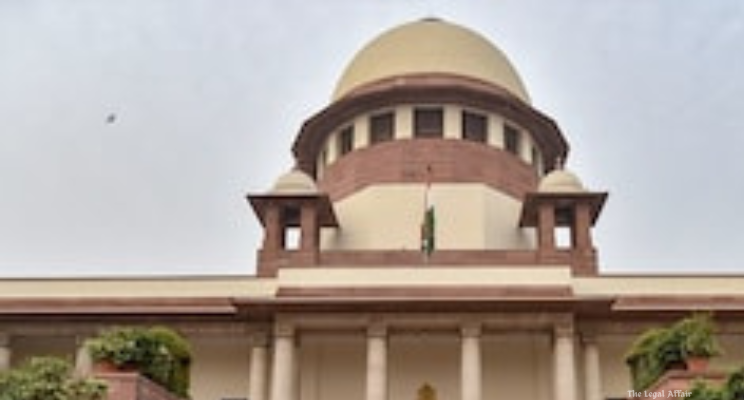
In a landmark judgment that underscores the principle that suspicion, however strong, cannot take the place of proof, the Supreme Court of India set aside the conviction of Mohamed Sameer Khan (“Appellant”), who had been found guilty of raping, robbing, and murdering an 85-year-old woman in Coimbatore. The case—Mohamed Sameer Khan v. State represented by Inspector of Police, 2025 LiveLaw (SC) 1045—involved serious charges under Sections 302, 376, 394, and 449 of the Indian Penal Code. The Appellant had been sentenced to life imprisonment by the Second Additional Sessions Judge (Special Court for Bomb Blast Case, Coimbatore) on November 17, 2017, and his conviction was later upheld by the Madras High Court on October 28, 2021. However, a Bench comprising Justices Dipankar Datta and A.G. Masih found that the prosecution’s case—built solely on circumstantial evidence—suffered from glaring deficiencies, including non-examination of a crucial witness, lack of forensic linkage, and failure to establish an unbroken chain of events leading to guilt beyond reasonable doubt. The Supreme Court, therefore, allowed the appeal, acquitting the Appellant and reinforcing the importance of fair investigation and the presumption of innocence.
Arguments of the Appellant:
The Appellant’s counsel challenged the entire prosecution narrative as being riddled with inconsistencies and devoid of direct evidence. It was contended that the conviction rested purely on weak circumstantial evidence and conjecture. The Appellant, a non-native of Tamil Nadu who only spoke Hindi and Manipuri, had allegedly been falsely implicated due to language barriers and police prejudice. Counsel argued that the supposed recovery of two gold bangles from the Appellant’s pocket was a concocted piece of evidence meant to lend legitimacy to an otherwise baseless prosecution. The defence emphasized that the Appellant was arrested five days after the incident at around 4:00 a.m., under suspicious circumstances, and no independent witnesses corroborated the police claim regarding recovery. It was highlighted that there was no Test Identification Parade (TIP) conducted to establish that the Appellant was indeed the person seen near the crime scene, and that the complainant (PW-1) and her son (PW-2) did not even know or identify him. Further, the counsel noted that the prosecution failed to establish the last seen theory convincingly, since the key person who was last with the Appellant—one Marcus—was never examined. This omission, the defence argued, fatally weakened the prosecution’s case as Marcus could have clarified the Appellant’s whereabouts and time movements, shedding light on whether he had the opportunity to commit the crime. Moreover, no forensic evidence connected the Appellant to the crime scene—there were no fingerprints, blood, semen, hair, or skin samples linking him to the deceased. The defence also attacked the reliability of the so-called informant whose identity was never established, whose statement was never recorded, and who was never examined. In the absence of credible eyewitnesses, forensic support, or a proven recovery, the defence contended that the conviction was unsustainable. The Appellant consistently maintained that he was tortured into making a false confession, and any alleged disclosure or recovery under Section 27 of the Evidence Act was fabricated. The defence stressed that the prosecution’s version was nothing more than a speculative narrative constructed to secure a conviction, which violated the fundamental criminal law principle that guilt must be established beyond all reasonable doubt.
Arguments of the Prosecution:
The State, represented by the Inspector of Police, sought to sustain the conviction by arguing that the chain of circumstances sufficiently pointed toward the guilt of the Appellant. It was submitted that the Appellant was seen leaving a compound adjacent to the deceased’s house around 2:45 a.m., just before the discovery of the victim’s body, and that his conduct was suspicious. The prosecution maintained that the Appellant had attended a party at one Akash Saksena’s house the previous night, and had gone out with Marcus around 2:00 a.m. for a smoke, after which only the Appellant returned—creating a presumption that he could have left to commit the crime. The prosecution further argued that the recovery of two gold bangles belonging to the deceased from the Appellant’s pocket upon his arrest corroborated his involvement in the robbery and murder. Although no direct eyewitness had seen the Appellant entering the deceased’s home, the prosecution claimed that circumstantial evidence of his presence near the scene, coupled with the recovery of the bangles and the alleged confession, constituted a complete chain of events leading to only one conclusion—his guilt. The State dismissed the defence’s claim of torture as an afterthought and emphasized that the trial court and the High Court had both found the prosecution’s version credible. It also argued that the absence of forensic evidence did not automatically exonerate the accused when the circumstantial chain was strong and consistent. Regarding the non-examination of Marcus, the prosecution submitted that he was not a “material witness” as his testimony would not have significantly altered the case’s outcome. Thus, the State urged the Supreme Court to uphold the concurrent findings of the courts below, arguing that the conviction was based on cogent and reliable evidence.
Court’s Judgment and Reasoning:
The Supreme Court, after meticulously evaluating the entire record, observed that the case against the Appellant was constructed entirely on circumstantial evidence. The Court reiterated that for conviction in such cases, the chain of circumstances must be so complete that it leaves no room for any hypothesis other than the guilt of the accused. The Bench, however, found that the prosecution had failed to meet this threshold.
Justice A.G. Masih, writing for the Bench, highlighted several critical lapses in the investigation. First and foremost, the non-examination of Marcus—who was last seen with the Appellant—was deemed a glaring omission. Marcus was the person who accompanied the Appellant out of the house for a smoke at around 2:00 a.m., after which the Appellant returned alone. His testimony could have clarified how long they were together and whether the Appellant even had the opportunity to go to the deceased’s house and commit the crime. The Court noted that the prosecution’s explanation that Marcus was “not a material witness” was “strange and unconvincing,” since Marcus was crucial to establishing or ruling out the last seen link. The Court observed:
“In this light, an aspect, which marks itself as a contradiction and may cast doubt on the efficiency, sincerity, and fairness of the investigation is the non-recording of the statement of Marcus, who had been with the Appellant and had last seen him… This creates a doubt as he could be a suspect and in any case the person who would have indicated as to how long he and the Appellant were together, throwing some light as to whether the Appellant had the opportunity or time to go to the site of incident and/or commit such an offence.”
The Court further pointed out that the prosecution’s theory of the offence having been committed between 2:00 and 3:00 a.m. did not align with the medical evidence, which suggested that the death occurred between 9:00 p.m. on December 18 and 2:00 a.m. on December 19. Therefore, even the alleged sighting of the Appellant at 2:45 a.m. could not conclusively connect him to the crime. The witness (PW-5) who claimed to have seen him did not assert that he exited the deceased’s house—only that he left a nearby compound. Thus, this testimony was insufficient to link him to the scene of the offence.
Another major flaw identified by the Court was the failure to conduct a Test Identification Parade (TIP). The complainant (PW-1) and her son (PW-2) had never seen the Appellant before, and no effort was made to confirm his identity through proper legal procedure. The Court observed that the very identity of the informant, who allegedly tipped off the police, remained shrouded in mystery. No statement from the informant was recorded, nor was any document produced to establish their existence. As the Court remarked:
“Nothing has come on record, either in the form of any document or in the statement of any of the witnesses including the investigating officer with regard to the identity of the informant… The complainant (PW-1) and her son (PW-2) did not know the Appellant nor have they met him ever so the question of them identifying the Appellant does not arise. As a matter of fact, no Test Identification Parade had been carried out of the Appellant after his arrest.”
The Court also found serious deficiencies in the forensic investigation. Despite the alleged sexual assault, no semen was found on the deceased. Furthermore, no fingerprints, blood traces, or hair samples of the Appellant were discovered on the deceased’s body, the recovered articles, or the crime scene. Even though a sniffer dog and fingerprint expert had visited the site, they could not trace anything linking the Appellant to the offence. The Court emphasized that the absence of such corroborative evidence was a major blow to the prosecution’s case.
Regarding the recovery of the two gold bangles from the Appellant, the Supreme Court noted inconsistencies in the prosecution’s story. The supposed recovery took place several days after the incident, at around 4:00 a.m., when the Appellant was arrested near a bridge. The Court found this circumstance suspicious, especially considering the possibility of planted evidence. The Court stated that the idea that the Appellant would be carrying stolen bangles openly in his pocket days after the incident was implausible. Moreover, since the informant’s identity was never established and the recovery was not witnessed by any independent person, the Court found the recovery doubtful and unreliable.
Taking a holistic view, the Supreme Court held that the chain of circumstances presented by the prosecution was incomplete, leaving significant gaps that prevented any conclusive inference of guilt. The possibility of false implication, especially given the absence of the crucial witness Marcus and the mysterious non-existent informant, could not be ruled out. The Court reiterated the well-established principle that in cases based solely on circumstantial evidence, each link in the chain must be proved beyond reasonable doubt, and all links must point only toward the guilt of the accused. In the present case, the Bench found that the links were broken, speculative, and unsupported by solid evidence.
Ultimately, the Supreme Court concluded that the prosecution had failed to prove its case beyond reasonable doubt. Justice Masih, delivering the verdict, observed:
“The prosecution has failed to bring forth reliable evidence forming a complete string of events, leading to the guilt of the Appellant. The chain of events being sought to be projected is laden with deficiencies creating significant gaps, leading to other possible hypotheses. Due to such missing links, a finding of guilt cannot be recorded. The benefit of the doubt with regard to this must flow to the accused.”
Accordingly, the appeal was allowed, and both the conviction and sentence imposed by the trial court and affirmed by the High Court were set aside. The Court ordered that the Appellant be released forthwith if not required in any other case.
The judgment thus reaffirmed a foundational tenet of criminal jurisprudence—that it is better that ten guilty persons escape than that one innocent suffer. The Court’s insistence on fair investigation, reliable evidence, and the presumption of innocence stands as a stern reminder to law enforcement agencies to adhere strictly to due process.