


Introduction:
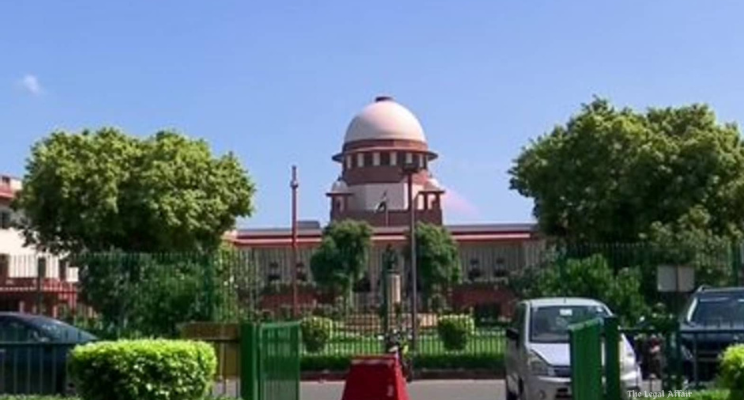
In a landmark judgment, the Supreme Court of India addressed the critical issue of filing a juvenility plea post-conviction in State of Madhya Pradesh vs. Ramji Lal Sharma & Another. The case revolved around the claim of juvenility by the accused, Ramji Lal Sharma, in a murder conviction that had already been upheld by the Supreme Court. A bench comprising Justices BV Nagarathna and N. Kostiswar Singh set aside Sharma’s conviction, ruling that juvenility pleas under the Juvenile Justice (Care and Protection of Children) Act, 2015, could be filed even after a final conviction. This judgment underscores the special protections offered to minors, reaffirming that their rights under the Juvenile Justice Act remain intact at any stage of criminal proceedings.
Petitioner’s Argument (State of Madhya Pradesh):
The State of Madhya Pradesh argued that Ramji Lal Sharma’s conviction for murder had been confirmed by the Supreme Court, and thus, his post-conviction juvenility plea was a tactic to evade justice. The State emphasized that Sharma had failed to raise the juvenility issue during the trial or appeal stages and should not be allowed to reopen the case after finality had been achieved. The prosecution argued that the principle of res judicata—finality of judgments—should prevent continuous litigation, particularly when the accused had sufficient opportunity to raise such claims earlier.
Furthermore, the State cast doubt on the reliability of the evidence supporting Sharma’s age, suggesting it had been manipulated to fit the defense’s narrative. The prosecution contended that allowing a juvenility claim after conviction would undermine the finality of the criminal process.
Respondent’s Argument (Accused – Ramji Lal Sharma):
The defense, led by Prashant Shukla, argued that under the Juvenile Justice (Care and Protection of Children) Act, 2015, a juvenility plea can be raised at any stage, including after a final conviction. They contended that Sharma was a minor at the time of the crime, which would entitle him to special treatment under the Juvenile Justice Act, designed to rehabilitate minors rather than punish them as adults.
The defense presented a Sessions Court inquiry that confirmed Sharma’s age at the time of the crime, proving he was under 18. The defense argued that juvenility is a substantive right, and the State’s responsibility under the principle of parens patriae (the State acting as a guardian for minors) meant Sharma could not be denied his right to be treated as a juvenile, irrespective of when the claim was raised.
Court’s Judgment:
The Supreme Court ruled in favor of Ramji Lal Sharma, setting aside his conviction on the grounds of juvenility. Justice BV Nagarathna, writing for the bench, emphasized that the Juvenile Justice Act allows juvenility claims to be raised at any stage of legal proceedings, including after a conviction has attained finality. The Court referred to its earlier rulings, including the Pramila vs. State of Chhattisgarh case, where it held that a claim of juvenility could be made post-conviction.
The judgment reaffirmed that the welfare provisions under the Juvenile Justice Act take precedence over the finality of criminal convictions. The Court ruled that the accused could not be treated as an adult for a crime committed when he was a minor, as this would violate the protections afforded to juveniles under the law. Furthermore, the Court validated the Sessions Court’s findings that confirmed Sharma’s birthdate, making him a minor at the time of the offense.
In setting aside the conviction, the Court highlighted the fundamental objective of the Juvenile Justice Act: rehabilitation rather than punishment for minors. Consequently, the conviction and sentence against Sharma were voided, and his bail bonds were canceled. The Court underscored that, regardless of the stage at which a juvenility plea is raised, the law prioritizes the protection and rehabilitation of minors.
Conclusion:
The Supreme Court’s decision in State of Madhya Pradesh vs. Ramji Lal Sharma & Another represents a significant reaffirmation of juvenile justice principles in India. By allowing the juvenility plea post-conviction, the Court reinforced the idea that minors deserve special consideration and rehabilitation, even after final judgments in criminal cases. This ruling ensures that juvenility claims can be invoked at any stage, offering crucial safeguards for minors within the criminal justice system.