


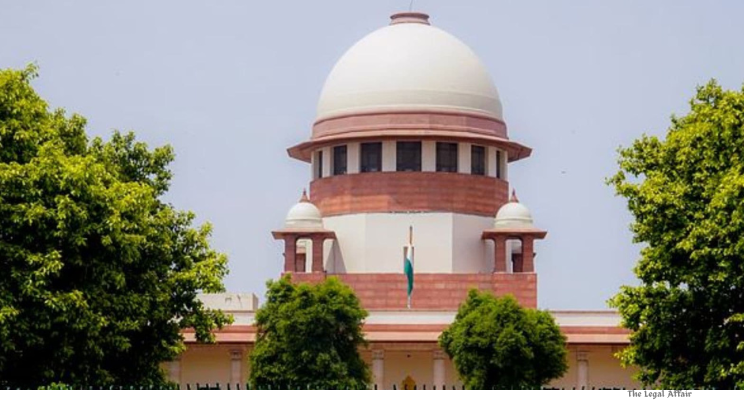
Introduction:
In Madras Bar Association v. Union of India, WP (C) 1018 of 2021, the Supreme Court of India—through a Bench comprising Chief Justice of India BR Gavai and Justice K. Vinod Chandran—delivered a landmark judgment on November 19, 2025, decisively striking down the Tribunal Reforms Act, 2021, for violating the constitutional principles of separation of powers and judicial independence. The petition, filed by the Madras Bar Association, sought to challenge the Act on the ground that it attempted to legislatively override a series of binding judgments, particularly Madras Bar Association (MBA IV, 2020) and Madras Bar Association (MBA V, 2021), which had earlier invalidated similar provisions relating to the appointment, tenure, and service conditions of tribunal members across India. The Court observed that instead of addressing the constitutional defects previously identified by the judiciary, Parliament had merely re-enacted the very provisions earlier struck down, often in cosmetic or altered form, without curing their inherent infirmities. The petitioners, represented by Senior Advocates Arvind Datar, C. S. Vaidyanathan, Sidharth Luthra, P. S. Patwalia, Sanjay Jain, Gopal Sankaranarayanan, Porus F. Kaka, and others, argued that the Act was a blatant attempt to undermine the judiciary’s authority, dilute tribunal independence, and allow excessive executive control. The Union, represented by Attorney General R. Venkataramani and ASG Aishwarya Bhati, defended the Act by asserting legislative competence and arguing that principles such as judicial independence and separation of powers cannot be invoked to invalidate statutes unless they violate explicit constitutional provisions. Ultimately, the Court found the Act unconstitutional, reiterating that Parliament cannot reenact provisions previously struck down without curing the defects, and directed the constitution of a National Tribunal Commission within four months, while also preserving pending appointments made pursuant to earlier directions.
Arguments of the Petitioners:
The petitioners forcefully argued that the Tribunal Reforms Act, 2021, constituted an impermissible legislative override of the Supreme Court’s decisions in MBA IV and MBA V. They pointed out that the Act resurrected several provisions that the Court had explicitly held unconstitutional. These included the minimum age limit of fifty years for all appointments to tribunals, a truncated four-year tenure (with upper age caps of 70 for Chairpersons and 67 for Members), and a mandate that the Search-cum-Selection Committee recommend two names for each vacancy rather than the one name permitted under earlier judicial directions. Likewise, the petitioners highlighted that the Act sought to equate the allowances and service benefits of tribunal members with those of civil servants, disregarding the judiciary’s prior instructions to ensure functional parity with High Court judges to safeguard independence. According to the petitioners, these provisions were not merely controversial but directly contrary to binding judicial pronouncements that had been issued after careful constitutional scrutiny. For instance, in MBA IV and MBA V, the Court held that tribunal members must enjoy a minimum tenure of five years to preserve institutional continuity, that advocates with at least ten years of experience should be eligible for appointment, and that the executive must not enjoy disproportionate control over the selection process. By reintroducing these very provisions, Parliament, the petitioners argued, had breached the doctrine of constitutional supremacy, failed to respect judicial authority, and undermined the foundational principle of judicial independence. They maintained that the legislation was a clear attempt to dilute the autonomy and credibility of tribunals, placing them under executive dominance and jeopardizing their ability to function as effective substitutes for High Courts. The petitioners further noted that the timing and drafting of the Act reflected an intent to nullify repeated judicial directions without engaging with the defects identified by the Supreme Court. Under constitutional doctrine, the petitioners emphasized, Parliament may enact fresh legislation correcting defects pointed out by the courts, but it cannot pass laws that simply resurrect invalidated provisions under a new name. The Act, they argued, violated Articles 14, 50, and the basic structure of the Constitution because it failed to ensure an independent adjudicatory mechanism free from executive interference. They urged the Court to strike down the Act, continue the operation of MBA IV and MBA V, and ensure that all appointments completed or recommended prior to the Act were protected under earlier rules.
Arguments of the Union Government:
The Union of India, represented by the Attorney General and the Additional Solicitor General, put forth a fundamentally different perspective. They argued that Parliament retains the sovereign authority to legislate on matters of tribunal structure and administration under Articles 245 and 246 of the Constitution, and that judicial review cannot be extended to invalidate a statute merely because it departs from judicial recommendations. The Union submitted that judicial independence, separation of powers, and similar principles cannot be treated as rigid constitutional commands unless explicitly stated in the text of the Constitution. According to the Centre, Parliament exercised its legislative wisdom to restructure the tribunal system in a manner it considered efficient and administratively sound. The Union further argued that age requirements, tenure conditions, and administrative provisions fall squarely within the domain of legislative policy and cannot be invalidated simply because the Court prefers another arrangement. They contended that the earlier MBA judgments amounted to judicially imposed standards, not constitutional mandates, and that Parliament is entitled to reconsider and revise these standards while formulating statutory schemes. On the plea for a larger bench, the Attorney General argued that there existed conflicting views in earlier judgments on the scope of judicial directions governing tribunal structure, and therefore the matter required reconsideration by a Constitution Bench. The Union also highlighted that tribunals differ from constitutional courts and are creations of statute; therefore, Parliament holds the power to define their framework, subject only to express constitutional limitations. They argued that the Act strikes a balance between administrative practicality and judicial independence, asserting that longer tenures or lower age eligibility would not necessarily ensure better tribunal functioning. Finally, the Union suggested that the Court should exercise restraint and avoid interfering with legislative choices unless there was demonstrable constitutional violation, insisting that the Tribunal Reforms Act was a policy decision well within Parliament’s competence.
Court’s Judgment:
The Supreme Court emphatically rejected the Union’s arguments and struck down the Tribunal Reforms Act, 2021, as unconstitutional. The Court held that the Act violated the constitutional principles of judicial independence and separation of powers, both of which are integral to the basic structure. The Bench observed that these principles are not abstract ideals but binding constitutional imperatives firmly embedded in precedent. The Court reaffirmed that when Parliament designs or alters tribunal structures, it must do so in conformity with the standards of independence and institutional autonomy previously laid down by the Supreme Court. In the present case, the Act sought not to cure any constitutional defects but to reintroduce, in slightly altered form, provisions that had already been held unconstitutional. The Bench described this as a “legislative override in the strictest sense,” noting that Parliament cannot simply re-enact invalidated provisions under new labels without addressing their constitutional infirmities. CJI Gavai wrote that once the Court strikes down a provision or issues binding directions after identifying a constitutional defect, that interpretation becomes authoritative law under Article 141, and the legislature cannot contradict it without remedying the defect. The minimum age bar of fifty years, the four-year tenure, the panel of two names for each vacancy, and the equating of tribunal members’ service conditions with those of civil servants were all identified as unconstitutional, arbitrary, and destructive of judicial independence. The Court also dismissed the Union’s request for a larger bench, calling it belated, and stating that such a move would “undermine fairness” in the conduct of the hearing while serving no meaningful purpose, as the legal issues had already been thoroughly settled in earlier cases. The Court directed the Union to constitute a National Tribunal Commission within four months, emphasizing that such a body is vital for ensuring uniform standards of appointments, administration, and oversight. Until fresh legislation is enacted in line with judicial directions, the standards laid down in MBA IV and MBA V will continue to govern tribunal appointments. Importantly, the Court protected those appointments where the Search-cum-Selection Committee had already completed the selection or recommendation process before the 2021 Act commenced, even if formal appointment notifications were issued later. Such appointees, the Court ruled, will be governed by the parent statutes and earlier judicial directions, not the truncated provisions of the impugned Act. Concluding, the Court reiterated that the Constitution is supreme, and all branches of government—Executive, Legislature, and Judiciary—must operate within its framework. Parliament is empowered to legislate but cannot nullify binding judicial decisions by reenacting unconstitutional provisions without curing the underlying defects. As the Act failed this constitutional test, it was struck down in its entirety.