


Introduction:
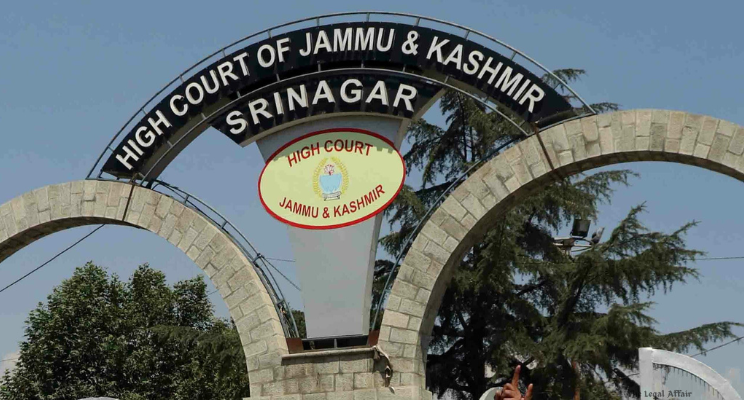
In the significant case of Intizamia Committee v. UT of J&K, reported as 2025 LiveLaw (JKL), the High Court of Jammu and Kashmir and Ladakh addressed the legal question of whether a religious property such as a Ziyarat (shrine) requires formal notification under the Jammu and Kashmir Wakafs Act, 1978 to be recognized as Wakaf. The Division Bench comprising Justice Sanjeev Kumar and Justice Sanjay Parihar dismissed an intra-court appeal filed by the Intizamia Committee Dargah and its Manager Haji Abdul Ahad Akhoon challenging the legality of the J&K Wakaf Board’s takeover of the shrine known as “Ziyarat Sharif Syed Khazir Sahib” located in Village Rayil, District Ganderbal. The appellants claimed personal ownership and possession of five kanals of land (Khasra No. 323) and asserted that they developed the shrines of Syed Jaffer, Syed Rehman, and Syed ul-Hajra over the years without any support from the Wakaf authorities. The core legal issue revolved around the classification of the property as Wakaf and whether it required notification in the Government Gazette under Section 6 of the Act. The Court ultimately ruled in favour of the Wakaf Board, holding that religious sites such as Dargahs and Ziyarats are “Wakaf by user” under Section 3(d)(i) of the J&K Wakafs Act, 1978 and do not require any formal declaration or notification to assume the status of Wakaf. This judgment highlights the legal recognition of user-based Wakafs and reinforces the authority of the Wakaf Board to manage religious sites traditionally used for pious and religious purposes without requiring ownership documents or gazette publications.
Arguments of the Appellants:
The appellants, represented by the Intizamia Committee and its Manager Haji Abdul Ahad Akhoon, laid substantial emphasis on their claim that the land in question, measuring approximately five kanals and recorded under Khasra No. 323, was privately owned and not part of any notified Wakaf under the Jammu and Kashmir Wakafs Act, 1978. Akhoon claimed that he had developed the Ziyarats of Syed Jaffer, Syed Rehman, and Syed ul-Hajra out of personal devotion and that these shrines had previously been in a state of neglect. He asserted that due to his efforts, the shrines became revered pilgrimage sites in the area and that the local Muslim community had accepted and appreciated the Intizamia Committee’s management. The appellants contended that the management of the shrines was never handed over to the Wakaf Board and that the Board’s attempt to resume control without a proper gazette notification was arbitrary and illegal. It was further argued that the land, being in Akhoon’s personal ownership, could not be treated as Wakaf property in the absence of a formal declaration or a Wakaf deed. The appellants challenged the validity of the order passed by the Wakaf Board under Sections 67, 68, and 69 of the 1985 Act (as extended to J&K) and the subsequent communication resuming control of the shrine. They specifically relied on the absence of any notification under Section 6 of the 1978 Act, contending that without such notification, the Wakaf Board had no authority to classify the land or the shrine as Wakaf. They also asserted that the Board had earlier issued a communication in 2015 which had become infructuous following the repeal of the J&K Wakaf Acts in 2001 and 2004, and that the current actions of the Board constituted an overreach. Furthermore, they argued that the publication of SRO 510 referred to a different Khasra number, and the current dispute pertained to land that was not part of any earlier notification, thus rendering the Wakaf Board’s takeover untenable in law. They pleaded for protection of their proprietary rights and claimed that they were being unlawfully dispossessed of land that belonged to them and had been religiously developed by them without any assistance from the Board.
Arguments of the Respondents (J&K Wakaf Board and UT Administration):
The respondents, represented by the J&K Wakaf Board and the Union Territory of Jammu and Kashmir, strongly opposed the appellant’s claim to private ownership over the shrine and emphasized the doctrine of Wakaf by user. They contended that the shrines in question had been used for religious and pious purposes for several decades by the local Muslim community, thereby acquiring the legal status of Wakaf by usage as defined under Section 3(d)(i) of the Jammu and Kashmir Wakafs Act, 1978. The Board emphasized that Wakafs by user include places like Ziyarats, Dargahs, Masjids, and Graveyards that have been customarily used for religious and charitable purposes, regardless of whether they were formally declared Wakafs or not. The Board maintained that Section 3(d)(i) of the Act provides an inclusive definition that recognizes the existence of such Wakafs through established community use without requiring a Wakaf deed or formal gazette notification. The respondents further argued that Section 4 of the Act, which mandates a preliminary survey of Wakafs by appointed Special Officers, merely aims at identifying and recording existing Wakafs and does not create them. Hence, they submitted that the absence of publication under Section 6 or the fact that the particular Khasra number had not been previously notified was not a bar to the Board exercising its statutory authority to manage Wakaf properties. They further highlighted that under Sections 67, 68, and 69 of the Act, the Wakaf Board has statutory powers to assume control of religious properties that fall within the meaning of Wakaf, including those that qualify as Wakaf by user. They also noted that the shrine had been notified under SRO 510 in respect of a different parcel of land and that the appellants’ claim over Khasra No. 323 did not disqualify the Board from resuming control of the shrine based on usage. The Board contended that it had acted in accordance with the statute and that its actions were neither arbitrary nor illegal. The respondents also submitted that the proper remedy for the appellants, if they truly believed in their claim of ownership over the land, was to approach a competent civil forum for adjudication of title and not to challenge the Board’s notification under writ jurisdiction.
Court’s Judgment and Analysis:
In its detailed and well-reasoned judgment, the Division Bench of the High Court comprising Justice Sanjeev Kumar and Justice Sanjay Parihar upheld the legality of the Wakaf Board’s action and rejected the contentions raised by the appellants. The Court began by interpreting the relevant provisions of the Jammu and Kashmir Wakafs Act, 1978 and particularly focused on Section 3(d)(i) which defines Wakaf to include properties used as Masjid, Dargah, Ziyarat, Idgah, Graveyard, Khankah, Takia, and other similar institutions irrespective of whether there is any deed of Wakf. The Bench clarified that the concept of Wakaf by user is legally valid and has deep roots in Islamic jurisprudence and the statutory framework, which recognizes that continuous and long-standing usage of a property for religious purposes is sufficient to confer upon it the status of a Wakaf. The Court held that such usage does not require validation by a deed or notification and that the shrine “Ziyarat Sharif Syed Khazir Sahib” clearly fell within this category. The Court further elaborated that the scheme under Sections 4 to 6 of the Act deals with the survey and publication of Wakaf properties but does not constitute the creation of Wakafs. Section 4 provides for a survey by Special Officers, Section 5 speaks of submitting the report to the Government, and Section 6 mandates publication of the list of Wakafs in the Official Gazette. However, the Court emphasized that this process merely records the status of pre-existing Wakafs and does not bestow or negate the character of a property as Wakaf. Hence, the absence of gazette notification under Section 6 does not affect the legal character of the shrine in question, which qualifies as a Wakaf by user. The Court then turned to the appellants’ argument regarding ownership over Khasra No. 323 and clarified that the notification referred to by the Wakaf Board pertained to a different Khasra. Nonetheless, the Bench ruled that since the shrine itself was used for religious purposes and not subject to any competing religious claims, its status as Wakaf by user could not be denied merely because of the difference in revenue record entries. The Court also noted that the writ petition was not an appropriate remedy to adjudicate title disputes and granted liberty to the appellant to approach civil courts if they wished to assert proprietary rights over the land. It concluded by stating that the management of the shrine by the Wakaf Board was lawful and did not suffer from procedural infirmities or jurisdictional overreach. The Division Bench thus affirmed the writ court’s findings and dismissed the appeal with a categorical declaration that Wakafs by user do not require any formal notification to assume legal character and that the Wakaf Board is empowered under law to manage such religious properties in the interest of the community. However, it preserved the appellant’s right to approach an appropriate legal forum to assert land ownership if they so chose.