


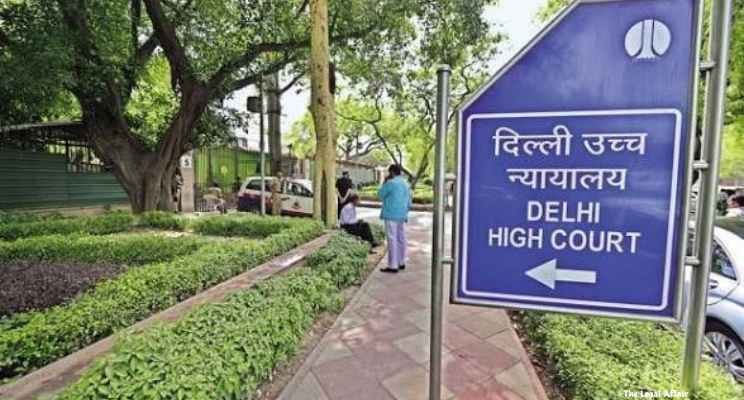
Introduction:
The Delhi High Court has clarified an important aspect of the power of criminal courts under Section 311 of the Code of Criminal Procedure, 1973, holding that reservation of a criminal case for judgment does not, by itself, prevent the trial court from summoning or recalling a witness where the evidence sought to be brought on record is considered necessary for a just decision of the case. The ruling was delivered by Justice Madhu Jain in Raman Soni v. Central Bureau of Investigation, where the Court declined to interfere with an order permitting the Central Bureau of Investigation (CBI) to examine a witness after final arguments had already been heard and the matter had been reserved for judgment.
The proceedings arose from a long-running case concerning alleged inaction by officials of the Municipal Corporation of Delhi in dealing with encroachments over public land. The CBI had registered a preliminary inquiry in 2006 into allegations that certain MCD officials failed to take appropriate action against encroachments, allegedly resulting in pecuniary advantage to private builders. Raman Soni, who was 69 years old at the time of the proceedings before the High Court, was subsequently arrayed as an accused in the chargesheet filed by the CBI in 2008.
After the prosecution and defence evidence had been dealt with, the trial court proceeded towards final hearing. The matter was listed for final arguments on April 20, April 28 and May 4. Following the hearing of the parties, the Special Judge (Prevention of Corruption Act) reserved the matter for judgment.
The case, however, did not immediately culminate in judgment. After the matter had been reserved, the CBI filed an application under Section 311 CrPC seeking permission to examine a witness in relation to certain aspects which, according to the prosecution, had not been adequately covered during the witness’s earlier examination.
Section 311 CrPC confers a broad power upon a criminal court to summon any person as a witness, examine a person present in court, or recall and re-examine a person already examined, if the court considers the evidence necessary for a just decision of the case. The provision is intended to ensure that the court has access to material evidence necessary for determining the truth rather than allowing a case to be decided on the basis of an incomplete evidentiary record.
The trial court allowed the CBI’s application on July 8. At the same time, it criticized the CBI’s conduct, observing that the agency had been “lackadaisical” in moving the application and in recording the testimony of the witness at the appropriate stage. Nevertheless, the trial court concluded that the prosecution’s delay or negligence could not be permitted to obstruct a fair determination of the case if the proposed evidence was genuinely necessary for deciding it.
Raman Soni challenged this order before the Delhi High Court. His principal argument was that once final arguments had concluded and the matter had been reserved for judgment, the trial had effectively come to an end. According to him, at that stage the trial court had become functus officio for the purpose of recording further evidence and could not reopen the evidentiary stage by invoking Section 311 CrPC.
The High Court rejected this contention. Justice Madhu Jain held that although reservation of judgment ordinarily marks the conclusion of the normal course of the trial, it does not strip the court of a statutory power expressly conferred upon it by the Code. Where the court is satisfied that additional evidence is necessary for arriving at a just decision, Section 311 may be invoked even at such an advanced stage.
The judgment therefore addresses an important procedural question: whether the power to summon or recall a witness under Section 311 is extinguished merely because the matter has been reserved for judgment. The Delhi High Court answered the question in the negative, while simultaneously emphasizing that such power must be exercised judicially and with due regard to the rights of the accused.
Arguments of the Parties:
The petitioner, Raman Soni, challenged the trial court’s order primarily on the ground that the proceedings had already reached their conclusion. He emphasized that the trial court had heard the final arguments of the parties and thereafter reserved the matter for judgment. According to him, this stage marked the completion of the trial and left no occasion for the prosecution to introduce additional evidence.
The petitioner argued that allowing the CBI to examine another witness after reservation of judgment effectively amounted to reopening the trial. In his submission, permitting such a course would undermine procedural finality and enable the prosecution to fill gaps in its evidence after it had already concluded its case and participated in final arguments.
The concept of functus officio formed an important part of the petitioner’s challenge. The expression broadly refers to a situation in which an authority has exhausted the jurisdiction or function entrusted to it and therefore cannot ordinarily reopen the matter. The petitioner sought to apply this principle to the trial court after the matter had been reserved for judgment.
According to the petitioner, once the court had heard the parties and reserved the case, the evidentiary stage had ended. Therefore, any subsequent attempt by the prosecution to examine a witness should not be permitted merely because the prosecution had failed to properly address certain aspects during the original examination.
The petitioner also challenged the explanation offered by the CBI for seeking recourse to Section 311. The CBI had essentially relied upon inadvertence in relation to the earlier examination of the witness. Soni argued that such an explanation was insufficient to justify reopening a concluded trial, particularly when the omission was attributable to the prosecution itself.
The petitioner’s concern was also linked to fairness in criminal proceedings. A criminal accused is entitled to know the case that he has to meet and to have the prosecution conduct its case within the procedural framework established by law. Allowing the prosecution to supplement its evidence after final arguments, according to the petitioner, could cause prejudice and disturb the balance between the prosecution and the defence.
The petitioner therefore urged the High Court to set aside the trial court’s order and prevent the CBI from examining the witness at that stage of the proceedings.
The CBI, on the other hand, defended the trial court’s decision by relying upon the broad language and purpose of Section 311 CrPC. The provision gives the court the authority to summon or recall a witness where the evidence appears essential to a just decision. The CBI’s position was that the ultimate objective of a criminal trial is the proper adjudication of the case on the basis of relevant and necessary evidence.
The prosecution maintained that the mere fact that the case had been reserved for judgment could not create an absolute prohibition against exercising a statutory power under Section 311. If material evidence came to the court’s attention and the court was satisfied that such evidence was necessary for deciding the case fairly, the court retained the jurisdiction to act.
The CBI’s application was concerned with certain aspects of a witness’s evidence which, according to the prosecution, had not been covered during the earlier examination. The prosecution therefore sought an opportunity to examine the witness on those aspects.
Importantly, the trial court itself had criticized the CBI’s conduct. It found that the agency had acted belatedly and had been “lackadaisical” in moving the application and recording the witness’s evidence. The CBI could not therefore claim that its conduct had been entirely beyond criticism.
Nevertheless, the prosecution’s position was that procedural shortcomings by the investigating or prosecuting agency should not prevent the court from obtaining evidence which it considers essential to the just determination of the case. In other words, the CBI relied upon the court’s independent duty to arrive at the truth rather than upon any absolute right of the prosecution to reopen its evidence.
The CBI’s position was also consistent with the nature of Section 311, which vests the power in the court rather than exclusively in the prosecution or defence. The provision does not make the exercise of jurisdiction dependent solely upon whether the party seeking recall has provided an impeccable explanation for its earlier omission.
The central dispute before the High Court was consequently not whether the CBI had acted with sufficient diligence. The trial court had already found that it had not. The more fundamental question was whether the court nevertheless possessed jurisdiction to invoke Section 311 when it considered the additional evidence necessary for a just decision.
The High Court was therefore required to balance two competing considerations. One was the need for procedural discipline and fairness to the accused, particularly when the prosecution had already concluded its case and final arguments had been heard. The other was the court’s responsibility to ensure that a criminal case is decided on the basis of the evidence necessary to arrive at the truth.
The petitioner relied on finality and the potential prejudice caused by reopening the matter, while the CBI relied upon the statutory duty of the court to ensure a just adjudication. The High Court ultimately concluded that the latter consideration could, in appropriate circumstances, justify exercise of Section 311 even after reservation of judgment.
Court’s Judgment:
The Delhi High Court dismissed the petition and upheld the trial court’s decision to permit the CBI to examine the witness under Section 311 CrPC. Justice Madhu Jain held that reservation of a matter for judgment does not create an absolute bar against exercising the jurisdiction expressly conferred upon a criminal court by Section 311.
The Court began by recognizing that reservation of judgment ordinarily signifies that the normal course of the trial has concluded. Once final arguments have been heard, the court would ordinarily proceed to consider the evidence and pronounce judgment. However, the Court drew a crucial distinction between the conclusion of the ordinary course of a trial and the complete extinguishment of the court’s statutory powers.
According to the High Court, reservation of judgment does not make the court powerless to act where the Code itself authorizes it to do so. Section 311 is designed precisely to enable the court to address situations in which additional evidence becomes necessary for a just determination of the case.
The Court therefore rejected the petitioner’s argument that the trial court had become functus officio merely because the case had been reserved for judgment. The doctrine could not be applied in a manner that defeated an express statutory power vested in the court.
The Court’s interpretation rests upon the language and purpose of Section 311. The provision is deliberately broad. It permits the court to summon a person as a witness, examine a person present in court, or recall and re-examine a witness who has already been examined. The determining consideration is whether the evidence is necessary for a just decision.
The Court emphasized that the stage at which the power is invoked is undoubtedly relevant. A request to recall a witness after the conclusion of final arguments naturally requires greater judicial scrutiny than an application made during the ordinary course of evidence. However, the advanced stage of proceedings does not, by itself, transform the court’s discretionary power into a prohibited jurisdiction.
This distinction is important. The judgment does not suggest that Section 311 can be casually invoked whenever a party realizes that its evidence is incomplete. Rather, the court must independently determine whether the evidence sought to be introduced or elicited is genuinely necessary for deciding the case.
The Court further held that the jurisdiction under Section 311 belongs to the court. Its exercise is therefore not dependent exclusively upon the adequacy of the explanation given by the party filing the application.
This became particularly relevant because the trial court had criticized the CBI for its conduct. The agency had been described as “lackadaisical” in moving the application and in recording the witness’s evidence. Nevertheless, the High Court held that the prosecution’s shortcomings did not necessarily prevent the court from exercising its statutory power if the evidence was essential for a just decision.
The Court thereby separated two questions that can sometimes become conflated in criminal proceedings. The first concerns whether a party was diligent in presenting its case. The second concerns whether the court requires particular evidence to reach a just conclusion. A party’s negligence may be relevant to the court’s discretion, but it cannot automatically override the court’s independent responsibility to decide the case correctly.
The High Court also emphasized that Section 311 can be exercised suo motu by the court. In other words, the court need not wait for either the prosecution or the defence to make an application. If, while examining the record, the court finds that certain evidence is essential for arriving at a just decision, it can itself summon or recall a witness.
This understanding reinforces the judicial nature of the power. Section 311 is not intended to function as a procedural weapon available exclusively to one side. It is an instrument placed in the hands of the court to ensure that the adjudicatory process is not defeated by an incomplete evidentiary record.
The Court explained that the ultimate purpose of a criminal trial is to enable the court to ascertain the truth through the best available evidence. A criminal proceeding is not merely a contest between the prosecution and the accused in which the court passively determines which side has performed better procedurally. The court has an active responsibility to ensure a fair and effective adjudication.
In this context, the Court observed that the trial court is required to remain an “active participant in the pursuit of truth.” This does not mean that the judge can assume the role of the prosecutor or conduct the case according to one party’s interests. Rather, it means that the court cannot remain a passive spectator when it is apparent that evidence necessary for a just decision is absent from the record.
The Court simultaneously recognized the importance of protecting the rights of the accused. The power under Section 311 must be exercised with care so that it does not result in unfairness, prejudice or an opportunity for the prosecution to repeatedly repair its case without justification.
The requirement that the evidence must appear essential for a just decision therefore operates as an important safeguard. The court must be satisfied that the proposed evidence has genuine relevance and necessity. The power cannot be exercised simply because a party wishes to improve its case or fill every conceivable gap in its evidence.
In the present case, however, the High Court found no sufficient reason to interfere with the trial court’s assessment that the evidence sought through the CBI’s application was necessary for a just decision.
The Court also rejected the petitioner’s argument that the CBI’s reliance upon “inadvertence” was inadequate. According to the High Court, the statutory jurisdiction did not depend exclusively upon whether the explanation furnished by the applicant was satisfactory.
The decisive consideration was the necessity of the evidence from the perspective of the court. If the evidence is essential, the court possesses the power to summon or recall the witness. The explanation offered by the party remains a relevant consideration, particularly when the request comes at a late stage, but it does not determine the existence of jurisdiction under Section 311.
The Court’s reasoning thus places the pursuit of truth at the centre of the provision. An omission during an earlier stage of the trial does not necessarily become irreversible if the court subsequently finds that the missing evidence is necessary for a just decision.
At the same time, the judgment should not be interpreted as permitting unlimited reopening of criminal trials. Section 311 does not give parties an unrestricted right to repeatedly recall witnesses or introduce new evidence. The power is controlled by the statutory requirement of necessity and must be exercised judicially.
The timing of an application remains relevant because late-stage applications can cause delay and potentially prejudice the opposite party. Courts must therefore scrutinize such applications carefully, particularly where the request appears designed merely to fill lacunae or prolong the proceedings.
The present case, however, was different in the Court’s assessment. The trial court had independently considered the proposed evidence and found it necessary. The High Court found no perversity or legal error in that exercise of discretion.
The judgment consequently reinforces the distinction between a “lacuna” in the prosecution case and evidence necessary for a just decision. A court cannot ordinarily permit a party to use Section 311 merely to repair a weak case. But where the evidence is genuinely necessary for resolving the issues before the court, the fact that the omission occurred earlier does not automatically deprive the court of jurisdiction.
This principle is particularly significant in lengthy criminal trials. Criminal proceedings may involve complicated evidence, numerous witnesses and substantial records. An omission discovered at a later stage can sometimes have a direct bearing on the court’s ability to determine the truth. Section 311 provides a mechanism to address such situations.
The Court’s observations also reinforce the concept of an active judicial role in criminal adjudication. While the adversarial system requires the prosecution and defence to present their respective cases, the judge remains responsible for ensuring that the resulting adjudication is fair, effective and based on material necessary for determining the issues.
The Court therefore declined to treat reservation of judgment as an inflexible procedural deadline after which the court could never revisit the evidentiary record. Such an approach, in the Court’s view, would undermine the very purpose of Section 311.
Ultimately, the Delhi High Court found no merit in Raman Soni’s challenge and upheld the Special Judge’s order allowing the CBI’s application. The witness could consequently be examined in relation to the aspects identified by the prosecution and considered necessary by the trial court.
The decision in Raman Soni v. Central Bureau of Investigation thus establishes an important procedural proposition: reservation of judgment ordinarily marks the end of the regular trial process, but it does not extinguish the court’s statutory power under Section 311 CrPC. Where the court is satisfied that particular evidence is essential for a just decision, it may summon or recall a witness even at that advanced stage.
The ruling also conveys an important message about the role of criminal courts. Procedural finality is important, but it cannot be elevated into an absolute principle at the cost of a just adjudication. At the same time, the power must be exercised cautiously, with full awareness of the accused’s right to a fair trial and the need to prevnt unnecessary delay.
The ultimate test, therefore, is not