


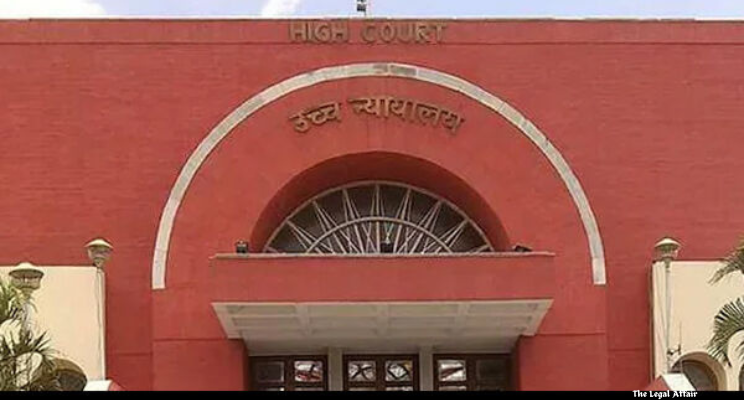
Introduction:
In Geetabai Eknath Salunke v. Sub Divisional Officer-cum-Land Acquisition Officer, Vaijapur & Ors. [First Appeal No. 1328 of 2024 and connected matters], the Bombay High Court delivered an important ruling interpreting the scope and purpose of Section 28-A of the Land Acquisition Act, 1894. The case arose from a batch of first appeals filed by several landowners challenging the decisions of the Reference Court, which had rejected their claims for enhanced compensation following land acquisition proceedings. The appeals were heard by Justice Shailesh P. Brahme, who examined whether compensation determined in proceedings under Section 28-A could be strictly confined to the amount awarded in a “foundational award” relied upon by landowners for redetermination. The controversy centered around lands that were acquired pursuant to a notification issued under Section 4 of the Land Acquisition Act on 3 December 1986 for a public purpose. When the Special Land Acquisition Officer passed the original award, compensation was granted for the land itself, but no compensation was awarded for wells, trees, or structures situated on the acquired properties. Subsequently, in separate reference proceedings arising from the same acquisition notification, another landowner successfully obtained enhanced compensation from the Reference Court. This judgment became the “foundational award” for other landowners who had not initially sought a reference under Section 18 of the Act. Relying on Section 28-A, which allows similarly placed landowners to seek redetermination of compensation based on an award passed in a reference case arising from the same acquisition notification, the appellants filed applications seeking similar enhancement. However, the Reference Court rejected their claims by adopting a narrow interpretation of Section 28-A, holding that compensation under the provision could not exceed the amount awarded in the foundational award and could not include additional components such as compensation for wells, trees, or structures. Aggrieved by this restrictive interpretation, the landowners approached the Bombay High Court through a series of first appeals. The High Court was thus required to examine the true scope and legislative intent of Section 28-A and determine whether the provision should be interpreted narrowly or as a beneficial mechanism designed to eliminate inequalities in compensation among landowners whose lands were acquired under the same notification.
Arguments on Behalf of the Appellants:
On behalf of the appellants, it was argued that the Reference Court had committed a serious legal error by adopting an unduly restrictive interpretation of Section 28-A of the Land Acquisition Act. The appellants contended that Section 28-A was enacted specifically to remedy the injustice suffered by landowners who, due to lack of awareness, financial constraints, or other practical difficulties, failed to seek a reference under Section 18 within the prescribed time limit. The counsel for the appellants emphasized that the provision was intended to ensure equality in compensation among all landowners whose lands were acquired under the same notification. Therefore, once a Reference Court determines the market value of land in a particular acquisition case, similarly situated landowners should not be deprived of the same benefit merely because they did not initially challenge the original award. The appellants argued that the foundational award relied upon in their applications had determined a higher market value for the acquired lands. Consequently, they were entitled to receive compensation at the same rate as determined in that award. It was submitted that the Reference Court had misunderstood the scope of Section 28-A by concluding that compensation payable under the provision must be strictly confined to the exact amount awarded in the foundational award without considering other relevant factors. The appellants further contended that the original award passed by the Special Land Acquisition Officer had failed to consider the existence of wells, trees, and structures situated on the acquired lands. According to them, this omission was arbitrary and unjustified, particularly when credible evidence existed showing that such features were present on the properties at the time of acquisition. They argued that the redetermination proceedings under Section 28-A were not merely mechanical exercises limited to copying the compensation figure mentioned in the foundational award. Instead, the authority was required to examine all relevant material placed on record and determine fair compensation in accordance with the law. The appellants also emphasized that certain lands involved in the acquisition were irrigated lands, which commanded a higher market value compared to dry lands. However, the Reference Court had failed to properly appreciate the evidence demonstrating the irrigated nature of these lands. As a result, the appellants were unjustly deprived of the higher compensation that should have been awarded to them. The counsel submitted that the restrictive approach adopted by the Reference Court defeated the very purpose of Section 28-A, which was enacted to ensure equitable treatment of landowners affected by the same acquisition proceedings. They therefore urged the High Court to set aside the impugned judgments and grant enhanced compensation consistent with the rates determined in the foundational award.
Arguments on Behalf of the Respondents:
The respondents, represented by the Sub-Divisional Officer-cum-Land Acquisition Officer and other authorities, defended the judgments passed by the Reference Court and argued that the appeals deserved to be dismissed. According to the respondents, the Reference Court had correctly interpreted the provisions of Section 28-A and had rightly rejected the claims of the appellants for additional compensation. The respondents contended that the scope of Section 28-A was limited and that the provision was intended only to grant parity in the rate of compensation determined in the foundational award. They argued that the redetermination proceedings could not be converted into fresh reference proceedings where new claims or additional heads of compensation could be introduced. The respondents further submitted that the appellants had chosen not to file references under Section 18 of the Land Acquisition Act within the prescribed time. Having failed to avail themselves of the statutory remedy available to them at the appropriate stage, they could not now attempt to enlarge the scope of proceedings under Section 28-A. According to the respondents, allowing such claims would undermine the finality of awards passed in land acquisition cases and open the floodgates for endless litigation. It was also argued that Section 28-A does not permit the redetermination authority to grant compensation exceeding the rate determined in the foundational award. The respondents emphasized that the provision was designed only to extend the benefit of the enhanced rate fixed in a reference award to other landowners covered by the same acquisition notification. It was therefore contended that the Reference Court had correctly held that the compensation payable to the appellants could not exceed the amount awarded in the foundational award. With regard to the appellants’ claims for additional compensation for wells, trees, and structures, the respondents argued that such claims were beyond the scope of proceedings under Section 28-A. According to them, these issues should have been raised in a reference under Section 18, and the appellants could not seek to introduce them at the stage of redetermination. The respondents therefore urged the High Court to uphold the judgments of the Reference Court and dismiss the appeals.
Court’s Judgment:
After carefully considering the submissions made by both sides and examining the relevant legal provisions and precedents, the Bombay High Court delivered a detailed judgment clarifying the true scope of Section 28-A of the Land Acquisition Act. Justice Shailesh P. Brahme began by analysing the legislative intent behind the enactment of Section 28-A. The court noted that the provision was introduced as a beneficial measure to address the inequality that often arose in land acquisition cases. Many landowners, particularly those belonging to economically weaker sections, lacked the resources or legal awareness required to file references under Section 18. As a result, while some landowners obtained enhanced compensation through reference proceedings, others were left with the lower amounts awarded by the Land Acquisition Officer. Section 28-A was enacted to remove this disparity and ensure that all landowners whose lands were acquired under the same notification received fair and equitable compensation. The High Court observed that the provision must therefore be interpreted liberally in order to advance its remedial purpose. The court rejected the narrow interpretation adopted by the Reference Court, which had treated the foundational award as a rigid ceiling for determining compensation under Section 28-A. Justice Brahme clarified that while the rate of market value determined in the foundational award provides the basis for redetermination, the compensation payable to applicants under Section 28-A cannot be mechanically restricted to the exact amount awarded in that judgment. The court explained that the precedents cited by the respondents did not establish any absolute prohibition against granting compensation exceeding the amount mentioned in the foundational award. Instead, they merely indicated that the market value determined in the foundational award could not be exceeded while determining compensation under Section 28-A. The High Court drew a distinction between the “market value of land” and the total “compensation payable” to landowners. While the market value fixed in the foundational award serves as the benchmark for determining compensation, other legitimate components such as compensation for wells, trees, structures, or the irrigated nature of land may still be considered if supported by credible evidence. The court held that restricting compensation strictly to the figure mentioned in the foundational award would defeat the purpose of Section 28-A and perpetuate the very inequality the provision was intended to eliminate. Applying these principles to the facts of the case, the High Court found that the appellants were entitled to receive compensation at the same rate of market value determined in the foundational award. Accordingly, the court held that the appellants were entitled to compensation at the rate of ₹1500 per Are for dry land and ₹3000 per Are for irrigated land. Justice Brahme observed that the Reference Court had committed a manifest illegality by denying these rates to the appellants despite the fact that the foundational award had already determined them as the appropriate market value for lands acquired under the same notification. The High Court further observed that where credible material is produced demonstrating that the acquired land was irrigated or that the authorities had arbitrarily denied compensation for wells, trees, or structures, the court has the power to grant appropriate compensation under those heads. Such an approach, the court held, is consistent with the beneficial nature of Section 28-A and ensures that landowners receive fair compensation for the actual value of their properties. After examining the evidence on record, the High Court found that certain appellants had indeed placed credible material demonstrating that their lands were irrigated. In those cases, the court allowed the appeals in part and granted compensation at the higher rate applicable to irrigated lands. However, in cases where sufficient evidence was not available, the court declined to grant additional compensation beyond the market value determined in the foundational award. The judgment thus provided a balanced interpretation of Section 28-A by reaffirming its beneficial character while ensuring that compensation remains consistent with the market value determined in the foundational award. By partly allowing the appeals, the Bombay High Court ensured that the appellants received fair compensation in accordance with the law while also clarifying an important legal principle governing redetermination proceedings under the Land Acquisition Act.