


Introduction:
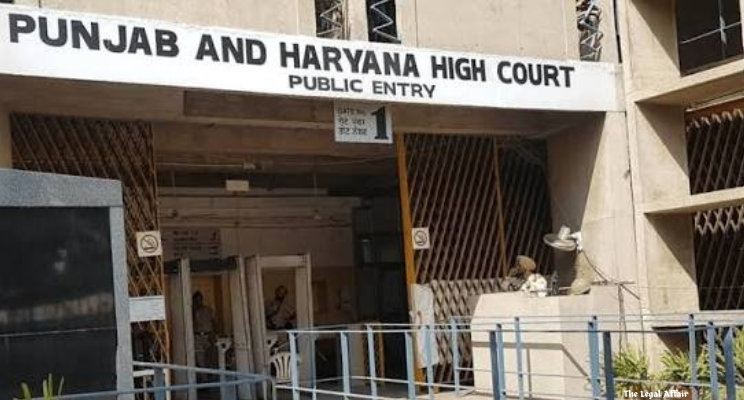
In a significant ruling reaffirming the welfare-oriented objective of land acquisition law, the Punjab and Haryana High Court has clarified that the parameters prescribed under Section 26 of the Right to Fair Compensation and Transparency in Land Acquisition, Rehabilitation and Resettlement Act, 2013 are not binding upon courts or the Land Acquisition, Rehabilitation and Resettlement Authority while deciding references for enhancement of compensation. Instead, these parameters serve merely as guiding principles for the Collector at the stage of initial determination of compensation and cannot curtail the independent judicial power vested in courts under Section 64 of the 2013 Act.
The decision was delivered by Justice Harkesh Manuja in a batch of nineteen Regular First Appeals led by Jaharvir Goga Samiti v. State of Haryana and Another [2026 LiveLaw (PH) 199]. The appeals arose from the acquisition of land situated in Village Barara, District Ambala, for the construction of a Mini Secretariat.
The acquisition proceedings commenced in 2012 under Sections 4 and 6 of the Land Acquisition Act, 1894. Although the award was passed after the enactment of the 2013 Act, the Land Acquisition Collector assessed compensation at ₹15 lakh per acre through an award dated October 13, 2014. Dissatisfied with the amount awarded, the affected landowners sought a reference before the competent court. The Additional District Judge, Ambala enhanced the compensation to ₹390 per square yard by judgment dated August 2, 2024. Even this enhancement was considered inadequate by the landowners, who approached the High Court seeking determination of the actual market value of their acquired land.
The principal legal issue before the High Court was whether the Authority or Court deciding a reference under Section 64 of the 2013 Act is legally bound to determine market value strictly in accordance with the methodology contained in Section 26 of the Act. The resolution of this issue assumed considerable importance because it directly concerned the extent of judicial discretion available while adjudicating compensation disputes and the interpretation of a beneficial legislation intended to secure just and fair compensation for persons whose lands are compulsorily acquired.
The Court undertook a detailed comparison between the framework under the Land Acquisition Act, 1894 and the 2013 Act. It examined the legislative intent, the distinct statutory roles assigned to the Collector and the judicial Authority, and the overall objective of ensuring equitable compensation. Ultimately, the judgment reaffirmed that judicial authorities are expected to independently evaluate all relevant evidence while determining market value and cannot be confined to the formula prescribed for administrative authorities.
Arguments of the Parties:
The landowners, represented by Senior Advocate Vijay Kumar Jindal along with Advocate Abhishek Shukla in several appeals, Advocate Bhag Singh in certain appeals, and Advocate Yadvinder Singh Turka assisted by Advocate Jaspreet Kaur Sandhu in others, challenged the compensation awarded by the Reference Court as being substantially below the actual market value of the acquired land. According to them, the acquired property possessed considerable commercial potential owing to its strategic location in Village Barara and its proximity to developed areas. They argued that the Reference Court had failed to adequately appreciate the documentary evidence demonstrating prevailing market prices in the locality.
The appellants relied upon several registered sale deeds executed in respect of the acquired land itself as well as adjoining properties. These sale transactions, according to the landowners, reflected market values ranging from approximately ₹1,000 to ₹1,810 per square yard. Since the transactions related to comparable land situated within the same locality and were executed around the relevant period, they contended that these documents represented the most reliable evidence of prevailing market value.
The landowners further argued that Section 26 of the 2013 Act was never intended to restrict the adjudicatory jurisdiction of the Authority or the Court. They submitted that the provision merely prescribes the methodology to be adopted by the Collector while making the original award. Once a dispute reaches the judicial forum under Section 64, the Authority exercises powers similar to those of a civil court and is expected to independently evaluate oral and documentary evidence. Therefore, the market value cannot be determined mechanically by relying upon Collector rates or other parameters mentioned in Section 26.
According to the appellants, rigid adherence to collector rates would defeat the very purpose of the 2013 Act, which was enacted to remedy the inadequacies of the earlier acquisition law and to provide landowners with fair, realistic and just compensation. They also contended that circle rates are fixed primarily for revenue and stamp duty purposes and often remain significantly lower than prevailing market prices. Consequently, treating such rates as binding would inevitably result in under-compensation.
On behalf of the State of Haryana, Deputy Advocate General Abhinash Jain defended the award passed by the Reference Court and argued that the methodology contained in Section 26 of the 2013 Act provides the statutory basis for determination of market value. It was submitted that the legislative framework establishes objective criteria intended to maintain uniformity and consistency in compensation awards. According to the State, the Reference Court had already enhanced the compensation substantially over the Collector’s award, and there was no justification for granting any further increase.
The State also questioned the reliance placed upon certain sale deeds produced by the landowners, contending that isolated sale transactions may not always reflect the representative market value of large tracts of acquired land. Appropriate deductions, it was argued, were necessary while evaluating small residential or commercial plots vis-à-vis large agricultural holdings acquired by the Government. The State therefore urged the High Court to uphold the Reference Court’s determination or, at the very least, avoid adopting an excessively liberal approach that could result in inflated compensation.
Court’s Judgment:
Justice Harkesh Manuja, speaking for the Punjab and Haryana High Court, undertook an elaborate examination of the statutory framework governing land acquisition compensation under both the Land Acquisition Act, 1894 and the Right to Fair Compensation and Transparency in Land Acquisition, Rehabilitation and Resettlement Act, 2013. The central question before the Court was whether the parameters prescribed under Section 26 of the 2013 Act are mandatory and binding upon the Authority or Court while adjudicating a reference seeking enhancement of compensation under Section 64 of the Act.
The Court answered the question in the negative and held that Section 26 is primarily intended to guide the Collector during the initial stage of determining market value. The provision prescribes certain methods for the Collector to assess compensation, including consideration of the market value specified in the Indian Stamp Act, the average sale price of similar land in the vicinity, or the consented compensation amount in private acquisitions. However, the Court clarified that these parameters cannot be mechanically imposed upon a judicial authority exercising independent adjudicatory functions.
The judgment emphasized that the legislative scheme of the 2013 Act consciously distinguishes between the role of the Collector and that of the Authority constituted under the Act. While the Collector performs an administrative function in making the original award, the Authority exercises judicial powers akin to those of a civil court. The Court observed that if Parliament intended Section 26 to bind the Authority or the Court, it would have expressly stated so. The absence of such language indicated that the legislature intended to preserve the independent jurisdiction of courts to determine fair market value based on the evidence presented before them.
A significant aspect of the Court’s reasoning centered on Section 69 of the 2013 Act. The State had argued that Section 69 requires the Authority to consider whether the Collector had correctly applied Section 26 and therefore the parameters therein should govern judicial determination as well. Rejecting this submission, the Court held that the expression “take into consideration” does not amount to a statutory mandate requiring strict adherence. Rather, it merely obliges the Authority to examine the Collector’s methodology as one of several relevant factors.
The Court further observed that treating Section 26 as a rigid formula would undermine the very objective of the 2013 Act, which was enacted to provide just, fair and equitable compensation to persons whose lands are compulsorily acquired. According to the Bench, circle rates and collector rates are often fixed for revenue and stamp duty purposes and do not necessarily reflect the true market value of land. In many instances, actual market transactions occur at values significantly higher than those recorded for registration purposes. Therefore, elevating collector rates to the status of a determinative benchmark would result in substantial injustice to landowners.
The Court also expressed reservations regarding the mechanical averaging of sale deeds. It noted that land values are influenced by numerous factors such as location, development potential, access to infrastructure, commercial viability and future growth prospects. A formulaic averaging process may fail to capture these realities, particularly in rapidly urbanizing areas where property values can increase dramatically within a short period. Consequently, determination of compensation must be based on a holistic assessment of all relevant circumstances rather than a mathematical exercise.
The judgment highlighted that the welfare-oriented character of the 2013 Act demands a liberal interpretation. The legislation was enacted to rectify longstanding grievances associated with inadequate compensation under the previous legal regime. Any interpretation that restricts the power of courts to ascertain the true market value would defeat the beneficial purpose of the statute. The Court therefore held that judicial authorities must retain sufficient flexibility to ensure that landowners receive compensation commensurate with the actual value of their acquired property.
Applying these principles to the facts of the case, the Court carefully evaluated the evidence produced by the landowners. It found that the sale deeds relied upon by them related either to the acquired land itself or to nearby parcels possessing similar characteristics. The transactions demonstrated that land values in the area ranged from approximately ₹1000 to ₹1810 per square yard. The Court observed that these transactions fell within a relatively narrow range and provided a reliable indication of prevailing market conditions.
The Bench also accepted the contention that the acquired land possessed significant locational advantages and commercial potential. Situated in Village Barara, District Ambala, the land was strategically placed and capable of supporting future development. These characteristics enhanced its market value beyond what could be reflected through collector rates or conventional valuation methods.
While determining compensation, the Court adopted an average of the relevant sale transactions after granting annual appreciation at the rate of 12 percent wherever necessary. At the same time, it applied a deduction of 60 percent on account of the small size of the plots reflected in the sale deeds when compared to the larger tract of acquired land. This approach was considered appropriate to balance the need for realism and fairness.
Importantly, the Court declined to impose any development cut. It observed that the acquisition was undertaken for the construction of a Mini Secretariat and did not require substantial infrastructural development by the State that would justify further deductions. Since the acquired land already enjoyed considerable utility and potential, an additional reduction would have unfairly depressed its value.
After considering all relevant factors, the Court determined that the fair market value of the acquired land was ₹608 per square yard. This represented a substantial enhancement over the compensation awarded by both the Land Acquisition Collector and the Reference Court. The Bench consequently modified the award of the Additional District Judge, Ambala and held that the landowners were entitled to compensation at the enhanced rate of ₹608 per square yard along with all statutory benefits available under the Land Acquisition Act, 1894, including solatium, additional compensation and interest.
The appeals were accordingly allowed. The judgment stands as an important precedent on the interpretation of the 2013 Act and reaffirms the principle that courts are not bound by rigid valuation formulas when determining compensation for acquired land. Instead, they must undertake an independent and comprehensive assessment aimed at ensuring genuine and equitable recompense to affected landowners.