


Introduction:
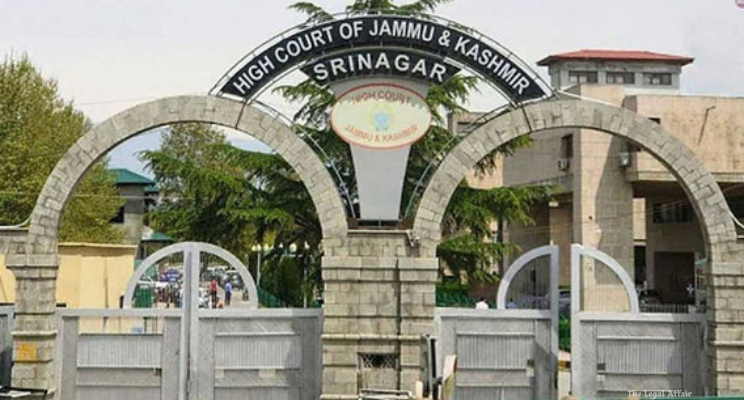
The Jammu & Kashmir and Ladakh High Court, in Rajeshwar Singh vs State & Ors., delivered a crucial ruling interpreting the scope and applicability of Section 197 of the Code of Criminal Procedure, 1973 (CrPC), reaffirming its role as a protective safeguard for public servants against unwarranted prosecution. The case arose from a petition filed under Section 561-A of the J&K CrPC—analogous to Section 482 CrPC—seeking quashing of criminal proceedings initiated against the petitioner, who was serving as Sub-Divisional Police Officer (SDPO), R.S. Pura, at the relevant time.
The petitioner had been accused of illegally detaining and subjecting the complainant, Satish Kumar, to custodial torture during the course of an investigation into a suspicious death. The complaint alleged that the petitioner, along with other police officials, had exceeded lawful authority and violated the complainant’s rights by detaining him for several days and inflicting third-degree torture.
The trial court had rejected the petitioner’s plea for protection under Section 197 CrPC, holding that the alleged acts bore no reasonable nexus with official duties. Challenging this decision, the petitioner approached the High Court, which was called upon to determine whether prior sanction for prosecution was mandatory in such circumstances and whether the alleged acts could be said to have been committed in discharge of official duties or under the colour of such duties.
Arguments by the Petitioner:
The petitioner’s arguments were anchored in the statutory protection afforded to public servants under Section 197 CrPC. He contended that as a gazetted police officer, he could not be prosecuted without prior sanction from the competent authority, provided that the acts complained of were reasonably connected to his official duties.
Firstly, the petitioner asserted that the entire sequence of events occurred during the course of an official investigation into a serious criminal matter—namely, the suspicious death of one Indu Rani in May 2005. As the SDPO, he was responsible for supervising the investigation, including interrogation of suspects and witnesses. Therefore, any actions taken during this period, even if questioned, were inherently linked to his official role.
Secondly, the petitioner denied the allegations of prolonged illegal detention and torture, claiming that the complainant had only been called for questioning and was released within a short span of time. He argued that the complaint was exaggerated and motivated, possibly to harass the police officials involved in the investigation.
Thirdly, the petitioner emphasized that even if, for the sake of argument, it was assumed that some excesses occurred during the discharge of duties, such acts would still fall within the protective ambit of Section 197 CrPC. He relied on settled legal principles that the protection extends not only to acts done strictly within the bounds of duty but also to those done in excess, as long as there exists a reasonable nexus with official functions.
The petitioner further submitted that the trial court had erred in adopting a narrow and restrictive interpretation of “official duty.” He argued that the concept must be understood in a broad and pragmatic manner, taking into account the realities of policing and the challenges faced by law enforcement officers in discharging their duties.
Additionally, the petitioner pointed out that the absence of prior sanction vitiated the entire proceedings. Since no sanction had been obtained from the government, the Magistrate could not have taken cognizance of the alleged offences. Thus, the continuation of proceedings was legally unsustainable and liable to be quashed.
Arguments by the Respondents:
The respondents, including the State and the complainant, strongly opposed the petitioner’s plea and defended the decisions of the lower courts.
At the outset, they argued that the allegations against the petitioner were grave and pertained to serious violations of fundamental rights, including illegal detention and custodial torture. Such acts, according to them, could never be considered part of official duty and therefore did not warrant protection under Section 197 CrPC.
The respondents contended that the petitioner had grossly misused his position of authority by subjecting the complainant to unlawful confinement and physical abuse. These acts, they argued, were not merely excessive but wholly outside the scope of lawful police functions.
They further submitted that the protection under Section 197 CrPC is not absolute and cannot be invoked to shield criminal misconduct. The provision is intended to protect honest public servants from vexatious litigation, not to provide immunity for illegal acts.
The respondents also emphasized that the trial court had rightly found that there was no reasonable nexus between the alleged acts and the petitioner’s official duties. They argued that the acts of illegal detention and torture were personal in nature and could not be justified as part of any legitimate investigation.
Additionally, the respondents highlighted the complainant’s detailed allegations, which described being detained across multiple police stations for an extended period and subjected to third-degree methods. Such conduct, they argued, clearly fell outside the ambit of lawful duty and therefore did not attract the protection of Section 197.
They also contended that allowing the petitioner to claim such protection would set a dangerous precedent, enabling public servants to evade accountability for serious human rights violations.
Court’s Judgment:
The High Court, presided over by Justice M.A. Chowdhary, undertook a detailed analysis of the legal framework governing Section 197 CrPC and its application to the facts of the case.
At the outset, the Court reaffirmed that Section 197 CrPC serves as a protective shield for public servants who cannot be removed from service without government sanction. The provision is designed to prevent frivolous and vexatious prosecutions that may arise from actions taken in the course of official duties.
The Court emphasized that the key test for applicability of Section 197 is whether there exists a “reasonable nexus” between the act complained of and the official duty of the public servant. If such a nexus is established, prior sanction is mandatory before initiating prosecution.
Importantly, the Court clarified that the protection under Section 197 extends even to acts done in excess of authority, provided they are connected to official duties. It observed that the law does not require the act to be strictly lawful; rather, it is sufficient if the act is done under the colour of office.
To illustrate this principle, the Court referred to a hypothetical example: if a police officer uses force to prevent a prisoner from escaping, even excessive force may still fall within the scope of official duty. However, if the same officer assaults a passerby without any connection to his duties, such an act would not be protected.
Applying these principles to the present case, the Court examined the allegations against the petitioner. It noted that the complainant’s detention and interrogation were directly linked to an ongoing criminal investigation. As the SDPO, the petitioner had supervisory authority over the investigation and was responsible for directing police actions.
The Court observed that even if the allegations of illegal detention and torture were taken at face value, they could not be completely divorced from the petitioner’s official functions. The acts, though potentially excessive or improper, were carried out in the context of investigation and bore a reasonable connection to official duties.
The Court held that the alleged acts were “inextricably connected” with the petitioner’s role as a police officer or at least carried the “colour” of such duties. Therefore, the protection under Section 197 CrPC was clearly attracted.
The Court further noted that no prior sanction had been obtained from the competent authority before initiating proceedings against the petitioner. In the absence of such sanction, the Magistrate was not competent to take cognizance of the offences.
Consequently, the Court set aside the order of the Magistrate taking cognizance as well as the trial court’s order rejecting the petitioner’s plea. The proceedings against the petitioner were quashed.
However, the Court clarified that this would not preclude future action if proper sanction was obtained. It observed that the Magistrate would be at liberty to reconsider the matter upon receipt of valid sanction for prosecution.
In conclusion, the Court allowed the petition and reaffirmed the importance of Section 197 CrPC as a safeguard for public servants, while also maintaining the possibility of accountability through proper legal channels.