


Introduction:
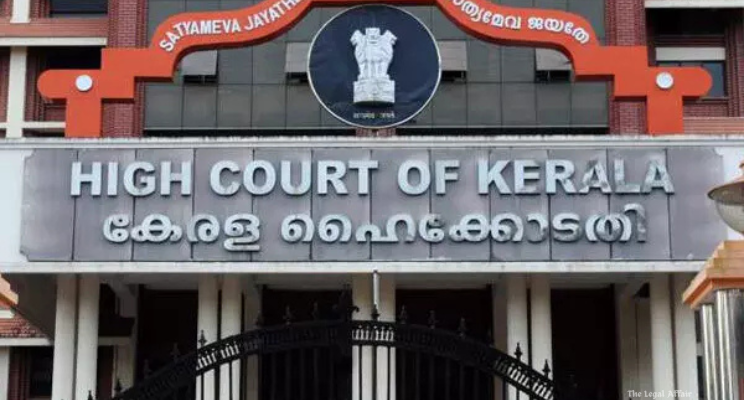
The case of Puthuparambil Raju v. Kachiriyil Joseph came before the Kerala High Court in the form of an original petition arising from a suit for specific performance of an agreement relating to immovable property. The dispute revolved around the execution of a decree passed on 21 November 2011, whereby the defendant was directed to execute a sale deed in favor of the plaintiff upon deposit of the balance sale consideration of ₹10,000 within one month. However, the plaintiff failed to deposit the amount within the stipulated period but subsequently deposited the same and secured execution of the sale deed through court process. The petitioner challenged this development by filing an application seeking rescission of the contract on the ground that the plaintiff had not complied with the time condition specified in the decree and that no formal extension of time had been granted. The central question before the Court was whether the petitioner’s application for rescission was filed within the period of limitation and when the right to seek such rescission actually accrued. Justice P Krishna Kumar was thus called upon to interpret the provisions of the Limitation Act, 1963 in conjunction with principles governing decrees for specific performance, particularly focusing on whether limitation begins from the date of default or from the date of knowledge of subsequent proceedings.
Arguments of the Petitioner:
That the petitioner contended that the respondent had failed to comply with the explicit condition laid down in the decree requiring deposit of the balance sale consideration within one month. It was argued that this failure rendered the decree incapable of execution and entitled the petitioner to seek rescission of the contract.
That the petitioner further submitted that no extension of time had been granted by the Court for deposit of the balance amount. In the absence of such extension, the respondent’s subsequent deposit and execution of the sale deed were claimed to be legally unsustainable. The petitioner emphasized that time was of the essence in the decree and non compliance within the stipulated period extinguished the respondent’s right to enforce the contract.
That it was argued that the petitioner became aware of the respondent’s actions only at a later stage when execution proceedings were initiated, and therefore, the limitation period for filing the application for rescission should be computed from the date of such knowledge or notice. It was contended that until such notice was received, the petitioner had no occasion to challenge the respondent’s conduct.
That reliance was placed on the judgment of the Supreme Court in Prem Jeevan v K S Venkata Raman to argue that the time stipulated in a decree does not automatically stand extended merely because the defendant has not sought rescission. It was submitted that strict compliance with the terms of the decree was necessary for its enforceability.
That the petitioner ultimately argued that the execution of the sale deed in favor of the respondent, without adherence to the time condition and without a formal extension, was illegal and liable to be set aside, and that the contract ought to be rescinded.
Arguments of the Respondent:
That the respondent opposed the petition by contending that the application for rescission was hopelessly barred by limitation. It was argued that the right to seek rescission accrued immediately upon expiry of the one month period stipulated in the decree, and not at a later stage when the petitioner received notice of execution proceedings.
That the respondent submitted that the applicable limitation period was governed by Article 137 of the Limitation Act, 1963, which prescribes a period of three years for filing such applications. Since the petitioner had approached the Court nearly eight years after the expiry of the stipulated period, the application was clearly time barred.
That the respondent further argued that the decree for specific performance is in the nature of a preliminary decree and the Court retains jurisdiction over the matter even after passing of the decree. Therefore, the petitioner was not required to wait for any action by the respondent and could have independently sought rescission as soon as the default occurred.
That it was also contended that the subsequent deposit of the balance consideration and execution of the sale deed were valid and had been carried out with the approval of the Court. The respondent argued that when the Court permits such deposit and proceeds with execution, it implicitly extends the time for compliance.
That reliance was placed on the Supreme Court judgment in Ishwar v Bhim Singh to contend that extension of time need not always be express and can be inferred from the conduct of the Court in allowing the decree holder to perform the obligations beyond the stipulated period.
That the respondent thus argued that the petitioner’s challenge was devoid of merit and liable to be dismissed.
Court’s Judgment:
That the Kerala High Court, after considering the submissions and examining the legal position, held that the petitioner’s application for rescission was barred by limitation and devoid of merit. The Court observed that Article 137 of the Limitation Act, 1963 governs applications for rescission and prescribes a limitation period of three years.
That the Court categorically held that the right to seek rescission accrues upon the expiry of the time stipulated in the decree for performance, and not upon the receipt of notice of any subsequent proceedings. The Court rejected the petitioner’s contention that limitation should be computed from the date of knowledge, emphasizing that such an interpretation would defeat the purpose of the limitation law.
That the Court further observed that a decree for specific performance is not a final decree but is in the nature of a preliminary decree, and the Court retains jurisdiction to supervise its execution. Therefore, the judgment debtor is not required to await any action by the decree holder and can independently seek rescission immediately upon default.
That the Court noted that in the present case, the petitioner had filed the application for rescission nearly eight years after the expiry of the stipulated period, which was far beyond the prescribed limitation period. The application was thus held to be hopelessly time barred.
That the Court also addressed the issue of extension of time and held that such extension need not always be explicit. Relying on the judgment in Ishwar v Bhim Singh, the Court held that when a decree holder deposits the balance consideration and the Court, after due consideration, permits such deposit and proceeds to execute the sale deed, it amounts to an implicit extension of time.
That the Court rejected the petitioner’s reliance on Prem Jeevan v K S Venkata Raman by distinguishing the facts and clarifying that the principle laid down therein does not preclude the possibility of implicit extension by the Court.
That the Court concluded that once the Court has acted upon the request of the decree holder and executed the sale deed, it cannot be contended that the absence of an express order extending time renders the decree inexecutable.
That accordingly, the Court upheld the impugned order and dismissed the original petition, reaffirming the principles governing limitation and execution of decrees for specific performance.