


Introduction:
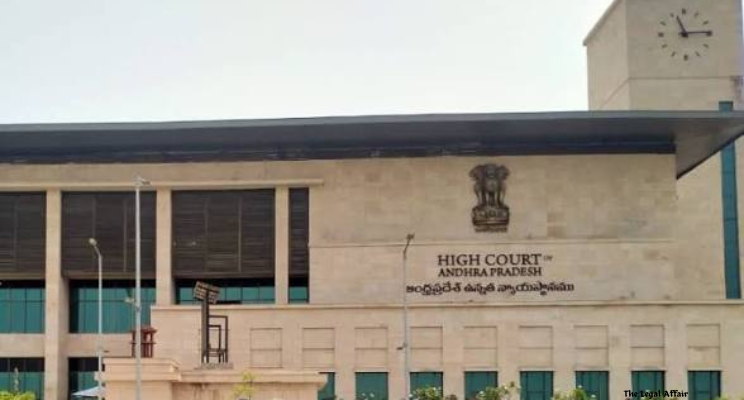
In a significant ruling reinforcing the importance of reasoned judicial decision-making, the Andhra Pradesh High Court has held that a judicial order rejecting interim relief cannot be sustained if it does not disclose the reasons for arriving at such a conclusion. Observing that “reasons are the backbone of every order,” the Court ruled that a one-line, non-speaking order violates settled principles of law and fails to satisfy the requirements of judicial accountability and transparency. The judgment was delivered by a Division Bench comprising Justice Ravi Nath Tilhari and Justice Subhendu Samanta in A. Rajasekhar Gowd v. Union of India & Others (W.P. No. 12292 of 2026), reported as 2026 LiveLaw (AP) 127.
The case arose from departmental proceedings initiated against the petitioner under Rule 15(1) of the Central Civil Services (Classification, Control and Appeal) Rules, 1965. This provision empowers the disciplinary authority to remit a disciplinary matter for further inquiry or fresh consideration whenever such a course is considered necessary. Aggrieved by the departmental action, the petitioner approached the Central Administrative Tribunal (CAT), Hyderabad Bench, by filing an Original Application challenging the legality of the proceedings.
Along with the Original Application, the petitioner also sought interim relief by requesting the Tribunal to stay the continuation of the disciplinary proceedings until the matter was finally adjudicated. However, while admitting the Original Application and issuing notice to the respondents, the Tribunal rejected the prayer for interim relief through a brief one-line order without recording any reasons or discussing the submissions advanced by either side.
Contending that the Tribunal’s order was arbitrary and contrary to settled principles governing judicial orders, the petitioner approached the Andhra Pradesh High Court under Article 226 of the Constitution. The principal issue before the High Court was whether a judicial forum could reject an application for interim relief without assigning reasons and whether such a non-speaking order could withstand judicial scrutiny.
Arguments of the Parties:
The petitioner contended that the Central Administrative Tribunal had committed a serious legal error by rejecting his application for interim relief without assigning any reasons whatsoever. It was argued that the Tribunal merely dismissed the prayer for interim protection while admitting the Original Application and issuing notice to the respondents, but failed to explain why the interim relief was considered unworthy of acceptance.
The petitioner submitted that judicial orders affecting the rights and interests of parties must necessarily contain reasons demonstrating due application of mind. According to him, the Tribunal had neither considered the facts of the case nor examined the legal issues involved before refusing interim protection. The absence of reasons rendered the order arbitrary, non-speaking and contrary to well-established judicial principles.
It was further argued that the disciplinary proceedings had been initiated pursuant to a remitting order under Rule 15(1) of the CCS (CCA) Rules, 1965, and unless interim protection was granted, the proceedings would continue, potentially causing irreparable prejudice before the Original Application itself could be finally decided. The petitioner therefore sought quashing of the Tribunal’s order and a direction for fresh consideration of the interim application.
The respondents defended the order passed by the Tribunal and opposed interference by the High Court. Although the detailed submissions of the respondents are not recorded in the judgment summary, they supported the continuation of the disciplinary proceedings and resisted the petitioner’s challenge.
The respondents contended that the Tribunal had exercised its jurisdiction while dealing with the application for interim relief and that the Original Application itself remained pending for adjudication on merits. They sought dismissal of the writ petition and continuation of the proceedings before the Tribunal.
Court’s Judgment:
After considering the rival submissions, the Andhra Pradesh High Court allowed the writ petition and set aside the Tribunal’s order rejecting interim relief.
The Division Bench observed that the impugned order was plainly a non-speaking order. The Tribunal had rejected the petitioner’s request for interim protection without recording even a single reason in support of its conclusion. The Court noted that neither the factual background of the case nor the submissions advanced by the parties had been discussed in the order. Such an approach, according to the Bench, was wholly inconsistent with settled principles governing judicial decision-making.
The Court emphatically observed that reasons constitute the very foundation of every judicial order. Recording reasons is not merely a procedural formality but an essential component of the administration of justice. A judicial authority is expected to demonstrate through its reasoning that it has applied its mind to the issues raised before it. The process of reasoning assures litigants that their submissions have been duly considered and that the conclusion has been reached after careful evaluation of the relevant facts and law.
The High Court observed that a judicial order must disclose not only the final conclusion but also the reasons that persuaded the authority to arrive at that conclusion. Without reasons, an order becomes opaque and prevents the parties from understanding why their claims have either succeeded or failed.
While examining the Tribunal’s order, the Bench found that it merely rejected the prayer for interim relief without assigning any justification. There was no discussion regarding the petitioner’s prima facie case, the balance of convenience, the likelihood of irreparable injury or any other factor ordinarily considered while deciding an application for interim relief. The absence of such analysis rendered the order legally unsustainable.
The Court relied upon the settled jurisprudence of the Supreme Court concerning the necessity of recording reasons in judicial and quasi-judicial orders. Referring to the principles laid down by the Supreme Court, the Bench observed that reasons perform multiple functions within the justice delivery system. They demonstrate fairness, ensure transparency, prevent arbitrary exercise of power and facilitate effective appellate review.
The High Court observed that when a judicial authority records reasons, it reflects due application of mind to the facts and legal issues involved in the case. Conversely, a non-speaking order creates uncertainty regarding whether the authority actually considered the rival submissions before reaching its conclusion.
The Bench further noted that recording reasons is equally important for the unsuccessful party. Unless reasons are disclosed, an aggrieved litigant cannot effectively challenge the decision before a superior court because the basis of the decision itself remains unknown. The absence of reasons therefore adversely affects not only the parties but also the appellate or supervisory courts entrusted with examining the correctness of judicial decisions.
The Court emphasized that judicial discipline requires every adjudicatory authority, including tribunals, to pass reasoned orders irrespective of whether the decision is rendered at an interim stage or upon final adjudication. Even an order refusing interim relief must indicate the reasons which persuaded the authority to deny such protection.
Applying these principles to the facts of the present case, the High Court concluded that the Tribunal had failed to discharge its judicial obligation. Since no reasons had been assigned for rejecting the petitioner’s application, the impugned order could not be sustained in law.
Accordingly, the Division Bench quashed the order of the Central Administrative Tribunal rejecting interim relief. However, instead of expressing any opinion on the merits of the dispute, the Court remitted the matter to the Tribunal for fresh consideration.
The High Court directed the Tribunal to reconsider the petitioner’s application for interim relief after affording both parties a reasonable opportunity of hearing. It further directed that the application should be decided expeditiously, preferably on the next date fixed, namely 23 July 2026. In the event that disposal on the said date was not possible for justifiable reasons, the Tribunal was directed to decide the interim application positively within one week thereafter.
The Court expressly clarified that it had not examined the merits of the disciplinary proceedings or the petitioner’s entitlement to interim relief. All issues were left open for consideration by the Tribunal independently and in accordance with law.
The judgment reiterates one of the most fundamental principles of judicial administration—that every judicial order must speak through its reasons. A reasoned order reflects fairness, transparency and judicial accountability, while a non-speaking order undermines public confidence in the justice delivery system. By setting aside the Tribunal’s one-line rejection of interim relief, the Andhra Pradesh High Court reaffirmed that recording reasons is not a matter of convenience but an indispensable requirement of the rule of law. The decision serves as an important reminder to courts and tribunals that justice is not merely about reaching a conclusion but about explaining the legal and factual basis upon which that conclusion rests.