


Introduction:
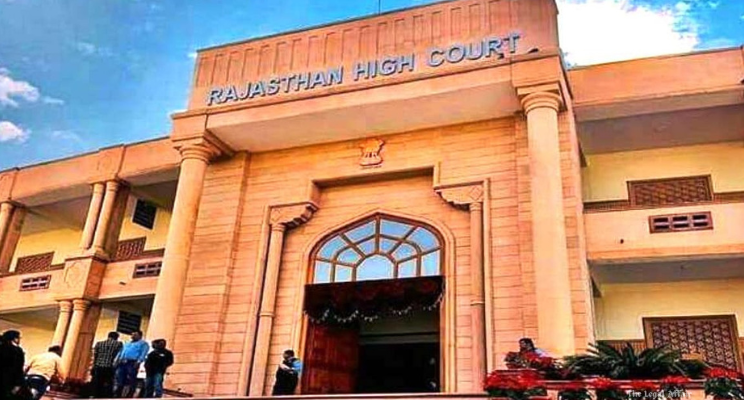
In Vikash Gupta v. District and Sessions Judge, the Rajasthan High Court examined the legality of a State action that treated prolonged absence from service as voluntary resignation. The matter came up before Justice Sameer Jain in a writ petition filed by Vikash Gupta challenging the State’s decision to construe his absence of nearly five years as willful absenteeism amounting to voluntary abandonment of service. The impugned order effectively severed his employment without a regular disciplinary inquiry, treating the prolonged absence as a conscious relinquishment of duty. The petitioner contended that his absence was not deliberate or intentional but was compelled by extraordinary medical circumstances involving his mother’s prolonged cancer treatment, which required approximately eighty chemotherapy sessions. He further argued that he had submitted multiple leave applications during the relevant period, many of which were either partially sanctioned without pay or rejected without proper communication. The controversy therefore raised important questions concerning the distinction between willful absence and absence due to compelling personal hardship, the principles governing voluntary resignation in service law, and the standards for grant of interim relief in writ jurisdiction.
Arguments:
On behalf of the petitioner Vikash Gupta it was argued that the State’s action was arbitrary, disproportionate and violative of principles of natural justice. The central submission was that absence from service, even if prolonged, cannot automatically be equated with voluntary resignation unless there is clear intention to abandon employment. The petitioner emphasized that he never expressed any desire to resign and at all times intended to continue in service. His absence, according to him, was forced by circumstances beyond his control. It was brought to the Court’s notice that his mother had been diagnosed with cancer and had undergone nearly eighty chemotherapy sessions over an extended period. The medical condition required constant care and supervision, and as the sole caregiver in the family, he was compelled to remain by her side. The petitioner contended that such absence could not be categorized as willful or deliberate. He further submitted that he had repeatedly submitted leave applications informing the department about his circumstances. Some of these applications were sanctioned partially without pay, while others were rejected without communication. The absence of proper response from the department, he argued, reflected administrative apathy rather than misconduct on his part. Relying upon the judgment of the Supreme Court of India in Krushnakant B. Parmar v. Union of India, it was contended that unauthorized absence owing to compelling reasons beyond the control of the employee cannot be treated as willful absenteeism. The petitioner argued that the Supreme Court had clearly held that before branding absence as willful, the employer must examine whether the absence was intentional or whether it was occasioned by unavoidable circumstances. In the present case, the State had mechanically treated the absence as voluntary resignation without conducting a proper inquiry into the surrounding circumstances. It was also submitted that the order had severe civil consequences, as it deprived the petitioner of his livelihood and service benefits without affording him a meaningful opportunity of hearing. The petitioner therefore urged that the impugned order deserved to be stayed pending final adjudication, as he had established a strong prima facie case, the balance of convenience lay in his favor, and irreparable injury would result if interim protection was denied.
On the other hand, the State authorities defended their action by contending that prolonged absence of nearly five years cannot be lightly condoned in a disciplined service. It was argued that continuous absence disrupts administrative functioning and erodes institutional discipline. According to the State, the petitioner had failed to report for duty for an inordinate length of time and had thereby demonstrated lack of interest in service. The authorities maintained that prolonged unauthorized absence is a serious misconduct and that service rules empower the employer to treat such absence as voluntary abandonment in appropriate cases. The State contended that the petitioner’s conduct reflected a pattern of non compliance and that the department could not be expected to indefinitely accommodate absence of such magnitude. It was argued that even if medical hardship existed, the petitioner ought to have pursued appropriate leave procedures or sought formal extension in accordance with rules. The State further submitted that administrative efficiency requires certainty and continuity and that an employee remaining absent for years together creates operational vacuum. On this basis, it was contended that the order treating the absence as voluntary resignation was justified and did not warrant judicial interference at the interim stage.
Judgment:
After hearing both sides and perusing the material on record, Justice Sameer Jain observed that the matter warranted interim protection in favor of the petitioner. The Court carefully evaluated the three well established parameters governing grant of interim relief, namely existence of a prima facie case, balance of convenience, and likelihood of irreparable injury. On the first parameter, the Court found that the petitioner had raised substantial questions requiring detailed examination. The medical hardship faced by his mother, including extensive chemotherapy treatment, constituted a compelling circumstance that could not be dismissed at the threshold. The Court noted that absence attributable to unavoidable medical emergencies stands on a different footing from willful desertion. The reliance placed upon the Supreme Court decision in Krushnakant B. Parmar was considered significant, as it underscores that absence beyond an employee’s control cannot automatically be labeled as misconduct. On the question of balance of convenience, the Court opined that permitting the petitioner to resume duty pending adjudication would not irreparably prejudice the State, whereas denying interim protection would deprive the petitioner of his livelihood. The Court was also persuaded that irreparable injury would ensue if the order remained operative, as the petitioner would suffer loss of employment and consequential benefits which might not be adequately compensated later. The Court therefore held that the equities at this stage leaned in favor of the petitioner. Without expressing any conclusive opinion on the merits of the case, the High Court stayed the impugned order until the next date of hearing and directed the State to allow the petitioner to resume his duties. The order reflects judicial sensitivity to humanitarian considerations within the framework of service jurisprudence. It reiterates that while discipline in public service is essential, administrative authorities must also account for genuine hardships and avoid mechanical application of rules. By granting interim relief, the Court has ensured that the petitioner is not prematurely deprived of his employment pending final determination of whether his absence was truly willful or compelled by circumstances beyond his control.