


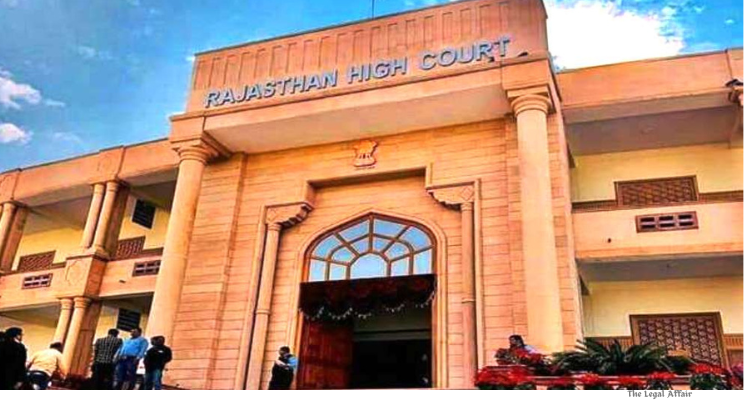
Introduction:
The Rajasthan High Court recently clarified critical principles concerning the production of documents during civil proceedings, specifically under Order VIII Rule 1A(3) of the Code of Civil Procedure (CPC). The Court emphasized that at the preliminary stage of document production, trial courts should not assess the probative value, evidentiary admissibility, or reliability of the documents. Justice Sudesh Bansal presided over a civil suit involving partition and a permanent injunction, where the petitioner sought to introduce documents related to joint property. The ruling reinforces judicial discretion aimed at advancing substantial justice, ensuring litigants can present relevant evidence without undue interference.
Case Background:
The case involved a petition by the defendant, who alleged that his brother (the respondent) failed to include a joint property in the suit. To substantiate this claim, the petitioner requested leave to introduce an original passbook and bank statement during the trial’s evidence stage. However, the trial court rejected this request, raising concerns about the documents’ authenticity due to visible overwriting and cuttings, prompting the petitioner to appeal to the High Court.
Petitioner’s Argument:
The petitioner, represented by counsel, argued that the trial court exceeded its jurisdiction by prematurely assessing the genuineness and evidential value of the documents. According to the petitioner, under Order VIII Rule 1A(3), the court’s role is limited to allowing or denying the submission of documents, without delving into their authenticity or probative worth at this stage.
The petitioner further argued that since the trial was still in its early evidence-collecting phase, any procedural delay caused by admitting the documents could be compensated with appropriate costs. This approach, he contended, would ensure that the trial proceeds fairly and all relevant evidence is duly considered, allowing the court to uncover the truth.
Respondent’s Argument:
In contrast, the respondent’s counsel justified the trial court’s decision, pointing to apparent discrepancies, such as cuttings and overwriting in the passbook and bank statement. They argued that admitting these documents without scrutinizing their reliability would undermine the integrity of the judicial process.
The respondent maintained that the trial court was right to prevent the introduction of potentially unreliable evidence, arguing that safeguarding the quality of evidence is essential to protecting the interests of both parties. Accepting such questionable documents, they contended, could lead to prejudice against the respondent.
Court’s Judgment:
Justice Sudesh Bansal, in delivering the judgment, reiterated that the trial court’s discretion under Order VIII Rule 1A(3) must be exercised judiciously, emphasizing that the objective of civil litigation is to allow a fair opportunity for parties to present relevant evidence. The Court stressed that procedural rules should not obstruct justice unless there is a significant risk of prejudice to the opposing party.
The High Court referenced the Supreme Court’s decision in Sugandhi v. P. Rajkumar, which established that procedural lapses should not result in denial of justice, especially if they do not harm the opposing party. Justice Bansal underscored that litigation’s central purpose is to uncover the truth, and trial courts should take a lenient approach when considering applications for document production under Order VIII Rule 1A(3).
In this case, the Court found that the trial court erred by focusing on the discrepancies in the passbook at such an early stage. The authenticity of the documents, it noted, should be determined after they are admitted into evidence and subjected to proper scrutiny, not before. The Court held that the trial court’s dismissal of the application was premature, as the evidence’s relevance justified its admission.
The High Court concluded that denying the petitioner the opportunity to submit these documents could result in significant hardship and potential injustice. At the same time, the respondent would not suffer undue prejudice, as he would retain the right to cross-examine the evidence once introduced.
Conclusion:
The Rajasthan High Court ultimately set aside the trial court’s order and allowed the petitioner to produce the disputed documents, reinforcing the principle that courts should prioritize fairness and the pursuit of truth over rigid procedural technicalities. The judgment serves as a reminder that while the authenticity and evidentiary value of documents are essential, these aspects should be evaluated during the trial itself, not at the initial production stage.