


Introduction:
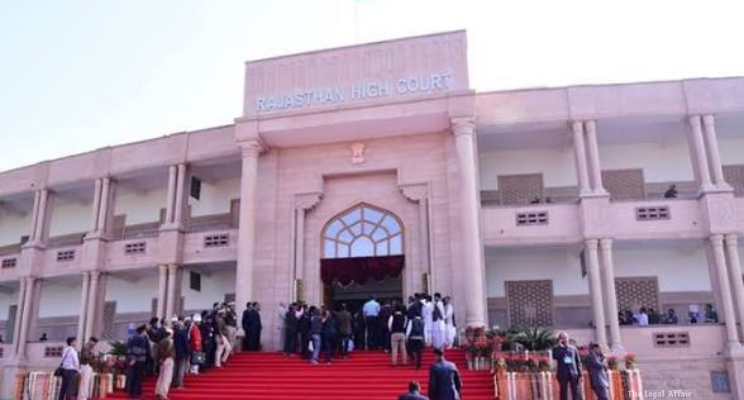
The Rajasthan High Court recently delivered an important ruling concerning the grant of bail to women accused in serious criminal offences, holding that gender alone cannot become a ground for release when allegations involve grave crimes such as murder. In the case titled Chhoti Devi v. State of Rajasthan, the Court refused to grant bail to a mother-in-law accused of participating in the murder of her daughter-in-law through strangulation and subsequent administration of electric shocks.
The matter was heard by Justice Baljinder Singh Sandhu, who rejected the applicant’s contention that she was entitled to the benefit of the proviso under Section 480 of the Bharatiya Nagarik Suraksha Sanhita, 2023 (BNSS), merely because she was a woman. The Court observed that while the law contains certain liberal provisions relating to bail for women, such considerations cannot override the seriousness of allegations where the offence involves brutal acts resulting in death.
The prosecution case alleged that the deceased woman was strangulated by her husband, father-in-law, and mother-in-law. It was further alleged that after the act of strangulation, electric shocks were administered to the deceased in order to ensure her death. The allegations painted a disturbing picture of domestic violence culminating in homicide within the matrimonial home.
During the investigation, the police reportedly recovered an electric wire and broken bangles belonging to the deceased from the possession of the applicant mother-in-law. These recoveries became significant circumstances relied upon by the prosecution to establish her involvement in the offence.
The bail proceedings primarily revolved around the extent of the mother-in-law’s alleged participation in the crime and the interpretation of Section 480 BNSS, which contains a proviso permitting courts to adopt a more lenient approach while considering bail for women, children, sick persons, or infirm individuals in appropriate cases.
The case therefore raised an important legal issue regarding the balance between humanitarian considerations in bail jurisprudence and the gravity of accusations involving serious offences against women. The High Court’s ruling reaffirmed that while gender-sensitive provisions exist within criminal procedure law, courts must ultimately evaluate the nature of allegations, available evidence, and societal interest before granting bail.
Arguments of the Parties:
The applicant’s counsel strongly argued that the mother-in-law had been falsely implicated and that the material collected during investigation did not justify her continued incarceration. It was submitted that the prosecution’s attempt to connect her with the alleged murder rested primarily on the recovery of an electric wire and broken bangles of the deceased.
According to the defence, these recoveries alone were insufficient to establish active participation in the alleged strangulation. Counsel contended that there was no direct evidence demonstrating that the applicant physically participated in causing the death of the deceased. It was argued that the prosecution case exaggerated her involvement merely because she happened to be a family member residing in the matrimonial house.
A major emphasis was placed on the medical evidence collected during investigation. The defence referred to the doctor’s opinion, which allegedly indicated that the injuries present on the deceased’s body did not correspond to injuries ordinarily caused by electric shocks. On the basis of this medical opinion, the applicant argued that the prosecution’s allegation regarding administration of electric shocks became doubtful.
The applicant’s counsel therefore contended that if the medical evidence itself failed to support the allegation relating to electric shocks, the entire case against the mother-in-law became weak because her alleged role was primarily confined to the administration of those shocks after the strangulation.
The defence further invoked the proviso contained under Section 480 of the BNSS. This provision recognises that courts may adopt a liberal approach while considering bail applications filed by women. Counsel argued that the applicant was entitled to the statutory benefit available to female accused persons and that continued detention would be unjustified considering her status as a woman.
It was submitted that bail jurisprudence in India consistently recognises the principle that pre-trial incarceration should not become punitive in nature. Since the trial was likely to take considerable time and there was no allegation that the applicant would abscond or tamper with evidence, the defence urged the Court to enlarge her on bail.
The State, however, strongly opposed the bail application and argued that the allegations involved a grave and heinous offence committed within the confines of the matrimonial home. The prosecution maintained that the deceased was subjected to violent assault, strangulation, and subsequent administration of electric shocks in order to ensure her death.
The prosecution argued that the recovery of the electric wire and broken bangles from the applicant was not an insignificant circumstance. Instead, these recoveries constituted material evidence linking the applicant to the commission of the offence. According to the State, such evidence created reasonable grounds to believe that the mother-in-law actively participated in the events leading to the deceased’s death.
The State further argued that the defence was incorrectly attempting to isolate one aspect of the prosecution case, namely the allegation regarding electric shocks, while ignoring the broader allegations involving murder by strangulation and assault. Even if the medical evidence did not conclusively establish injuries caused by electric current, that alone could not absolve the applicant from criminal liability at the stage of bail.
The prosecution also opposed the defence reliance upon Section 480 BNSS by arguing that the proviso relating to women cannot be applied mechanically in cases involving serious offences such as murder. It was submitted that courts must consider the gravity of allegations, nature of evidence, and societal impact of the crime before extending the benefit of liberal bail provisions.
The State relied upon judicial precedents holding that gender by itself cannot become an automatic ground for bail when accusations reveal active involvement in grave offences. According to the prosecution, releasing the applicant merely because she was a woman would undermine the seriousness of the allegations and weaken public confidence in the criminal justice process.
The prosecution therefore urged the Court to reject the bail plea considering the nature of accusations, the material collected during investigation, and the seriousness of the alleged offence.
Court’s Judgment:
After hearing both sides, the Rajasthan High Court rejected the bail application and held that the applicant was not entitled to release merely because she was a woman. Justice Baljinder Singh Sandhu observed that the allegations against the applicant involved a serious and brutal offence and therefore required strict scrutiny at the stage of bail.
The Court specifically examined the contention raised by the defence under Section 480 BNSS. The proviso under the provision permits courts to adopt a comparatively liberal approach while considering bail applications filed by women, minors, sick persons, or infirm individuals. However, the Court clarified that such statutory discretion cannot be exercised mechanically or in disregard of the gravity of allegations.
In reaching this conclusion, the High Court relied upon the judgment of the Supreme Court of India in Rekha K.C. v. Jyotibhai and Another. Referring to the principles laid down in that case, the Court reiterated that the mere fact that an accused is a woman does not automatically justify grant of bail when the allegations concern serious offences.
The Bench observed that offences involving violence against women, particularly within domestic settings, must be viewed with seriousness. The Court therefore declined to accept the argument that the applicant deserved automatic leniency solely because of her gender.
While addressing the defence argument relating to medical evidence, the Court noted that the prosecution case could not be reduced merely to the allegation of electric shocks. The Bench observed that the allegations as a whole involved strangulation and assault leading to the death of the deceased.
The Court rejected the submission that the applicant’s role was confined only to administering electric shocks. According to the Court, even if the doctor’s opinion suggested that certain injuries did not correspond to electric shock injuries, such medical observations did not negate the applicant’s involvement in the offence at the preliminary stage of considering bail.
The High Court placed considerable emphasis on the recoveries made during investigation. The recovery of the electric wire and broken bangles of the deceased from the possession of the applicant was considered a significant incriminating circumstance. The Court held that these recoveries constituted reasonable grounds to believe that the applicant was connected with the offence.
Importantly, the Court clarified that at the stage of deciding bail, a detailed examination of evidence equivalent to a full-fledged trial is neither necessary nor appropriate. Instead, the Court is required to examine whether the available material discloses prima facie involvement of the accused and whether the allegations are serious enough to justify continued detention.
The Court found that the prosecution had placed sufficient material to establish a prima facie case against the applicant. Considering the seriousness of the offence, the nature of allegations, and the evidence collected during investigation, the Bench held that the applicant was not entitled to the discretionary relief of bail.
The judgment reflects an important aspect of Indian bail jurisprudence: while courts are expected to adopt a humanitarian approach in suitable cases involving women accused, such considerations cannot eclipse the broader interests of justice in cases involving grave offences such as murder.
The ruling also demonstrates the judiciary’s increasing sensitivity toward crimes occurring within matrimonial homes. Allegations involving domestic violence, dowry harassment, and violence against daughters-in-law often involve complex family dynamics where evidence may primarily emerge from circumstantial material and recoveries. In such cases, courts frequently exercise caution while considering pre-trial release.
Another significant aspect of the decision is the Court’s reliance upon the principle that statutory bail relaxations are discretionary rather than absolute. The proviso under Section 480 BNSS does not create an indefeasible right to bail for women accused persons. Instead, it merely permits courts to consider gender as one of several relevant factors while balancing competing considerations such as gravity of offence, available evidence, possibility of tampering with witnesses, and societal impact.
Ultimately, the Rajasthan High Court concluded that the allegations and evidence collected during investigation disclosed sufficient prima facie involvement of the mother-in-law in the alleged murder of her daughter-in-law. Accordingly, the bail application was rejected.
The judgment serves as a reminder that courts will not extend liberal bail protections solely on the basis of gender where accusations involve heinous offences supported by material evidence. It reinforces the principle that the seriousness of the crime and the interests of justice remain central considerations in bail adjudication under the BNSS.