


Introduction:
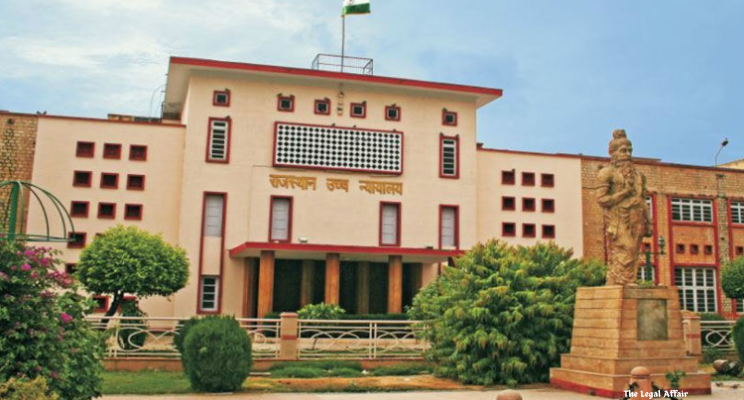
The Rajasthan High Court, in Conflict with Law Juvenile X v. State of Rajasthan (2026 LiveLaw (Raj) 268), delivered an important decision highlighting the duty of investigating agencies to conduct a fair, impartial, and legally compliant investigation in cases involving unnatural deaths. While refusing to grant bail to a 13-year-old juvenile accused of murder, the Court expressed serious concern over what it described as an apparent “intentional” lapse on the part of the police during the investigation. The Court observed that although the deceased’s father had initially declined to seek a post-mortem examination and expressed that he had no grievance against anyone, the investigating officers were nevertheless legally obligated to complete the mandatory procedural formalities, including preparing a panchnama before handing over the body for cremation.
The judgment was delivered by Justice Ravi Chirania while hearing a revision petition filed on behalf of the juvenile in conflict with law, challenging the rejection of his bail application. Although the Court identified significant deficiencies in the manner in which the investigation had been conducted, it ultimately concluded that those deficiencies could not justify releasing the accused on bail at that stage of the proceedings. Instead, the observations made by the Court underscored the importance of procedural safeguards in criminal investigations, particularly where allegations involve offences as serious as murder.
The case arose from an FIR alleging the commission of murder. However, the circumstances surrounding the registration of the case were highly unusual. According to the material placed before the Court, immediately after the death of the victim, the deceased’s father submitted a handwritten application before the Station House Officer stating that he had no grievance against any individual, did not suspect foul play, and did not seek any legal action. He also declined to request a post-mortem examination of the body. Acting upon this communication, the police did not conduct a post-mortem, nor did they undertake certain procedural formalities ordinarily associated with cases involving suspicious or unnatural deaths.
Nearly one month later, an FIR alleging murder was lodged. During the course of investigation, the police initially filed a negative final report, concluding that no sufficient material existed to proceed against the accused. Dissatisfied with the police investigation, the complainant challenged the final report by filing a protest petition before the competent court. The protest petition succeeded, and the Magistrate took cognizance against the accused despite the police closure report.
Subsequently, the juvenile sought release on bail by challenging the earlier orders refusing such relief. The revision petition required the High Court to examine not only the merits of the bail claim but also the larger question of whether serious procedural irregularities committed during the investigation had compromised the integrity of the criminal process. The Court’s decision therefore addresses the intersection between fair investigation, statutory duties of investigating officers, and the principles governing bail in cases involving juveniles accused of grave offences.
Arguments of the Parties:
Counsel appearing on behalf of the juvenile primarily challenged the prosecution case by pointing to the extraordinary delay in registration of the First Information Report. It was submitted that the alleged incident had occurred approximately one month before the FIR was eventually lodged, thereby creating substantial doubt regarding the genuineness of the allegations.
The petitioner argued that immediately after the death of the deceased, the complainant himself had voluntarily submitted a handwritten letter before the Station House Officer. In that communication, the complainant categorically stated that he harboured no grievance against any person, did not suspect any criminal act behind the death, and did not desire any legal proceedings. He had also expressly declined to seek a post-mortem examination of the body. According to the petitioner, this contemporaneous document constituted the most reliable account of the events and demonstrated that no suspicion of murder existed at the relevant time.
It was further submitted that acting upon the complainant’s own request, the police did not conduct a post-mortem examination and permitted the family to perform the funeral rites. Therefore, the subsequent allegation of murder introduced after a considerable lapse of time was an afterthought unsupported by the earliest version recorded immediately after the death.
The petitioner also relied upon the fact that after conducting investigation, the police themselves had submitted a negative final report. According to the defence, the investigating agency had initially found no material establishing the commission of murder or the involvement of the accused. It was argued that the criminal proceedings were revived only because the complainant filed a protest petition challenging the closure report, which ultimately resulted in cognizance being taken by the Magistrate.
On these facts, counsel submitted that the prosecution case suffered from serious inconsistencies and that continued detention of the juvenile was unjustified. The petitioner therefore prayed that bail be granted considering his age, the delayed registration of the FIR, and the weaknesses in the prosecution case.
The State opposed the revision petition by contending that the delay in investigation and the absence of post-mortem could not be viewed in isolation. According to the prosecution, the petitioner and his family members had actively manipulated the circumstances immediately following the death in order to frustrate a proper investigation.
The State argued that the complainant’s refusal to seek a post-mortem did not absolve the investigating authorities from examining the surrounding circumstances leading to the death. It was submitted that the family members of the accused ensured that the body was cremated hurriedly during the night, thereby preventing effective forensic examination and collection of evidence.
The prosecution maintained that the seriousness of the allegations, coupled with the suspicious circumstances surrounding the disposal of the body, justified continued detention of the accused despite the procedural irregularities highlighted by the defence.
Appearing for the complainant, counsel strongly criticised the conduct of the investigating agency. It was argued that the investigation had not been carried out fairly and objectively. According to the complainant, the police failed to comply with mandatory procedural requirements while handing over the body to the family.
The complainant specifically pointed out that the investigating officers neglected to prepare the panchnama before releasing the body, thereby causing irreparable prejudice to the investigation. It was submitted that the police acted with undue haste and failed to discharge their statutory obligations despite being present at the hospital when the body was released.
Accordingly, both the State and the complainant urged the Court to reject the bail application while taking serious note of the deficiencies that had occurred during investigation.
Court’s Judgment:
After considering the rival submissions and examining the material available on record, Justice Ravi Chirania declined to interfere with the orders refusing bail to the juvenile. At the same time, the Court made significant observations regarding the conduct of the investigating agency and the procedural lapses committed during investigation.
The High Court first addressed the circumstances surrounding the absence of a post-mortem examination. The Court acknowledged that the complainant had indeed submitted a handwritten letter immediately after the death stating that he had no grievance against any person and did not seek legal proceedings or a post-mortem examination.
However, the Court categorically held that such a request by the complainant could not relieve the investigating authorities of their independent statutory obligations. The Bench observed that in cases involving an unnatural or suspicious death, the investigating officer bears an independent responsibility to ensure compliance with legal procedure irrespective of the wishes expressed by family members.
The Court particularly emphasised the importance of preparing a panchnama before handing over the body to the relatives. A panchnama constitutes an essential procedural safeguard that documents the apparent condition of the deceased, the surrounding circumstances, and other relevant facts at the earliest possible stage of investigation. Such contemporaneous documentation often assumes considerable evidentiary value during subsequent criminal proceedings.
Justice Chirania observed that although the complainant may have declined a post-mortem examination, the investigating officer present at the hospital was nevertheless duty-bound to prepare the panchnama before releasing the body. The Court found that no such exercise had been undertaken. Instead, the body was handed over directly to the family members without compliance with this basic procedural requirement.
The High Court described this omission as a serious lacuna in the investigation. Going a step further, the Court observed that the circumstances gave rise to an apprehension that the lapse appeared to be intentional rather than accidental. Such an observation reflects the Court’s concern that the investigating agency may have failed to perform its statutory duties despite being fully aware of the legal requirements governing suspicious deaths.
The Court’s remarks underscore an important principle of criminal investigation. The duty to investigate fairly does not depend solely upon the allegations or suspicions expressed by the complainant. Criminal investigations are conducted in the public interest, and investigating officers must independently secure available evidence even where immediate family members initially decline to pursue legal action.
The High Court also considered the submissions regarding the delayed registration of the FIR. Although the FIR was lodged nearly one month after the incident and the police initially filed a negative final report, the Court did not treat these circumstances as sufficient to justify granting bail. The Court noted that after examination of the protest petition, the competent court had taken cognizance against the accused, indicating that the available material required judicial scrutiny through trial.
While refraining from expressing any opinion on the ultimate merits of the prosecution case, the Court held that the procedural irregularities committed during investigation could not automatically entitle the accused to bail. The seriousness of the allegations and the overall circumstances of the case continued to require judicial caution.
The Court also examined the competing allegations advanced by both sides regarding manipulation of the investigation. The defence sought to rely upon the complainant’s original letter disclaiming any suspicion, whereas the State alleged that the accused’s family had hurriedly conducted the funeral and prevented proper forensic examination.
Without conclusively determining these disputed factual issues, the Court observed that the conduct of the investigating agency itself required serious scrutiny. Regardless of the conduct of either party, it remained the responsibility of the police to ensure that mandatory procedural safeguards were followed before releasing the body. Their failure to do so weakened the investigative process and created avoidable controversy regarding the true circumstances of the death.
The High Court’s observations also reinforce the broader principle that police investigations must remain independent of the wishes of private individuals. Even where relatives initially express unwillingness to pursue legal proceedings, investigating officers cannot abandon statutory responsibilities imposed by criminal law. Compliance with mandatory procedures protects not only the interests of the victim and the accused but also the integrity of the criminal justice system itself.
The Court nevertheless declined to extend the benefit of bail to the juvenile. It found that the procedural deficiencies identified during investigation did not outweigh the seriousness of the allegations at the present stage. The Court therefore upheld the rejection of the bail application while simultaneously expressing strong disapproval of the manner in which the investigation had been conducted.
The judgment carries important implications for criminal investigations involving suspicious deaths. It reiterates that investigating officers cannot dispense with mandatory procedural requirements merely because family members initially decline a post-mortem examination or legal proceedings. The preparation of a panchnama and proper documentation of the condition of the deceased remain independent obligations of the police intended to preserve evidence and ensure fairness to all parties.
Ultimately, the High Court dismissed the revision petition and affirmed the order refusing bail to the juvenile accused. At the same time, the Court’s pointed criticism of the investigating agency serves as a reminder that fairness in criminal investigations depends not only upon the conduct of the parties but also upon strict adherence by police authorities to established legal procedures. By describing the omission to prepare a panchnama as a serious and apparently intentional lapse, the Court highlighted the critical importance of procedural compliance in preserving public confidence in the administration of criminal justice.