


Introduction:
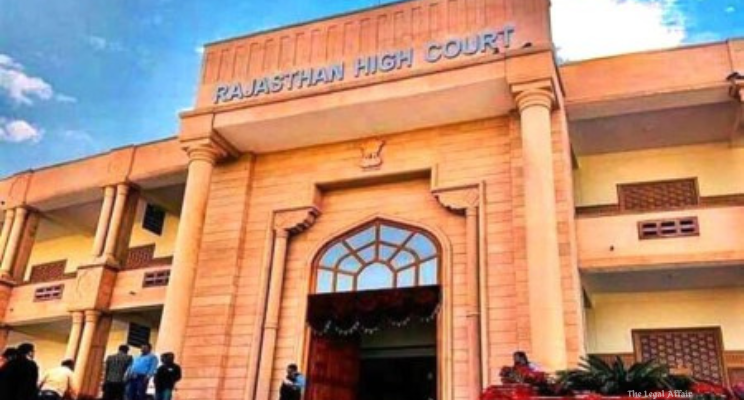
In Purnamal Verma v. State of Rajasthan & Ors. (2025 LiveLaw (Raj) 244), the Rajasthan High Court, presided over by Justice Anoop Kumar Dhand, delivered an important ruling reinforcing the significance of procedural safeguards when removing elected representatives under the Rajasthan Panchayati Raj Act, 1994, and the Rajasthan Panchayati Raj Rules, 1996. The case arose from the removal of the Administrator of Gram Panchayat, Panwar, Panchayat Samiti Devli, who challenged the removal order citing non-compliance with the mandatory provisions of Rule 22. The petitioner argued that his removal was executed without following the prescribed enquiry procedure despite allegations of financial irregularities during his tenure as Sarpanch. Justice Dhand underscored that elected representatives hold the mandate of the people, and their removal requires careful adherence to legal provisions, ensuring fairness and accountability. The Court criticized the authorities for routinely bypassing the requirements of Rule 22, directing the Principal Secretary, Department of Panchayati Raj, Divisional Commissioners, and District Collectors to sensitize all Chief Executive Officers of Panchayat Samitis regarding the importance of following the correct procedure.
Arguments:
The petitioner contended that his removal violated the fundamental principles of natural justice and procedural fairness, as outlined under Rule 22 of the Rajasthan Panchayati Raj Rules, 1996. He argued that while a chargesheet had been served on him, no proper enquiry was conducted, and no evidence of witnesses or other material documents was recorded or considered. The petitioner asserted that the removal order was arbitrarily based solely on his reply to the chargesheet, without conducting cross-examinations, collecting testimonies, or providing an opportunity to challenge the allegations effectively. It was submitted that Rule 22 mandates a structured process, beginning with a preliminary enquiry by a designated officer, followed by the framing of definite charges, an opportunity for the accused to present a defense, cross-examination of witnesses, and a final report with reasoned findings on each charge. By failing to follow this procedure, the authorities acted in a manner contrary to the law and deprived the petitioner of his rightful tenure as an elected representative.
On the other hand, the State, represented by the government counsel, admitted that the enquiry process was flawed as no witness statements were recorded and other documentary evidence was not reviewed before the removal order was issued. However, the State attempted to justify its action by pointing to allegations of financial irregularities during the petitioner’s tenure as Sarpanch, arguing that such conduct was serious enough to warrant removal under Section 38 of the Rajasthan Panchayati Raj Act, 1994. The State submitted that while certain procedural lapses may have occurred, the charges were grave, and therefore the removal order should not be overturned. It further contended that the discretion of the State Government under the Act allows for removal where misconduct or misuse of power is evident. However, the State failed to counter the petitioner’s claim of complete non-adherence to the statutory provisions of Rule 22, which mandates strict compliance with due process before any such punitive action can be confirmed.
Judgement:
After hearing both parties, the Rajasthan High Court noted that Rule 22 of the Panchayati Raj Rules, 1996, prescribes a detailed and mandatory procedure for conducting enquiries prior to the removal of elected Panchayat members. Justice Anoop Kumar Dhand observed that an elected representative is not merely an individual office bearer but the voice of the people who have entrusted him with authority, and as such, his removal must not be carried out in a perfunctory or arbitrary manner. The Court emphasized that in a democracy governed by the rule of law, elected officials are entitled to hold office for their full term unless their conduct is demonstrably disgraceful, involves misuse of authority, or warrants disqualification under Section 38 of the Act. Even in such cases, adherence to Rule 22 is non-negotiable, as it ensures fairness, transparency, and proper evaluation of evidence before reaching a conclusion.
The Court strongly criticized the prevalent practice of issuing removal orders without following Rule 22, noting that it appeared that enquiry officers were often unfamiliar with the procedural requirements. The Court directed the Principal Secretary of the Department of Panchayati Raj, along with Divisional Commissioners and District Collectors, to ensure that all Chief Executive Officers of Panchayat Samitis are informed about the critical importance of adhering to Rule 22. This directive aimed to prevent similar procedural violations in the future and safeguard the democratic rights of elected representatives.
In the present case, the Court found that the preliminary and final enquiry reports prepared by the Block Development Officer were fundamentally flawed, as they relied solely on the petitioner’s reply to the chargesheet and did not include recorded witness statements or a proper consideration of documentary evidence. Such an approach, the Court held, violated the principles of natural justice and failed to meet the procedural standards mandated under Rule 22. Consequently, the High Court set aside the removal order and remitted the matter back to the State Government, directing that any fresh action must be taken strictly in accordance with the provisions of Rule 22.
Justice Dhand’s judgment highlights the judiciary’s role in preserving democratic accountability and protecting the sanctity of elected offices. The Court reiterated that while misconduct must not be condoned, the removal of public representatives cannot be undertaken casually or in violation of established legal procedures. It further underscored that the rule of law requires strict adherence to statutory safeguards, especially when the rights of elected officials, who represent the will of the people, are at stake. The Court’s directions to the authorities serve as a clear warning against procedural shortcuts and emphasize the need for thorough and impartial enquiries before arriving at such consequential decisions.